
Catalogue Search | MBRL


Are you sure you want to remove the book from the shelf?

{{itemTitle}}
352
result(s) for
"Chemicals Law and legislation United States."
Sort by:

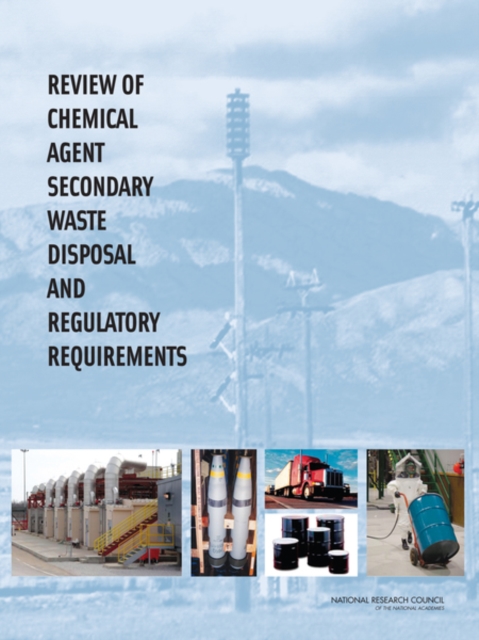
Review of Chemical Agent Secondary Waste Disposal and Regulatory Requirements
Under the direction of the U.S. Army's Chemical Materials Agency (CMA) and mandated by Congress, the nation is destroying its chemical weapons stockpile. Large quantities of secondary waste are being generated in the process, and managing these wastes safely and effectively is a critical part of CMA's weapons disposal program. To assist, the CMA asked the NRC to examine the environmental and regulatory requirements that secondary waste treatment is subject to, and to assess best practices by industry in meeting such requirements for similar facilities. This book presents an overview of secondary wastes from chemical agent disposal facilities (CDF), a comparison of CDF and industry experience, site-specific analysis of major secondary waste issues, an examination of closure wastes, and findings and recommendations.
eBook

Pesticides, a love story : America's enduring embrace of dangerous chemicals
\"A provocative cultural history of pesticides and their controversial use and depiction in the United States. Mart contends that--despite the sharp concerns raised by environmentalists and others since the appearance of Rachel Carson's Silent Spring--Americans have not only never resolved the inherent tension between costs and benefits presented by these chemicals, but have actually grown ever more attached to them with the passage of time\"-- Provided by publisher.
Book

Corporate crops : biotechnology, agriculture, and the struggle for control
Biotechnology crop production area increased from 1.7 million hectares to 148 million hectares worldwide between 1996 to 2010. While genetically modified food is a contentious issue, the debates are usually limited to health and environmental concerns, ignoring the broader questions of social control that arise when food production methods become corporate-owned intellectual property. Drawing on legal documents and dozens of interviews with farmers and other stakeholders, Corporate Crops covers four case studies based around litigation between biotechnology corporations and farmers. Pechlaner investigates the extent to which the proprietary aspects of biotechnologies—from patents on seeds to a plethora of new rules and contractual obligations associated with the technologies—are reorganizing crop production. The lawsuits include patent infringement litigation launched by Monsanto against a Saskatchewan canola farmer who, in turn, claimed his crops had been involuntarily contaminated by the company’s GM technology; a class action application by two Saskatchewan organic canola farmers launched against Monsanto and Aventis (later Bayer) for the loss of their organic market due to contamination with GMOs; and two cases in Mississippi in which Monsanto sued farmers for saving seeds containing its patented GM technology. Pechlaner argues that well-funded corporate lawyers have a decided advantage over independent farmers in the courts and in creating new forms of power and control in agricultural production. Corporate Crops demonstrates the effects of this intersection between the courts and the fields where profits, not just a food supply, are reaped.
eBook

The unsteady state and inertia of chemical regulation under the US Toxic Substances Control Act
After 40 years, the 1976 US Toxic Substances Control Act (TSCA) was revised under the Frank R. Lautenberg Chemical Safety for the 21st Century Act. Its original goals of protecting the public from hazardous chemicals were hindered by complex and cumbersome administrative burdens, data limitations, vulnerabilities in risk assessments, and recurring corporate lawsuits. As a result, countless chemicals were entered into commercial use without toxicological information. Few chemicals of the many identified as potential public health threats were regulated or banned. This paper explores the factors that have worked against a comprehensive and rational policy for regulating toxic chemicals and discusses whether the TSCA revisions offer greater public protection against existing and new chemicals.
Journal Article

Pollution limits and polluters' efforts to comply : the role of government monitoring and enforcement
This book integrates economics and legal perspectives to examine the impact of government strategies for monitoring and enforcing environmental protection laws. It closely examines industrial facilities' compliance with regulatory obligations stemming from the implementation of the Clean Water Act (CWA) to explore the success of policies such as this.
eBook

Assessing the Effects of Medical Marijuana Laws on Marijuana Use: The Devil is in the Details
This paper sheds light on previous inconsistencies identified in the literature regarding the relationship between medical marijuana laws (MMLs) and recreational marijuana use by closely examining the importance of policy dimensions (registration requirements, home cultivation, dispensaries) and the timing of when particular policy dimensions are enacted. Using data from our own legal analysis of state MMLs, we evaluate which features are associated with adult and youth recreational and heavy use by linking these policy variables to data from the Treatment Episode Data Set (TEDS) and National Longitudinal Survey of Youth (NLSY97). We employ differencesin-differences techniques, controlling for state and year fixed effects, allowing us to exploit within-state policy changes. We find that while simple dichotomous indicators of MML laws are not positively associated with marijuana use or abuse, such measures hide the positive influence legal dispensaries have on adult and youth use, particularly heavy use. Sensitivity analyses that help address issues of policy endogeneity and actual implementation of dispensaries support our main conclusion that not all MML laws are the same. Dimensions of these policies, in particular legal protection of dispensaries, can lead to greater recreational marijuana use and abuse among adults and those under the legal age of 21 relative to MMLs without this supply source.
Journal Article

The USA lags behind other agricultural nations in banning harmful pesticides
Background
The United States of America (USA), European Union (EU), Brazil and China are four of the largest agricultural producers and users of agricultural pesticides in the world. Comparing the inclination and ability of different regulatory agencies to ban or eliminate pesticides that have the most potential for harm to humans and the environment can provide a glimpse into the effectiveness of each nation’s pesticide regulatory laws and oversight.
Methods
The approval status of more than 500 agricultural pesticides was identified in the USA, EU, Brazil and China and compared between nations. The amount of pesticides that were used in the USA and banned in these other nations was compiled and linear regression was used to identify trends in use.
Results
There are 72, 17, and 11 pesticides approved for outdoor agricultural applications in the USA that are banned or in the process of complete phase out in the EU, Brazil, and China, respectively. Of the pesticides used in USA agriculture in 2016, 322 million pounds were of pesticides banned in the EU, 26 million pounds were of pesticides banned in Brazil and 40 million pounds were of pesticides banned in China. Pesticides banned in the EU account for more than a quarter of all agricultural pesticide use in the USA. The majority of pesticides banned in at least two of these three nations have not appreciably decreased in the USA over the last 25 years and almost all have stayed constant or increased over the last 10 years.
Conclusions
Many pesticides still widely used in the USA, at the level of tens to hundreds of millions of pounds annually, have been banned or are being phased out in the EU, China and Brazil. Of the pesticides banned in at least two of these nations, many have been implicated in acute pesticide poisonings in the USA and some are further restricted by individual states. The United States Environmental Protection Agency (US EPA) has all but abandoned its use of non-voluntary cancellations in recent years, making pesticide cancellation in the USA largely an exercise that requires consent by the regulated industry.
Journal Article
Population susceptibility: A vital consideration in chemical risk evaluation under the Lautenberg Toxic Substances Control Act
The 2016 Frank Lautenberg Chemical Safety for the 21st Century Act (Lautenberg TSCA) amended the 1976 Toxic Substances Control Act (TSCA) to mandate protection of susceptible and highly exposed populations. Program implementation entails a myriad of choices that can lead to different degrees of public health protections. Well-documented exposures to multiple industrial chemicals occur from air, soil, water, food, and products in our workplaces, schools, and homes. Many hazardous chemicals are associated with or known to cause health risks; for other industrial chemicals, no data exist to confirm their safety because of flaws in 1976 TSCA. Under the 2016 Lautenberg amendments, the United States Environmental Protection Agency (EPA) must evaluate chemicals against risk-based safety standards under enforceable deadlines, with an explicit mandate to identify and assess risks to susceptible and highly exposed populations. Effective public health protection requires EPA to implement the Lautenberg TSCA requirements by incorporating intrinsic and extrinsic factors that affect susceptibility, adequately assessing exposure among vulnerable groups, and accurately identifying highly exposed groups. We recommend key scientific and risk assessment principles to inform health-protective chemical policy such as consideration of aggregate exposures from all pathways and, when data are lacking, the use of health-protective defaults.
Journal Article

Current status on the biodegradability of acrylic polymers: microorganisms, enzymes and metabolic pathways involved
Acrylic polymers (AP) are a diverse group of materials with broad applications, frequent use, and increasing demand. Some of the most used AP are polyacrylamide, polyacrylic acid, polymethyl methacrylates, and polyacrylonitrile. Although no information for the production of all AP types is published, data for the most used AP is around 9 MT/year, which gives an idea of the amount of waste that can be generated after products’ lifecycles. After its lifecycle ends, the fate of an AP product will depend on its chemical structure, the environmental setting where it was used, and the regulations for plastic waste management existing in the different countries. Even though recycling is the best fate for plastic polymer wastes, few AP can be recycled, and most of them end up in landfills. Because of the pollution crisis the planet is immersed, setting regulations and developing technological strategies for plastic waste management are urgent. In this regard, biotechnological approaches, where microbial activity is involved, could be attractive eco-friendly strategies. This mini-review describes the broad AP diversity, their properties and uses, and the factors affecting their biodegradability, underlining the importance of standardizing biodegradation quantification techniques. We also describe the enzymes and metabolic pathways that microorganisms display to attack AP chemical structure and predict some biochemical reactions that could account for quaternary carbon-containing AP biodegradation. Finally, we analyze strategies to increase AP biodegradability and stress the need for more studies on AP biodegradation and developing stricter legislation for AP use and waste control.Key points• Acrylic polymers (AP) are a diverse and extensively used group of compounds.• The environmental fates and health effects of AP waste are not completely known.• Microorganisms and enzymes involved in AP degradation have been identified.• More biodegradation studies are needed to develop AP biotechnological treatments.
Journal Article