
Catalogue Search | MBRL


Are you sure you want to remove the book from the shelf?

{{itemTitle}}
69,914
result(s) for
"Chemistry Experiments."
Sort by:

Chemistry around the house
You do not need to be in a laboratory to see science in action. Just about everything you find in your home, the shampoo in the bathroom, the pizza in the oven, the gasoline in the car, depends on chemistry.
Book
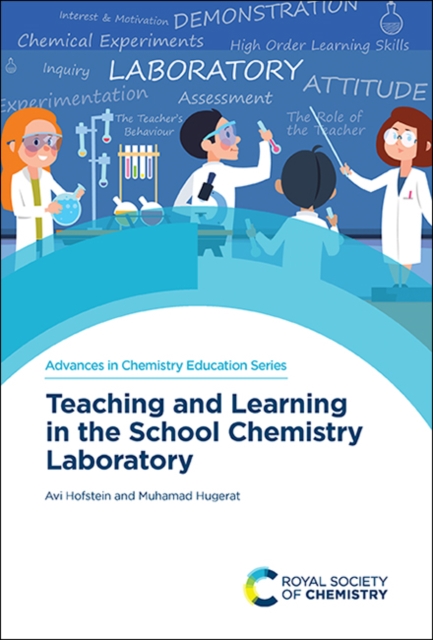
Teaching and learning in the school chemistry laboratory
Research into the educational effectiveness of chemistry practical work has shown that the laboratory offers a unique mode of instruction, assessment and evaluation. Laboratory work is an integral and important part of the learning process, used to encourage the development of high order thinking and learning alongside high order learning and thinking skills such as argumentation and metacognition.Authored by renowned experts in the field of chemistry education, this book provides a holistic approach to cover all issues related to learning and teaching in the chemistry laboratory. With sections focused on developing the skill sets of teachers, as well as approaches to supporting students in the laboratory, the book offers a comprehensive look at vicarious instruction methods, teacher and students' roles, and the blend with ICT, simulations, and other effective approaches to practical work. The book concludes with a focus on retrospective issues, followed-up with a look to the future of laboratory learning. A product of nearly fifty years of research, this book will be useful for chemistry teachers, curriculum developers, researchers in chemistry education, and professional development providers.
eBook

Junk drawer chemistry : 50 awesome experiments that don't cost a thing
\"Here are more than 50 great hands-on experiments that can be performed for just pennies...or less. Each project has a materials list, detailed step-by-step instructions with illustrations, and a brief explanation of the scientific principle being demonstrated--atoms, compounds, solutions, mixtures, reactions, thermodynamics, acids and bases, and more.\"--Amazon.com.
Book

A primer on experiments with mixtures
The concise yet authoritative presentation of key techniques for basic mixtures experiments
Inspired by the author's bestselling advanced book on the topic, A Primer on Experiments with Mixtures provides an introductory presentation of the key principles behind experimenting with mixtures. Outlining useful techniques through an applied approach with examples from real research situations, the book supplies a comprehensive discussion of how to design and set up basic mixture experiments, then analyze the data and draw inferences from results.
Drawing from his extensive experience teaching the topic at various levels, the author presents the mixture experiments in an easy-to-follow manner that is void of unnecessary formulas and theory. Succinct presentations explore key methods and techniques for carrying out basic mixture experiments, including:
* Designs and models for exploring the entire simplex factor space, with coverage of simplex-lattice and simplex-centroid designs, canonical polynomials, the plotting of individual residuals, and axial designs
* Multiple constraints on the component proportions in the form of lower and/or upper bounds, introducing L-Pseudocomponents, multicomponent constraints, and multiple lattice designs for major and minor component classifications
* Techniques for analyzing mixture data such as model reduction and screening components, as well as additional topics such as measuring the leverage of certain design points
* Models containing ratios of the components, Cox's mixture polynomials, and the fitting of a slack variable model
* A review of least squares and the analysis of variance for fitting data
Each chapter concludes with a summary and appendices with details on the technical aspects of the material. Throughout the book, exercise sets with selected answers allow readers to test their comprehension of the material, and References and Recommended Reading sections outline further resources for study of the presented topics.
A Primer on Experiments with Mixtures is an excellent book for one-semester courses on mixture designs and can also serve as a supplement for design of experiments courses at the upper-undergraduate and graduate levels. It is also a suitable reference for practitioners and researchers who have an interest in experiments with mixtures and would like to learn more about the related mixture designs and models.
eBook

Organic chemistry science fair projects : revised and expanded using the scientific method
\"Explains how to use the scientific method to conduct several science experiments with organic chemistry. Includes ideas for science fair projects\"--Provided by publisher.
Book
Computer based projects for a chemistry curriculum
Dynamics of Biological Macromolecules by Neutron Scattering provides insight into the study of the dynamics of biological macromolecules by neutron scattering techniques. The applicability of neutron scattering to expanding fields of biological studies is very extended and the neutron scattering community is interested in using these unique technologies to their best advantage. The book is focused on recent scientific results on biomolecular motions obtained by using neutron spectroscopy, and also discusses likely directions of future work on biological macromolecular systems while outlining some challenging, hitherto inaccessible problem areas. The Ebook should be very useful for biophysicists, biochemists, experts and non-experts in neutron scattering.
eBook

Global OZone Chemistry And Related trace gas Data records for the Stratosphere (GOZCARDS): methodology and sample results with a focus on HCl, H2O, and O3
We describe the publicly available data from the Global OZone Chemistry And Related trace gas Data records for the Stratosphere (GOZCARDS) project and provide some results, with a focus on hydrogen chloride (HCl), water vapor (H2O), and ozone (O3). This data set is a global long-term stratospheric Earth system data record, consisting of monthly zonal mean time series starting as early as 1979. The data records are based on high-quality measurements from several NASA satellite instruments and the Atmospheric Chemistry Experiment Fourier Transform Spectrometer (ACE-FTS) on SCISAT. We examine consistency aspects between the various data sets. To merge ozone records, the time series are debiased relative to SAGE II (Stratospheric Aerosol and Gas Experiments) values by calculating average offsets versus SAGE II during measurement overlap periods, whereas for other species the merging derives from an averaging procedure during overlap periods. The GOZCARDS files contain mixing ratios on a common pressure-latitude grid, as well as standard errors and other diagnostics; we also present estimates of systematic uncertainties in the merged products. Monthly mean temperatures for GOZCARDS were also produced, based directly on data from the Modern-Era Retrospective analysis for Research and Applications. The GOZCARDS HCl merged product comes from the Halogen Occultation Experiment (HALOE), ACE-FTS and lower-stratospheric Aura Microwave Limb Sounder (MLS) data. After a rapid rise in upper-stratospheric HCl in the early 1990s, the rate of decrease in this region for 1997-2010 was between 0.4 and 0.7 % yr-1. On 6-8-year timescales, the rate of decrease peaked in 2004-2005 at about 1 % yr-1, and it has since levelled off, at ~ 0.5 % yr-1. With a delay of 6-7 years, these changes roughly follow total surface chlorine, whose behavior versus time arises from inhomogeneous changes in the source gases. Since the late 1990s, HCl decreases in the lower stratosphere have occurred with pronounced latitudinal variability at rates sometimes exceeding 1-2 % yr-1. Recent short-term tendencies of lower-stratospheric and column HCl vary substantially, with increases from 2005 to 2010 for northern midlatitudes and deep tropics, but decreases (increases) after 2011 at northern (southern) midlatitudes. For H2O, the GOZCARDS product covers both stratosphere and mesosphere, and the same instruments as for HCl are used, along with Upper Atmosphere Research Satellite (UARS) MLS stratospheric H2O data (1991-1993). We display seasonal to decadal-type variability in H2O from 22 years of data. In the upper mesosphere, the anticorrelation between H2O and solar flux is now clearly visible over two full solar cycles. Lower-stratospheric tropical H2O has exhibited two periods of increasing values, followed by fairly sharp drops (the well-documented 2000-2001 decrease and a recent drop in 2011-2013). Tropical decadal variability peaks just above the tropopause. Between 1991 and 2013, both in the tropics and on a near-global basis, H2O has decreased by ~ 5-10 % in the lower stratosphere, but about a 10 % increase is observed in the upper stratosphere and lower mesosphere. However, such tendencies may not represent longer-term trends. For ozone, we used SAGE I, SAGE II, HALOE, UARS and Aura MLS, and ACE-FTS data to produce a merged record from late 1979 onward, using SAGE II as the primary reference. Unlike the 2 to 3 % increase in near-global column ozone after the late 1990s reported by some, GOZCARDS stratospheric column O3 values do not show a recent upturn of more than 0.5 to 1 %; long-term interannual column ozone variations from GOZCARDS are generally in very good agreement with interannual changes in merged total column ozone (Version 8.6) data from SBUV instruments. A brief mention is also made of other currently available, commonly formatted GOZCARDS satellite data records for stratospheric composition, namely those for N2O and HNO3.
Journal Article

Medicine cabinet chemistry
Have you ever wondered how aspirin works? Or toothpaste? Or deodorant? Your bathroom medicine cabinet is full of substances created through the science of chemistry.
Book

Research on the Application of Computer Technology in Data Processing of University Chemical Experiment
University chemistry is a subject based on experimental verification, which is inseparable from instruments and data analysis. However, with the increasing complexity of university chemistry experiments, we need to use modern instruments for analysis, which can record experimental data more accurately. However, there are clear requirements for the processing of experimental data. With the different purposes of the experiment, we need different graphics and data analysis, which needs the help of computer technology. Through the computer technology, we can realize the automation of chemical experiment instrument operation, which can also automatically collect and transmit test data. Therefore, computer technology not only promotes the development of modern chemical instrument technology, but also improves the processing of university chemical experiment data. First of all, this paper analyzes the main application software technology. Then, this paper puts forward some examples for MATLAB and origin respectively.
Journal Article