
Catalogue Search | MBRL


Are you sure you want to remove the book from the shelf?

{{itemTitle}}
353
result(s) for
"Chemistry Laboratory manuals"
Sort by:

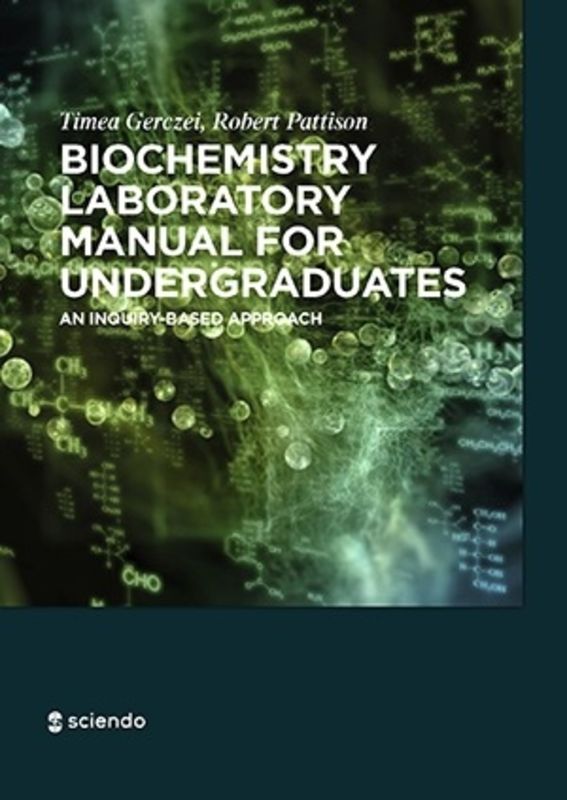
Biochemistry Laboratory Manual For Undergraduates
Biochemistry laboratory manual for undergraduates – an inquiry based approach by Gerczei and Pattison is the first textbook on the market that uses a highly relevant model, antibiotic resistance, to teach seminal topics of biochemistry and molecular biology while incorporating the blossoming field of bioinformatics. The novelty of this manual is the incorporation of a student-driven real real-life research project into the undergraduate curriculum. Since students test their own mutant design, even the most experienced students remain engaged with the process, while the less experienced ones get their first taste of biochemistry research. Inclusion of a research project does not entail a limitation: this manual includes all classic biochemistry techniques such as HPLC or enzyme kinetics and is complete with numerous problem sets relating to each topic.
eBook
Practical pharmacology for the pharmaceutical sciences
Practical Pharmacology for the Pharmaceutical Sciences is a lab survival guide for those studying Pharmacology, providing hands-on advice on developing pharmacology laboratory and data handling skills. Suitable for both undergraduates and postgraduates, it focuses on laboratory techniques rather than computer-simulated data. It also guides the reader through the process of communicating experimental results in a variety of formats, including posters, oral presentations and project reports. Split into three main areas, the following topics are covered in detail: Preparation for Experimental Pharmacology * Legal aspects * Fundamentals of Pharmacology * Definitions, calculations and statistics Experiments in Pharmacology * Microtitre-based techniques using isolated cells * In vitro techniques using isolated tissues and organs * Biochemical techniques using cell-free systems Communicating experimental results * Data presentation * How to write scientific reports * Pharmacological literature Supported with numerous questions throughout the text, as well as step by step instructions for practical experiments, this book presents an approach to learning pharmacology through an appreciation of authentic experimental data.
eBook
Environmental laboratory exercises for instrumental analysis and environmental chemistry
A comprehensive set of real-world environmental laboratory experiments This complete summary of laboratory work presents a richly detailed set of classroom-tested experiments along with background information, safety and hazard notes, a list of chemicals and solutions needed, data collection sheets, and blank pages for compiling results and findings. This useful resource also: * Focuses on environmental, i.e., \"dirty\" samples * Stresses critical concepts like analysis techniques and documentation * Includes water, air, and sediment experiments * Includes an interactive software package for pollutant fate and transport modeling exercises * Functions as a student portfolio of documentation abilities * Offers instructors actual samples of student work for troubleshooting, notes on each procedure, and procedures for solutions preparation.
eBook
Domino and Intramolecular Rearrangement Reactions as Advanced Synthetic Methods in Glycoscience
The book consists of a brief introduction, a foreward provided by professor Danishefsky of Columbia University, and about 14 - 16 chapters, each written by one or two eminent scholars/authors describing their recent research in the area of either domino reactions or intramolecular rearrangements in carbohydrate chemistry. Three or four chapters will be reviews. The domino (cascade, tandem) reactions are always intramolecular. They are usually very fast, clean and offer highly complex structures in a one pot process. Intramolecular rearrangements offer very similar advantages and often lead to highly complex products as well. Although many recently isolated carbohydrates fulfill various sophisticated functions, their structures are often very complex. The editors cover the broadest scope of novel methodologies possible. All the synthetic and application aspects of domino/cascade reactions are explored in this book. A second theme that will be covered is intramolecular rearrangement, which is also fast, stereoselective, and often constitutes one or more steps of domino / cascade process. Selected examples of intramolecular rearrangements are presented. Together, both processes offer an elegant and convenient approach to the synthesis of many complex molecules, which are normally difficult to synthesize via alternative routes. It appears that domino and intramolecular rearrangements are ideally suited to synthesize certain specific modified monosaccharides. What is particularly important is that both processes are intermolecular and almost always yield products with very well-defined stereochemistry. This high definition is absolutely crucial when synthesizing advanced, modified mono and oligosaccharides. The choice of contributors reflects an emphasis on both therapeutic and pharmacological aspects of carbohydrate chemistry.
eBook
