
Catalogue Search | MBRL


Are you sure you want to remove the book from the shelf?

{{itemTitle}}
2,406
result(s) for
"Chess players."
Sort by:


Cultural history of chess-players
This inquiry concerns the cultural history of the chess-player. It takes as its premise the idea that the chess-player has become a fragmented collection of images, underpinned by challenges to, and confirmations of, chess’s status as an intellectually-superior and socially-useful game, particularly since the medieval periodThis inquiry concerns the cultural history of the chess-player. It takes as its premise the idea that the chess-player has become a fragmented collection of images, underpinned by challenges to, and confirmations of, chess’s status as an intellectually-superior and socially-useful game, particularly since the medieval period
eBook

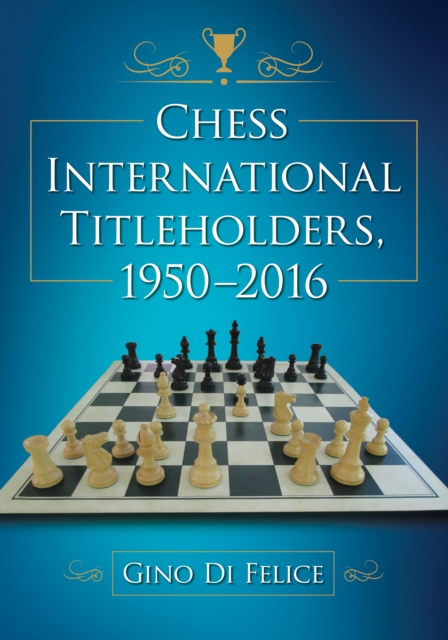
Chess International Titleholders, 1950-2016
The International Chess Federation or FIDE (from the French Federation Internationale des Echecs) was founded in Paris in 1924 but only from 1950 began to award international titles.This book lists more than 18,000 players who received titles from 1950 through 2016.
eBook

Positional decision making in chess
Positional Decision Making in Chess offers a rare look into the mind of a top grandmaster. In his efforts to explain his way of thinking, Boris Gelfand focuses on such topics as the squeeze, space advantage, the transformation of pawn structures and the transformation of advantages. Based on examples from his own games and those of his hero, Akiba Rubinstein, Gelfand explains how he thinks during the game. Grandmaster Boris Gelfand won the European Junior Championship in 1987 and reached No. 3 in the World in 1990. He has led the Israeli team to numerous medals at both European and Olympiad level. Gelfand won the 2009 World Cup and has participated in six Candidates cycles, winning it in 2011. He lost the 2012 World Championship match in the play-off. At 46 he is still winning tournaments ahead of the best players in the world, in many cases men half his own age. Grandmaster Jacob Aagaard is the only chess author to have won all the major awards for chess writing.
Book
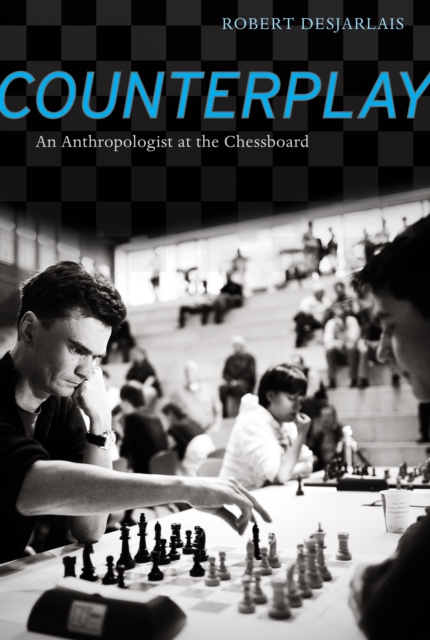
Counterplay
\"Chess gets a hold of some people, like a virus or a drug,\" writes Robert Desjarlais in this absorbing book. Drawing on his lifelong fascination with the game, Desjarlais guides readers into the world of twenty-first-century chess to help us understand its unique pleasures and challenges, and to advance a new \"anthropology of passion.\" Immersing us directly in chess's intricate culture, he interweaves small dramas, closely observed details, illuminating insights, colorful anecdotes, and unforgettable biographical sketches to elucidate the game and to reveal what goes on in the minds of experienced players when they face off over the board. Counterplay offers a compelling take on the intrigues of chess and shows how themes of play, beauty, competition, addiction, fanciful cognition, and intersubjective engagement shape the lives of those who take up this most captivating of games.
eBook


Planning, Cognitive Reflection, Inter-Temporal Choice, and Risky Choice in Chess Players: An Expertise Approach
This study investigates the cognitive processes underlying chess expertise by examining planning, cognitive reflection, inter-temporal choice, and risky choice in chess players. The study involves 25 chess players and 25 non-chess players, comparing their performance on the Tower of London (TOL) task, Cognitive Reflection Test (CRT), inter-temporal choice (ITC), and risky choice tasks. Results indicate that chess players outperform non-chess players in TOL and CRT, showing superior planning and cognitive reflection abilities. Chess players also prefer future rewards over immediate ones in ITC, suggesting a higher propensity for future more rewarding options. In risky choice tasks, chess players made more decisions based on expected value than non-chess players, but the evidence in favour of differences between groups is very weak. Despite this study not being able to establish causality, the findings highlight the cognitive advantages associated with chess expertise and suggest potential areas for further research on the transfer of cognitive skills from chess to other domains and differences in general abilities between experts and novices.
Journal Article