
Catalogue Search | MBRL


Are you sure you want to remove the book from the shelf?

{{itemTitle}}
9
result(s) for
"Chicago (Ill.) Race relations Political aspects."
Sort by:


Latino Crossings
First published in 2003. Routledge is an imprint of Taylor & Francis, an informa company.
Nicholas P. De Genova is Assistant Professor in the Department of Anthropology and the Program in Latino Studies at Columbia University.
Ana Yolanda Ramos-Zayas is Assistant Professor in the Departments of Anthropology and Hispanic Caribbean Studies at Rutgers University.
eBook

Queer Clout
In postwar America, the path to political power for gays and lesbians led through city hall. By the late 1980s, politicians and elected officials, who had originally sought political advantage from raiding gay bars and carting their patrons off to jail, were pursuing gays and lesbians aggressively as a voting bloc-not least by campaigning in those same bars. Gays had acquired power and influence. They had clout.
Tracing the gay movement's trajectory since the 1950s from the closet to the corridors of power,Queer Cloutis the first book to weave together activism and electoral politics, shifting the story from the coastal gay meccas to the nation's great inland metropolis. Timothy Stewart-Winter challenges the traditional division between the homophile and gay liberation movements, and stresses gay people's and African Americans' shared focus on police harassment. He highlights the crucial role of black civil rights activists and political leaders in offering white gays and lesbians not only a model for protest but also an opening to join an emerging liberal coalition in city hall. The book draws on diverse oral histories and archival records spanning half a century, including those of undercover vice and police red squad investigators, previously unexamined interviews by midcentury social scientists studying gay life, and newly available papers of activists, politicians, and city agencies.
As the first history of gay politics in the post-Stonewall era grounded in archival research,Queer Cloutsheds new light on the politics of race, religion, and the AIDS crisis, and it shows how big-city politics paved the way for the gay movement's unprecedented successes under the nation's first African American president.
eBook

Jim Crow Nostalgia
In the Jim Crow era Chicago’s Bronzeville neighborhood on the city’s South Side was a major center of African American cultural vitality. Michelle R. Boyd examines how black revitalization leaders reinvented the neighborhood’s history in ways that, amazingly, sanitized the brutal elements of life under Jim Crow and develops a new way to understand the political significance of race today.
eBook

Lake Michigan
From the author ofThe Performance of Becoming Human, winner of the National Book Award for poetryLake Michigan, a series of 19 lyric poems, imagines a prison camp located on the beaches of a Chicago that is privatized, racially segregated, and overrun by a brutal police force. Thinking about the ways in which economic policy, racism, and militarized policing combine to shape the city,Lake Michigan's poems continue exploring the themes from Borzutzky'sPerformance of Becoming Human, winner of the National Book Award for Poetry. But while the influences in this book (Césaire, Vallejo, Neruda) are international, the focus here is local as the book takes a hard look at neoliberal urbanism in the historic city of Chicago.
eBook

The Preacher and the Politician
Barack Obama's inauguration as the first African American president of the United States has caused many commentators to conclude that America has entered a postracial age.The Preacher and the Politicianargues otherwise, reminding us that, far from inevitable, Obama's nomination was nearly derailed by his relationship with Jeremiah Wright, the outspoken former pastor of Trinity United Church of Christ on the South Side of Chicago. The media storm surrounding Wright's sermons, the historians Clarence E. Walker and Gregory D. Smithers suggest, reveals that America's fraught racial past is very much with us, only slightly less obvious.
With meticulous research and insightful analysis, Walker and Smithers take us back to the Democratic primary season of 2008, viewing the controversy surrounding Wright in the context of enduring religious, political, and racial dynamics in American history. In the process they expose how the persistence of institutional racism, and racial stereotypes, became a significant hurdle for Obama in his quest for the presidency.
The authors situate Wright's preaching in African American religious traditions dating back to the eighteenth century, but they also place his sermons in a broader prophetic strain of Protestantism that transcends racial categories. This latter connection was consistently missed or ignored by pundits on the right and the left who sought to paint the story in simplistic, and racially defined, terms. Obama's connection with Wright gave rise to criticism that, according to Walker and Smithers, sits squarely in the American political tradition, where certain words are meant to incite racial fear, in the case of Obama with charges that the candidate was unpatriotic, a Marxist, a Black Nationalist, or a Muslim.
Once Obama became the Democratic nominee, the day of his election still saw ballot measures rejecting affirmative action and undermining the civil rights of other groups. The Preacher and the Politician is a concise and timely study that reminds us of the need to continue to confront the legacy of racism even as we celebrate advances in racial equality and opportunity.
eBook

Advancing the civil rights movement
Advancing the Civil Rights Movement: Race and Geography of Life Magazine's Visual Representation, 1954–1965 examines the way Life Magazine covered the civil rights movement visually and geographically. Michael Dibari addresses Life's visual impact and representation in the struggle for equal rights.
eBook
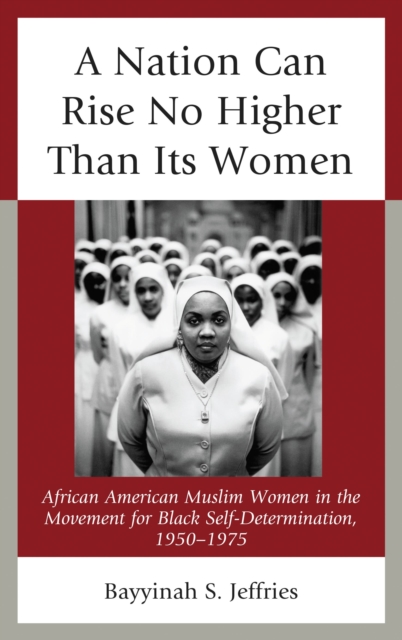
A nation can rise no higher than its women
A Nation Can Rise No Higher Than Its Women: African American Muslim Women in the Movement for Black Self Determination, 1950–1975 challenges traditional notions and interpretations of African American, particularly women who joined the Original Nation of Islam during the Civil Rights-Black Power era. This book is the first major investigation of the subject that engages a wide scope of women from \"The Nation\" and utilizes a wealth of primary documents and personal interviews to reveal the importance of women in this community. Jeffries reveals that women were respected in the movement and maintained a very clear and often sought after voice in the advancement of the Original Nation of Islam. A Nation Can Rise No Higher Than Its Women replaces the typical portrait of the subservient and irrelevant African American Muslim woman with a far more accurate picture of their integral leadership and substantial contributions to the rise of Islam and black consciousness in the self-determination movement in the United States and beyond during the Civil Rights-Black Power era.
eBook
