
Catalogue Search | MBRL


Are you sure you want to remove the book from the shelf?

{{itemTitle}}
5,431,017
result(s) for
"Child "
Sort by:


Does Money Matter? The Effects of Cash Transfers on Child Development in Rural Ecuador
A large body of research indicates that child development is sensitive to early‐life environments, so that poor children are at higher risk for poor cognitive and behavioral outcomes. These developmental outcomes are important determinants of success in adulthood. Yet, remarkably little is known about whether poverty‐alleviation programs improve children’s developmental outcomes. We examine how a government‐run cash transfer program for poor mothers in rural Ecuador influenced the development of young children. Random assignment at the parish level is used to identify program effects. Our data include a set of measures of cognitive ability that are not typically included in experimental or quasi‐experimental studies of the impact of cash transfers on child well‐being, as well as a set of physical health measures that may be related to developmental outcomes. The cash transfer program had positive, although modest, effects on the physical, cognitive, and socioemotional development of the poorest children in our sample.
Journal Article

NurtureShock : new thinking about children
Award-winning science journalists Po Bronson and Ashley Merryman demonstrate that many of modern society's strategies for nurturing children are in fact backfiring--because key twists in the science of child development have been overlooked. The authors discuss the inverse power of praise, why insufficient sleep adversely affects kids' capacity to learn, why white parents don't talk about race, why kids lie, why evaluation methods for \"giftedness\" and accompanying programs don't work, and why siblings really fight.
Book

Science in the Service of Children, 1893-1935
This book is the first comprehensive history of the development of child study during the early part of the twentieth century. Most nineteenth-century scientists deemed children unsuitable subjects for study, and parents were hostile to the idea. But by 1935, the study of the child was a thriving scientific and professional field. Here, Alice Boardman Smuts shows how interrelated movements-social and scientific-combined to transform the study of the child.
Drawing on nationwide archives and extensive interviews with child study pioneers, Smuts recounts the role of social reformers, philanthropists, and progressive scientists who established new institutions with new ways of studying children. Part history of science and part social history, this book describes a fascinating era when the normal child was studied for the first time, a child guidance movement emerged, and the newly created federal Children's Bureau conducted pathbreaking sociological studies of children.
eBook

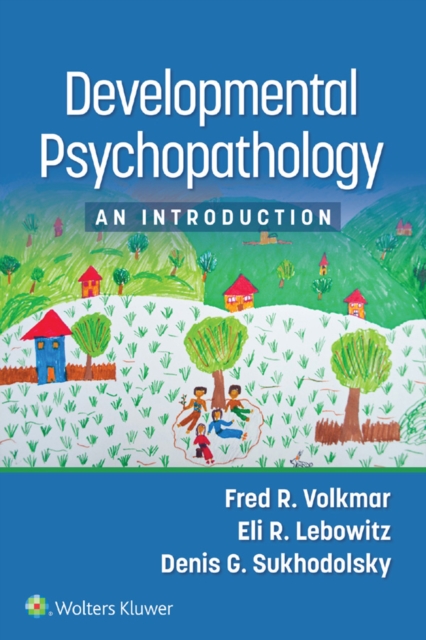
Developmental psychopathology: an introduction
Specifically designed for readability and utilizing a concise format, Developmental Psychopathology: An Introduction offers an authoritative, approachable overview of mental developmental disorders and problems faced by children and adolescents. Noted researcher and author Dr. Fred R. Volkmar leads a team of experts from the Child Study Center at Yale University School of Medicine in presenting essential, introductory information ideal for fellows and physicians in child and adolescent psychiatry, as well as psychiatry residents and other health care professionals working in this complex field.
eBook

The five principles of parenting : your essential guide to raising good humans
100 years of developmental psychology established what really matters in parenting. Contemporary neuroscience shows that we can retrain our reactions to situations. Now, Dr. Aliza Pressman, cofounding director of the Mount Sinai Parenting Center and host of the hit podcast Rasing Good Humans, has written the book on how to combine those fields and start cutting yourself some slack as a parent. This parenting book is for parents who are tired of extreme advice and the pressure to be perfect and want a playbook for raising independent, motivated, and well-adjusted kids. 'The Five Principles of Parenting' teaches you how to let the little stuff go, identify when to worry, and focus on the skills that actually impact raising kids who are responsible, motivated, healthy, and connected.
Book

Enhancing Attachment Organization Among Maltreated Children: Results of a Randomized Clinical Trial
Young children who have experienced early adversity are at risk for developing disorganized attachments. The efficacy of Attachment and Biobehavioral Catch-up (ABC), an intervention targeting nurturing care among parents identified as being at risk for neglecting their young children, was evaluated through a randomized clinical trial. Attachment quality was assessed in the Strange Situation for 120 children between 11.7 and 31.9 months of age (M = 19.1, SD = 5.5). Children in the ABC intervention showed significantly lower rates of disorganized attachment (32%) and higher rates of secure attachment (52%) relative to the control intervention (57% and 33%, respectively). These results support the efficacy of the ABC intervention in enhancing attachment quality among parents at high risk for maltreatment.
Journal Article

Dialogues with children and adolescents : a psychoanalytic guide
Psychoanalytic work with children is popular, but the sophisticated language used in psychoanalytic discourse can be at odds with how children communicate, and how best to communicate with them. This title shows how these aims can be achieved for the most effective clinical outcome with children from infancy up to late adolescence.
Book

Immigrants raising citizens
An in-depth look at the challenges undocumented immigrants face as they raise children in the U.S. There are now nearly four million children born in the United States who have undocumented immigrant parents. In the current debates around immigration reform, policymakers often view immigrants as an economic or labor market problem to be solved, but the issue has a very real human dimension. Immigrant parents without legal status are raising their citizen children under stressful work and financial conditions, with the constant threat of discovery and deportation that may narrow social contacts and limit participation in public programs that might benefit their children. Immigrants Raising Citizens offers a compelling description of the everyday experiences of these parents, their very young children, and the consequences these experiences have on their children’s development. Immigrants Raising Citizens challenges conventional wisdom about undocumented immigrants, viewing them not as lawbreakers or victims, but as the parents of citizens whose adult productivity will be essential to the nation’s future. The book’s findings are based on data from a three-year study of 380 infants from Dominican, Mexican, Chinese, and African American families, which included in-depth interviews, in-home child assessments, and parent surveys. The book shows that undocumented parents share three sets of experiences that distinguish them from legal-status parents and may adversely influence their children’s development: avoidance of programs and authorities, isolated social networks, and poor work conditions. Fearing deportation, undocumented parents often avoid accessing valuable resources that could help their children’s development — such as access to public programs and agencies providing child care and food subsidies. At the same time, many of these parents are forced to interact with illegal entities such as smugglers or loan sharks out of financial necessity. Undocumented immigrants also tend to have fewer reliable social ties to assist with child care or share information on child-rearing. Compared to legal-status parents, undocumented parents experience significantly more exploitive work conditions, including long hours, inadequate pay and raises, few job benefits, and limited autonomy in job duties. These conditions can result in ongoing parental stress, economic hardship, and avoidance of center-based child care — which is directly correlated with early skill development in children. The result is poorly developed cognitive skills, recognizable in children as young as two years old, which can negatively impact their future school performance and, eventually, their job prospects. Immigrants Raising Citizens has important implications for immigration policy, labor law enforcement, and the structure of community services for immigrant families. In addition to low income and educational levels, undocumented parents experience hardships due to their status that have potentially lifelong consequences for their children. With nothing less than the future contributions of these children at stake, the book presents a rigorous and sobering argument that the price for ignoring this reality may be too high to pay. HIROKAZU YOSHIKAWA is professor of education in Harvard University’s Graduate School of Education.
eBook