
Catalogue Search | MBRL


Are you sure you want to remove the book from the shelf?

{{itemTitle}}
67
result(s) for
"Child development Popular works."
Sort by:


Wild Child
How can you help the ADD child in your life?
Attention deficit disorder (ADD) is one of the most discussed yet least understood childhood disorders today. Here is a book that delivers the answers people are looking for!
Wild Child explains the symptoms, thinking patterns, and behavior of children and adolescents with ADD in terms that are understandable by parents and grandparents, yet relevant to the professionals who deal with these children. It outlines specific strategies that you can use to cope with the vast array of behavior, hyperactivity, and inattention problems experienced by children with ADD.
The concepts outlined in Wild Child will show you how to bond more closely with children who tend to alienate them, and help children feel better about themselves, aiding them in their quest to master their specific challenges. Because this book is written from the inside, explaining what the symptoms feel like from the perspective of someone with ADD as well as from the perspective of someone with an ADD child, readers will easily identify with the author.
This valuable book will help you and the ADD child in your life by helping you to:
build your personal confidence in dealing with ADD children and teens through knowledge and understanding
deal with specific problems in your family or patients
build esteem and sound emotional infrastructures in ADD children and empower them to take control of their lives
Wild Child features:
tables and motivational charts that illustrate how to work with an ADD child
checklists that adults can use if the suggested interventions fail with a particular child
ADD is truly a hidden disability, and the children suffering with it are usually labeled wild, crazy, or stupid. This, of course, leads to low self-esteem and underachievement, but Wild Child stresses that new learning can and does take place when proper motivators are applied. This book provides conc
eBook

Happy & healthy : a wellness journal of baby's first year
\"A guide for parents to the first year of doctor's visits, illnesses, and vaccinations The first year with a baby is chock full of wellness visits. What can parents expect at each one? What will the pediatrician be looking for during examinations? What should parents ask? What information should they share about their baby's feeding schedule, sleep habits, and so on? Dr. Pete demystifies these well visits and prepares parents for each one by covering the major growth & development milestones, examination details, typical vaccinations, and issues that may crop up at different ages and stages. Happy and Healthy also includes information about common newborn infections and viruses, the signs and symptoms of minor versus major illnesses, what to expect during a visit to the emergency room-including common tests and procedures-and how to prepare for a hospital stay. Each well visit chapter includes a write-in space for parents to record changes in their baby's height and weight, as well as notes from the visit. The logs at the end of the book enable parents to keep a handy record of such information as immunizations, test records, allergies and sensitivities, major illnesses, and important contact information\"-- Provided by publisher.
Book

When babies read : a practical guide to help young children with hyperlexia, asperger syndrome and high-functioning autism
Audra Jensen' son began reading when he was only two years old. She shares her experiences - both the challenges and joys - of raising a child with autism and hyperlexia - an early and obsessive interest in the written word associated with social deficits and significant difficulty in understanding verbal language.The author stresses the importance of diagnosis of the condition for successful implementation of effective teaching strategies and encouragement of more typical childhood development. As well as useful advice, this guide provides a comprehensive reading curriculum specially designed for young, challenged children to help promote their reading ability.With practical suggestions on how to modify teaching and therapy programmes to suit a child's individual learning style, this practical guide will prove invaluable for parents of children with autism and hyperlexia.
eBook

Exploring lesbian adolescence: an analysis of Abha Dawesar’s Babyji
Purpose
The purpose of this study is to examine the advancement of cultural transformation over time demands certain alterations in human perceptions. It also aims to examine the 21st century’s many radical changes in India, the constant legal battles to decriminalize homosexuality, and challenges to the rigid dichotomy between heterosexuality and homosexuality. Besides, it influences popular culture among the masses, which has turned out to create a more visible space for the lesbian community. In India, lesbian literature begins synchronously under the shades of women’s writing and feminism that wires new hopes for their identity.
Design/methodology/approach
This paper examines a primary text as Indian writer Abha Dawesar’s Babyji (2005). There comes the iconic work of Abha Dawesar’s Babyji (2005), which creates a turning point by introducing the life, inner conflict and turbulence of a teenage girl. In addition, a textual analysis of this novel brings forth an analysis of attributes such as sexuality, gender and the interplay of caste and class that meld lesbian childhood and adolescence. This paper also examines how a lesbian girl adapts to and negotiates her maturation amidst vivid social scenarios and cultural conditioning.
Findings
A few studies (Hidalgo, et al., 2013; Bem, 1989; Pyne, 2016) show many children have reached or crossed their teenage life without accurate or affirmative knowledge of sexuality and gender. Parents, teachers and even other intellectuals of the adult world fail to transfer their knowledge effectively to children. Definitely, the relevance of sex education is paramount, but more important is what implementation tactics should be used for the same cause. The point is that sex education should not be condensed into a certain gender or perpetuate parochial discrimination. It needs to adapt an age-appropriate curriculum for the cognitive and emotional development of the individuals. Considering these factors, understanding comprehensive sex education is what is most likely to find sustainable remedies for this matter. Gerald writes about a socialization process and gays and lesbians hiding their identity from family and society; a fear of rejection; there is a social gap in peer and family spheres. These fears prevent lesbian or gay young persons from fully developing their identities (1999). Rao and Mason tested a model derived from minority stress theory in which the perceived impact of Section 377 increases depressive symptoms of sexual minorities by increasing concealment stress, leading to a diminished sense of belonging. Because of their minority status, they are more vulnerable to and have a higher prevalence of mental illness than heterosexual individuals (2018).
Originality/value
Babyji has created a discourse to perpetuate normativity and gives importance to the mental health of the excluded lesbian group. It opens a door to studying teenage groups’ issues and their challenges to understanding social and mental issues regarding their identity. A study on this untouched area is required to highlight their issues and mental health problems. This research is an initiative step to create and provide a platform to raise awareness in society.
Journal Article

Exploring cultural imaginaries of robots with children with brittle bone disease: a participatory design study
A symbiotic relationship exists between narrative imaginaries of and real-life advancements in technology. Such cultural imaginings have a powerful influence on our understanding of the potential that technology has to affect our lives; as a result, narrative-based approaches to participatory design (PD) of technology are an active area of investigation.In this ongoing study, the following research questions are addressed: how can PD be optimised for the fields of robotics and assistive technology, particularly with regard to fostering empowerment and eliciting how people imagine the role of technology in their own futures? How can the symbiotic relationship between (popular) cultural imaginaries and real-life technological advancements be acknowledged within the PD process?The study synthesises fictional inquiry and science fiction prototyping methodologies and processes over multiple workshops. Its aim is to explore and develop conceptions of robotics and assistive technology of children with osteogenesis imperfecta (OI, commonly known as brittle bone disease) and their families, as these populations are under-represented in collaborative research and stand to benefit from future robotics development. Narrative-based approaches are complemented by participants’ direct interaction with contemporary robots during each workshop and a ‘robot home visit’ to unite experiential understandings of robots and their current capabilities with possible futures, as well as foster mutual learning between stakeholders and designers. The study deploys a mixed methods research design with a critical posthumanist theoretical lens.This inclusive co-designed methodology should establish a rich, nuanced picture of how people currently imagine robots in their future and facilitate all involved to deepen these conceptions. It is anticipated that everyone taking part will empower themselves to imagine fully the range of possibilities in their own personal futures in our increasingly technologised world.
Journal Article
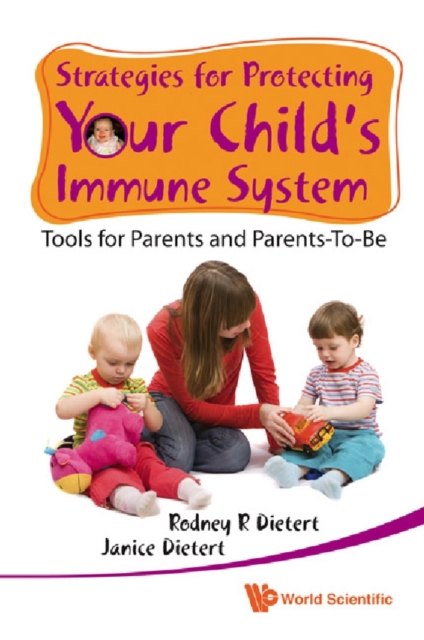
Strategies for protecting your child's immune system
Strategies for Protecting Your Child's Immune System is the first book to focus on prevention of environmental damage to the immune system of embryos, babies and older children. It provides expecting and existing parents, their families and physicians with science-based information to protect and proactively manage their child's immune system. Environmental exposures (pollutants, allergens, drugs, diet, physical factors) in the home, school and community can damage the developing immune system and increase the risk of lifelong chronic diseases such as allergies, asthma, type 1 diabetes, celiac disease and neurological problems. This book imparts specific tools to parents and their physicians to help keep the early-life immune system out of harm's way and minimize environmental health risk.
eBook

Socialist Fun
Most narratives depict Soviet Cold War cultural activities and youth groups as drab and dreary, militant and politicized. In this study Gleb Tsipursky challenges these stereotypes in a revealing portrayal of Soviet youth and state-sponsored popular culture.The primary local venues for Soviet culture were the tens of thousands ofklubswhere young people found entertainment, leisure, social life, and romance. Here sports, dance, film, theater, music, lectures, and political meetings became vehicles to disseminate a socialist version of modernity. The Soviet way of life was dutifully presented and perceived as the most progressive and advanced, in an attempt to stave off Western influences. In effect, socialist fun became very serious business. As Tsipursky shows, however, Western culture did infiltrate these activities, particularly at local levels, where participants and organizers deceptively cloaked their offerings to appeal to their own audiences. Thus, Soviet modernity evolved as a complex and multivalent ideological device.Tsipursky provides a fresh and original examination of the Kremlin's paramount effort to shape young lives, consumption, popular culture, and to build an emotional community-all against the backdrop of Cold War struggles to win hearts and minds both at home and abroad.
eBook
An a-Z of Genetic Factors in Autism
The book covers the main genetic disorders associated with autism, including those linked to growth differences, neurodevelopmental problems, gastrointestinal disturbances epilepsy and many others. It alphabetically lists the conditions next to information about how common they are, causes, signs, symptoms, and methods of treatment and management.
eBook
Grandparents of Children with Disabilities
This briefs offers a comprehensive view of the journey of grandparents of children with disabilities by employing a wide range of theoretical approaches such as intergenerational relationships, positive psychology, psychoanalytic views and models of stress.
eBook