
Catalogue Search | MBRL


Are you sure you want to remove the book from the shelf?

{{itemTitle}}
2,499
result(s) for
"Child maltreatment"
Sort by:

Association of child maltreatment subtypes and long-term physical health in a German representative sample
Background: Child maltreatment is a major public problem, associated with enormous consequences on the individual and socioeconomic level. Studies show a clear impact of child maltreatment on long-term physical health. However, there is a lack of analyses comprising a wide variety of subtypes of maltreatment and addressing cumulative effects of different maltreatment subtypes experienced during childhood on physical health. Objective: The objective of this analysis was to assess the association of different subtypes and the intensity of child maltreatment with long-term physical health outcomes. Methods: In a cross-sectional observational approach, a representative sample of the German population (N=2510) was assessed regarding socioeconomic information, their current health status, and their experiences of child maltreatment using the Childhood Trauma Questionnaire (CTQ). Chi2-Tests were performed to compare differences of physical health conditions in adulthood in association with child maltreatment and binary regression analyses to assess the relationship of physical health and number of different subtypes of maltreatment experienced during childhood. Results: Odds increased significantly for obesity (1.8), diabetes (1.26), cancer (1.28), hypertension (1.16), chronic obstructive pulmonary disease (1.51), history of myocardial infarction (1.29) and stroke (1.31) with increasing number of experienced subtypes of child maltreatment. Growing intensity of each subtype of maltreatment was associated with higher rates of all assessed physical health conditions, which could point towards a dose-dependency of the relationship between maltreatment and long-term physical health. Conclusions: Child maltreatment is associated with increased odds for the leading morbidity and mortality causes in Germany. Interventions encompassing secondary and primary preventive strategies are critical to target this major public health problem and its devastating consequences. (ZPID).
Journal Article

Economic Burden of Known Cases of Child Maltreatment from 2018 in Each State
Child abuse and neglect are a major public health problem with significant effects for individual victims and for society. Previous research has estimated the economic burden of child maltreatment at a national level but has not provided social work advocates with state-level estimates or provided information regarding the correct interpretation of these estimates. Using data from the National Child Abuse and Neglect Data System (NCANDS) from 2018 and per victim estimates of the economic burden of fatal and non-fatal cases of child maltreatment, this study calculates state-level estimates of the economic burden of known cases of child maltreatment from the year 2018. Rationale for estimating the economic burden of investigated versus substantiated cases is discussed, as is interpretation of study findings. The findings of this study provide social work and other advocates with state-level estimates of the economic burden of child maltreatment and facilitate the interpretation of the findings to be used in advocacy efforts. Limitations of NCANDS data and economic burden estimation are discussed.
Journal Article

Understanding System Change in Child Protection and Welfare
This book provides an account of the experience of a multifaceted system change programme to strengthen the capacity of Ireland's statutory child protection and welfare agency in the areas of prevention, early intervention and family support.
Many jurisdictions globally are involved in system change processes focused on increasing investment in services that seek to prevent children's entry into child protection and welfare systems, through early intervention, greater support to families and an increased emphasis on rights and participation. Based on a four-year in-depth study by a team of university-based researchers, this text adds to the emerging knowledge base on developing, implementing and evaluating system change in child protection and welfare. Study methodological approaches were wide-ranging and involved a number of key stakeholders, including children, parents, social workers and social care workers, service managers, agency leaders and policymakers. Since the change process involved an agency-university partnership encompassing design, technical support and evaluation, the book also contributes to understanding of the potential and limits of such partnerships in the child protection and welfare field. Uniquely, the book gives voice to the experience of both agency personnel and academic researchers in the accounts provided.
It will be of interest to all scholars, students and practitioners in the areas of child protection and welfare.
eBook

Caregivers’ Perceptions and Attitudes Toward Child Maltreatment: a Pilot Case Study in Tel Aviv, Israel, and Cleveland, USA
The purpose of this pilot cross-national study was to uncover similarities and differences in three areas that might affect the development of community-based programs targeting child maltreatment: behaviors considered to be maltreatment, perceived contributors to maltreatment, and whether the government or neighbors can do anything about maltreatment. Data were obtained from two neighborhood-based, cross-sectional surveys of adult caregivers of minors: one in Cleveland, USA, the other in Tel Aviv, Israel. The sample consisted of a total of 120 caregivers, in each city 20 residing in a low-SES neighborhood, 20 in a medium-SES neighborhood, and 20 in an elevated-SES neighborhood. Participants were asked (a) to provide three examples of behaviors they considered to be child abuse, (b) to rate the degree to which each of 13 factors contribute to child maltreatment, and (c) to rate the degree to which they agreed with a range of attitudes about maltreatment. The same coding scheme was used in both sites. Logistic regression analyses assessed city differences in dichotomous outcomes, while linear regression analyses assessed city differences in ratings of continuous outcomes. Analyses adjusted for individual and neighborhood characteristics, and accounted for residential clustering in neighborhoods. Primary results indicated that residence in Tel Aviv was associated with greater odds of citing emotional/psychological abuse compared to Cleveland residents. Also compared to Cleveland residents, Tel Aviv residents (a) viewed family structure, family values, religion, child-raising knowledge, and personal history of maltreatment as contributing less to maltreatment, (b) were less likely to agree that anyone could abuse a child or that spanking is necessary, and (c) had substantially greater odds of endorsing the government’s ability to address child maltreatment. Concerning study implications, this investigation demonstrated the importance of context in shaping constructions of child maltreatment and the need for caution in replicating interventions without due consideration of potential differences in context, policy, and public opinion.
Journal Article

The Efficacy of a Resilience-Enhancement Program for Mothers Based on Emotion Regulation: A Randomized Controlled Trial in Japan
This study evaluated the efficacy of a brief (four 2-h sessions) group-based resilience-enhancement program focused on emotion regulation in Japan. Mothers (n = 123) of children aged 3–6 years were recruited in two prefectures and allocated with stratified randomization by the prefecture to either a bi-weekly intervention or treatment as usual. Mothers self-reported online at pre/post-intervention and at 2-month follow-up. Analysis of covariance was used to compare groups. At post-intervention and 2-month follow-up, the intervention group mothers showed significant improvements compared to the control group in resilience (p < 0.001/p = 0.001), self-esteem (p = 0.008/p = 0.001), anger control toward the child (p < 0.001/p = 0.012), and positive attribution toward the child’s misbehavior (p < 0.001/p = 0.003). The partners of mothers in both groups answered the same questionnaire at the same timepoints without participating in either program; no differences between groups were found. This study was the first randomized controlled trial investigating how a resilience-enhancement program improves maternal resilience, emotion regulation, and cognition toward children and themselves. This preliminary study provides evidence that improving resilience may reduce the risk of child maltreatment. Further research regarding implementing this intervention in the community is warranted.
Journal Article

Preventing child maltreatment in the U.S
This book is part of a concentrated series of books that examines child maltreatment across minoritized, cultural groups.Specifically, this volume addresses American Indian and Alaska Native populations. However, in an effort to contextualize the experiences of 574 federally recognized tribes and 50+ state recognized tribes, as well as villages, the authors focus on populations within rural and remote regions and discuss the experiences of some tribal communities throughout US history. It should be noted that established research has primarily drawn attention to the pervasive problems impacting Indigenous individuals, families, and communities. Aligned with an attempt to adhere to a decolonizing praxis, the authors share information in a strength-based framework for the Indigenous communities discussed within the text. The authors review federally funded programs (prevention, intervention, and treatment) that have been adapted for tribal communities (e.g., Safecare) and include cultural teachings that address child maltreatment. The intention of this book is to inform researchers, practitioners, policy makers, and advocates about the current state of child maltreatment from an Indigenous perspective.
eBook

Understanding the association between self-reported poor oral health and exposure to adverse childhood experiences: a retrospective study
Background
Adverse childhood experiences, including physical, sexual or emotional abuse, can have detrimental impacts on child and adult health. However, little research has explored the impact that such early life experiences have on oral health. This study examines whether experiencing adverse childhood experiences before the age of 18 years is associated with self-reported poor dental health in later life.
Methods
Using stratified random probability sampling, a household survey (
N
= 5307; age range 18–69 years) was conducted in the South of England (Hertfordshire, Luton and Northamptonshire). Data were collected at participants’ homes using face-to-face interviews. Measures included exposure to nine adverse childhood experiences, and two dental outcomes: tooth loss (> 8 teeth lost due to dental caries or damage) and missing or filled teeth (direct or indirect restorations; > 12 missing or filled teeth).
Results
Strong associations were found between exposure to childhood adversity and poor dental health. The prevalence of tooth loss was significantly higher (8.3%) in those with 4+ adverse childhood experiences compared to those who had experienced none (5.0%;
p
< 0.05). A similar relationship was found for levels of missing or filled teeth (13.4%, 4+ adverse childhood experiences; 8.1%, none;
p
< 0.001). Exposure to 4+ adverse childhood experiences was associated with a higher level of tooth loss and restorations at any age, compared to individuals who had not experienced adversity. Demographically adjusted means for tooth loss increased with adverse childhood experience count in all age groups, rising from 1.0% (18–29 years) and 13.0% (60–69 years) in those with none, to 3.0% and 26.0%, respectively in those reporting 4+.
Conclusions
Exposure to childhood adversity could be an important predictive factor for poor dental health. As oral health is an important part of a child’s overall health status, approaches that seek to improve dental health across the life-course should start with safe and nurturing childhoods free from abuse and neglect. Given the growing role that dental professionals have in identifying violence and abuse, it seems appropriate to raise awareness in the field of dentistry of the potential for individuals to have suffered adverse childhood experiences, and the mechanisms linking childhood adversity to poor dental health.
Journal Article
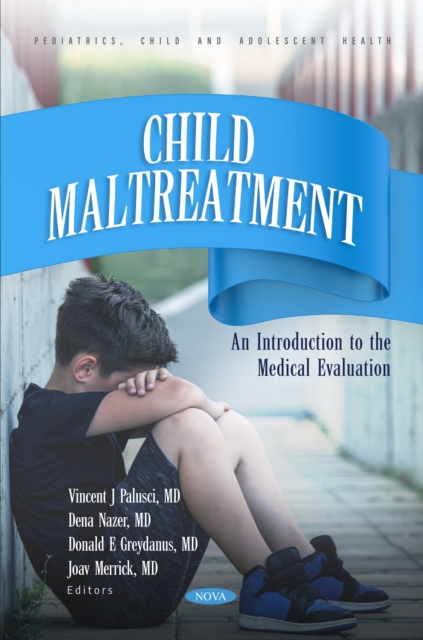
Child Maltreatment. an Introduction to the Medical Evaluation
\"As educators as well as clinicians, we recognized the scarcity of specific books designed to address the needs of the resident trainee in this important area of pediatric practice. The American Academy of Pediatrics (AAP) and others have published a number of texts on child abuse; but, this book specifically addresses the need for easily accessible materials outlining the medical approach to child abuse and neglect for pediatric and family medicine trainees as well as other professionals working with children. It is a collection of materials that covers a range of topics and serves as a repository for materials we have found helpful when teaching about child abuse and neglect. In addition, it provides information for more advanced students and trainees who want to learn more than can be learned during standard rotations and clinical experiences. Child abuse identification, treatment and prevention is the responsibility of us all, and o
eBook
How are experiences and acceptability of child maltreatment related to resilience and posttraumatic growth: a cross cultural study
Background: Post-traumatic growth (PTG) and resilience, regarded as positive psychological change following a traumatic experience, are under-researched across cultures in people exposed to child maltreatment (CM).Objective: We investigated how experiences and the perceived acceptability of CM are related to resilience and PTG in countries with different cultures, living standards, and gross national income.Method: A total of 478 adults from Cameroon (n = 111), Canada (n = 137), Japan (n = 108), and Germany (n = 122) completed an online survey with self-reported questionnaires, including the Brief Resilience Scale and the Post Traumatic Growth Inventory-Short Form.Results: Across countries, self-reported male gender and age were positively associated with resilience, while experiences of physical abuse and emotional maltreatment were negatively associated with resilience. Experiences of emotional maltreatment were positively associated with PTG. Higher levels of PTG and resilience were found amongst Cameroonian participants as compared to other countries.Conclusion: Our results suggest that positive changes following CM can vary significantly across cultures and that experiences of specific CM subtypes, but not the perceived acceptability of CM, may be important for a deeper understanding of how individuals overcome trauma and develop salutogenic outcomes. Our findings may inform CM intervention programmes for an enhanced cultural sensitivity.
Journal Article

The Triple P System of Evidence-Based Parenting Support: Past, Present, and Future Directions
Triple P is an integrated, multi-level system of evidence-based parenting support designed to promote the well-being of children and families to reduce prevalence rates of social, emotional, and behavioral problems in children and adolescents and to prevent child maltreatment. The system developed gradually over four decades to address the complex needs of parents and children from diverse family, socioeconomic and cultural backgrounds. It blends universal and targeted programs, a focus on developing parental self-regulation capabilities, and adopts a life span perspective with a population health framework. The Triple P system is used as a case example to discuss the past, present and future challenges, and opportunities involved in developing, evaluating, adapting, scaling and maintaining a sustainable system of evidence-based parenting intervention. Seven stages of program development are outlined from initial theory building and development of the core parenting program through to the sustained deployment of the intervention system delivered at scale. The importance of ongoing research and evaluation is highlighted so that different programs within the system evolve and adapt to address the contemporary concerns and priorities of families in diverse cultural contexts. A well-trained workforce is essential to deliver evidence-based programs, in a need-responsive manner that blends both fidelity of delivery and flexibility and is tailored to respond to the needs of individual families and local context. Programs need to be gender-sensitive, culturally informed, and attuned to the local context including relevant policies, resources, cultural factors, funding, workforce availability and their capacity to implement programs.
Journal Article