
Catalogue Search | MBRL


Are you sure you want to remove the book from the shelf?

{{itemTitle}}
22
result(s) for
"Childhood ARI"
Sort by:

Prevalence and risk factors of acute lower respiratory infection among children living in biomass fuel using households: a community-based cross-sectional study in Northwest Ethiopia
Background
Childhood acute lower respiratory infection in the form of pneumonia is recognized as the single largest cause of childhood death globally accounting for 16% of the overall deaths. Some studies also reported a higher prevalence of childhood acute respiratory infection in Ethiopia, which ranges from 16% up to 33.5%. Concerning the risk factors, there are limited community-based studies in Ethiopia in general, and in the current study region in particular. Therefore, the present study was conducted to investigate the prevalence of childhood acute respiratory infection and associated factors in Northwest Ethiopia.
Methods
As part of the wider stove trial project, a cross-sectional study was conducted in May 2018 among a total of 5830 children aged less than 4 years old in randomly selected clusters. Binary logistic regression was applied to identify factors linked with childhood acute lower respiratory infection and adjusted odds ratios were used as measures of effect with a 95% confidence interval.
Results
A total of 5830 children were included in the study within 100 clusters. Out of which 51.7% were male and 48.3% female. The prevalence of childhood lower acute respiratory infection was 19.2% (95% CI: 18.2–20.2) and found to decrease among children living in homes with chimney, eaves space and improved cookstove than children living in households with no chimney, eaves space and improved cookstove with estimated AOR of 0.60 (95% CI: 0.51–0.70), 0.70 (95% CI: 0.60–0.84) and 0.43 (95% CI: 0.28–0.67) respectively. It was also associated with other cooking-related factors such as cow dung fuel use [AOR = 1.54 (95% CI: 1.02–2.33)], child spending time near stove during cooking [AOR = 1.41 (95% CI: 1.06–1.88), presence of extra indoor burning events [AOR = 2.19 (95% CI: 1.41–3.40)] and with frequent cooking of meals [AOR = 1.55 (95% CI: 1.13–2.13)].
Conclusion
High prevalence of childhood acute lower respiratory infection was demonstrated by this study and it was found to be associated with household ventilation, cooking technology, and behavioral factors. Therefore, we recommend a transition in household ventilation, cooking technologies as well as in child handling and in the peculiar local extra indoor burning practices.
Journal Article
Health matters: a statistical approach to understand childhood illnesses in the North-East States of India, 2019–2021
The present study explores the prevalence and socio-economic demographic factors affecting childhood illnesses. Diarrhoea, fever and ARI among under-five children in the North -East states of India using NFHS-5 data Kids file. Results showed that diarrhoea, ARI, and fever among the northeastern states were highest in Meghalaya.For diarrhoea Sikkim has the highest prevalence for children within 6 months while Meghalaya has the highest prevalence in the age groups 6- 12 months and 1- 2 years old children and Arunachal Pradesh has the highest rate in the age group 2- 5 years old children. Meghalaya stands out with the highest prevalence of fever and ARI in all age groups. Compared to Sikkim, the state of Meghalaya had more diarrhoea, ARI and fever, and it was statistically highly significant. However, Tripura and Assam had significantly higher odds of having fever and ARI than Sikkim. There is an association between diarrhoea, fever, and ARI and factors such as the age of the child and caregiver, the wealth status of the household, the quality of sanitation facilities, methods of stool disposal, and the caregiver's educational level.
Journal Article

Prevalence and risk factors of child morbidity with spatial analysis among under five children in Bangladesh
Child morbidity has been, and still is, an enormous public health concern everywhere around the world and a major cause of child mortality in low- and middle-income countries like Bangladesh. Even if some improvements are seen with child health indicators in Bangladesh recently, the burden of child morbidity, on the other hand, remains high. This study investigated the prevalence, spatial distribution, and risk factors of child morbidity in Bangladesh utilizing data from the 2022 Bangladesh Demographic and Health Survey. Spatial analyses were carried out using Moran’s I and Getis-Ord Gi* statistics, which identified hot spots of child morbidity in Rangpur, Khulna, Barisal, and Chattogram divisions. Multilevel logistic regression analysis indicated that children aged 24–59 months (adjusted odds ratio [aOR] = 0.71; 95% CI: 0.57–0.88), children currently being breastfed (aOR = 0.82; 95% CI: 0.68–0.99), children from the richest households (aOR = 0.74; 95% CI: 0.56–0.97), and those living in rural areas (aOR = 0.78; 95% CI: 0.65–0.95) were all significantly less likely to experience morbidity. The high level of overall prevalence (33.6%) suggests a geographically targeted intervention is required as a matter of urgency, particularly in the hot spot divisions (Rangpur, Khulna, Barisal and Chattogram). These spatial results have programmatically clear implications: to enhance the prioritization of child health resources and preventive care (like addressing integrated management of childhood illness as well WASH-related interventions) at hotspots and strengthen geographically targeted monitoring to inform sub-national level planning. Understanding spatial patterns and risk factors of the morbidity will help policymakers to develop more focused interventions to decrease under-five mortality and improve child health outcomes in Bangladesh.
Journal Article

Analyzing Effect of WASH Practices and District-Level Spatial Effects on Acute Respiratory Infections and Diarrhoea Among Under-Five Children in India
The United Nations sustainable development goal 6 (UN SDG-6) emphasizes equitable access to safe and affordable drinking water, sanitation, and hygiene (WASH) for all by 2030. Lack of WASH is health hazardous and hinders children’s physical and educational development due to the frequent exposure to childhood illnesses. Previous researches from Africa have found strong linkages between WASH practices and childhood chronic undernutrition and related morbidities like diarrhoea, and acute respiratory infection (ARI). Furthermore, according to the National Health Profile of India, Report 2019, mortality from diseases among children is 27.2% for ARI and 10.5% for acute diarrhoea. The current study utilizes a Bayesian geoadditive modeling framework to explain the district-level spatial heterogeneity in cases of diarrhoea and ARI in India and simultaneously analyzes the effects of WASH practices and other socioeconomic covariates. The study results suggests that most districts situated in India’s north and central regions had higher chances of ARI and diarrhoea and, cases of diarrhoea may reduce with the improved toilet facilities. Nevertheless, female children are less prone to ARI and Diarrhoea, whereas, stunted and wasted children are more susceptible to Diarrhoea only; young women with low education level are more likely to have children down with both the diseases. On the other hand, Hindu and ST have less while SC children have more chances of being sick with ARI and diarrhoea. Finally, the study may suggest to have an effective intervention of the Government for the identified regions of country with a high burden of ARI and Diarrhoea and a need for strategies for behavioural change in the people towards health and hygiene.
Journal Article

“It is good to take her early to the doctor” – mothers’ understanding of childhood pneumonia symptoms and health care seeking in Kilimanjaro region, Tanzania
Background
Pneumonia is among the leading causes of avoidable deaths for young children globally. The main burden of mortality falls on children from poor and rural families who are less likely to obtain the treatment they need, highlighting inequities in access to effective care and treatment. Caretakers’ illness perceptions and care-seeking practices are of major importance for children with pneumonia to receive adequate care. This study qualitatively explores the caretaker concepts of childhood pneumonia in relation to treatment seeking behaviour and health worker management in Moshi urban district, Tanzania.
Methods
In May - July 2013 data was gathered through different qualitative data collection techniques including five focus group discussions (FGDs) with mothers of children under-five years of age. The FGDs involved free listing of pneumonia symptoms and video presentations of children with respiratory symptoms done, these were triangulated with ten case narratives with mothers of children admitted with pneumonia and eleven in-depth interviews with hospital health workers. Transcripts were coded and analysed using qualitative content analysis.
Results
Mothers demonstrated good awareness of common childhood illnesses including pneumonia, which was often associated with symptoms such as cough, flu, chest tightness, fever, and difficulty in breathing. Mothers had mixed views on causative factors and treatments options but generally preferred modern medicine for persisting and severe symptoms. However, all respondent reported access to health facilities as a barrier to care, associated with transport, personal safety and economic constraints.
Conclusion
Local illness concepts and traditional treatment options did not constitute barriers to care for pneumonia symptoms. Poor access to health facilities was the main barrier. Decentralisation of care through community health workers may improve access to care but needs to be combined with strengthened referral systems and accessible hospital care for those in need.
Journal Article

Intervention models for the management of children with signs of pneumonia or malaria by community health workers
A systematic review was conducted to categorize and describe Intervention Models involving community health workers (CHWs) that aim to improve case management of sick children at the household and community levels. The review focused on management of children with signs of malaria or pneumonia. Seven Intervention Models were identified, and classified according to: (1) the role of CHWs and families in assessment and treatment of children, (2) system of referral to the nearest health facility (verbal or facilitated), and (3) the location in the community of the drug stock. Standardization of terminology for Intervention Models using this or a similar classification could facilitate comparison and selection of models, including deciding how to modify programmes when policies change concerning first-line drugs, and setting priorities for further research. Of the seven models, that of CHW pneumonia case management (Model 6) has the strongest evidence for an impact on mortality. Pneumonia case management by CHWs is a child health intervention that warrants considerably more attention, particularly in Africa and South Asia.
Journal Article
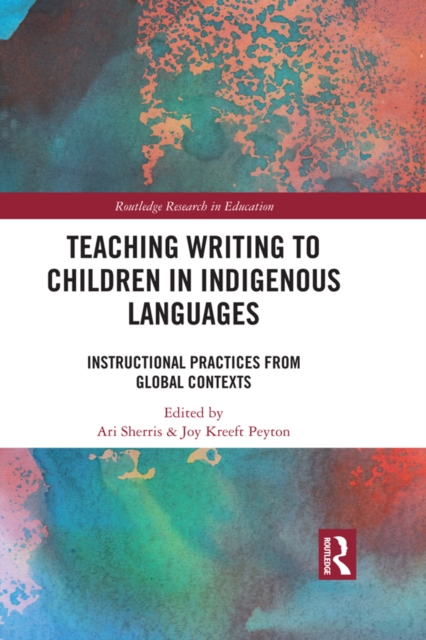
Teaching Writing to Children in Indigenous Languages
iiiThis volume brings together studies of instructional writing practices and the products of those practices from diverse Indigenous languages and cultures. By analyzing a rich diversity of contexts-Finland, Ghana, Hawai'i, Mexico, Papua New Guinea, and more-through biliteracy, complexity, and genre theories, this book explores and demonstrates critical components of writing pedagogy and development. Because the volume focuses on Indigenous languages, it questions center-margin perspectives on schooling and national language ideologies, which often limit the number of Indigenous languages taught, the domains of study, and the age groups included.
eBook

Assessment and management of children aged 1–59 months presenting with wheeze, fast breathing, and/or lower chest indrawing; results of a multicentre descriptive study in Pakistan
Background and Aims: Using current WHO guidelines, children with wheezing are being over prescribed antibiotics and bronchodilators are underutilised. To improve the WHO case management guidelines, more data is needed about the clinical outcome in children with wheezing/pneumonia overlap. Methodology: In a multicentre prospective study, children aged 1–59 months with auscultatory/audible wheeze and fast breathing and/or lower chest indrawing were screened. Response to up to three cycles of inhaled salbutamol was recorded. The responders were enrolled and sent home on inhaled bronchodilators, and followed up on days 3 and 5. Results: A total of 1622 children with wheeze were screened from May 2001 to April 2002, of which 1004 (61.8%) had WHO defined non-severe and 618 (38.2%) severe pneumonia. Wheeze was audible in only 595 (36.7%) of children. Of 1004 non-severe pneumonia children, 621 (61.8%) responded to up to three cycles of bronchodilator. Of 618 severe pneumonia children, only 166 (26.8%) responded. Among responders, 93 (14.9%) in the non-severe and 63 (37.9%) children in the severe pneumonia group showed subsequent deterioration on follow ups. No family history of wheeze, temperature >100°F, and lower chest indrawing were identified as predictors of subsequent deterioration. Conclusions: Two third of children with wheeze are not identified by current WHO ARI (acute respiratory infections) guidelines. Antibiotics are over prescribed and bronchodilators under utilised in children with wheeze. Children with wheeze constitute a special ARI group requiring a separate management algorithm. In countries where wheeze is common it would be worthwhile to train health workers in use of the stethoscope to identify wheeze.
Journal Article

Environmental health and child survival : epidemiology, economics, experiences
Each year, millions of children in developing countries fall sick and die from diseases caused by polluted air, contaminated water and soil, and poor hygiene behavior. Repeated infectious also contribute to malnutrition in children, and subsequently impacts future learning and productivity. This book analyzes the linkages between malnutrition and environmental health, and assesses the burden of disease on young children, and its economic costs.
eBook
Clinical efficacy of co-trimoxazole versus amoxicillin twice daily for treatment of pneumonia: a randomised controlled clinical trial in Pakistan
Aims: To compare the clinical efficacy of twice daily oral co-trimoxazole with twice daily oral amoxicillin for treatment of childhood pneumonia. Methods: Randomised controlled, double blind, multicentre study in outpatient departments of seven hospitals and in one community health service. A total of 1471 children (aged 2–59 months) with non-severe pneumonia were randomly assigned to 25 mg/kg amoxicillin (n = 730) or 4 mg/kg trimethoprim plus 20 mg/kg sulphamethoxazole (co-trimoxazole) (n = 741). Both medicines were given orally twice daily for five days. Results: Data from 1459 children were analysed: 725 were randomised to amoxicillin and 734 to co-trimoxazole. Treatment failure in the amoxicillin group was 16.1% compared to 18.9% in the co-trimoxazole group. Multivariate analysis showed that treatment failure was more likely in infants who had history of difficult breathing or those who had been ill for more than three days before presentation. Conclusions: Both amoxicillin and co-trimoxazole were equally effective in non-severe pneumonia. Good follow up of patients is essential to prevent worsening of illness.
Journal Article