
Catalogue Search | MBRL


Are you sure you want to remove the book from the shelf?

{{itemTitle}}
1,453
result(s) for
"Children Language Fiction."
Sort by:

The silent history : a novel
\"An innovative literary thriller about a generation of children born unable to create or comprehend language\"-- Provided by publisher.
Book

The Impact of Interactive Shared Book Reading on Children's Language Skills: A Randomized Controlled Trial
Purpose: Research has indicated that interactive shared book reading can support a wide range of early language skills and that children who are read to regularly in the early years learn language faster, enter school with a larger vocabulary, and become more successful readers at school. Despite the large volume of research suggesting interactive shared reading is beneficial for language development, two fundamental issues remain outstanding: whether shared book reading interventions are equally effective (a) for children from all socioeconomic backgrounds and (b) for a range of language skills. Method: To address these issues, we conducted a randomized controlled trial to investigate the effects of two 6-week interactive shared reading interventions on a range of language skills in children across the socioeconomic spectrum. One hundred and fifty children aged between 2;6 and 3;0 (years;months) were randomly assigned to one of three conditions: a pause reading, a dialogic reading, or an active shared reading control condition. Results: The findings indicated that the interventions were effective at changing caregiver reading behaviors. However, the interventions did not boost children's language skills over and above the effect of an active reading control condition. There were also no effects of socioeconomic status. Conclusion: This randomized controlled trial showed that caregivers from all socioeconomic backgrounds successfully adopted an interactive shared reading style. However, while the interventions were effective at increasing caregivers' use of interactive shared book reading behaviors, this did not have a significant impact on the children's language skills. The findings are discussed in terms of practical implications and future research.
Journal Article

Bye land, bye sea
Two children lost at sea must overcome a language barrier if they want to find a way home.
CHILDBOOK

Exploring Engagement in Shared Reading Activities Between Children with Autism Spectrum Disorder and Their Caregivers
Reading aloud to children is a valued practice to promote emergent literacy and language skills that form the foundation for future reading success. We conducted a descriptive study of shared book reading practices between caregivers and their children with autism spectrum disorder (n = 17) and caregivers and their typically developing children (n = 20) to identify factors that can promote or inhibit children’s engagement in reading. Caregivers and their children read nine books (familiar, non-fiction, fiction). Children with ASD demonstrated lower levels of passive engagement (looking at the book) and higher levels of non-engaged behavior compared to typically developing children. Caregiver reading quality and book type contributed to joint engagement during reading. Implications of these findings for intervention development are discussed.
Journal Article

The nature and frequency of relative clauses in the language children hear and the language children read: A developmental cross-corpus analysis of English complex grammar
As written language contains more complex syntax than spoken language, exposure to written language provides opportunities for children to experience language input different from everyday speech. We investigated the distribution and nature of relative clauses in three large developmental corpora: one of child-directed speech (targeted at pre-schoolers) and two of text written for children – namely, picture books targeted at pre-schoolers for shared reading and children’s own reading books. Relative clauses were more common in both types of book language. Within text, relative clause usage increased with intended age, and was more frequent in nonfiction than fiction. The types of relative clause structures in text co-occurred with specific lexical properties, such as noun animacy and pronoun use. Book language provides unique access to grammar not easily encountered in speech. This has implications for the distributional lexical-syntactic features and associated discourse functions that children experience and, from this, consequences for language development.
Journal Article
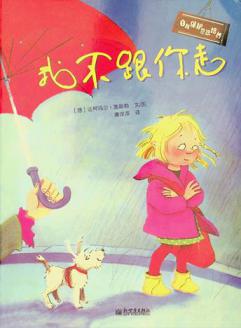
Wo bu gen ni zou
Lu cn only go home with a person from a list that her parents made. This is to keep Lu safe from people who might be dangerous.
BOOK
“And they had a big, big, very long fight:” The development of evaluative language in preschoolers' oral fictional stories told in a peer-group context
This study examined the development of evaluative language in preschoolers’ oral fictional narratives using a storytelling/story-acting practice where children told stories to and for their friends. Evaluative language orients the audience to the teller's cognitive and emotional engagement with a story's events and characters, and we hypothesized that this STSA context might yield new information about the early development of this language, prior to elementary school. We analyzed 60 stories: the first and last story told by 10 children in each of three preschool classrooms (3-, 4-, and 5-year-old classes) that used STSA throughout the school year. Stories were coded for evaluative expressions and evidential expressions. Five-year-olds used significantly more evaluative language than did 3-year-olds, and children at all ages used significantly more evaluative language at the end than at the beginning of the year. The number of stories told throughout the year explained unique variance in children's evaluative language growth.
Journal Article


Promises, Pitfalls, and Clinical Applications of Artificial Intelligence in Pediatrics
Artificial intelligence (AI) broadly describes a branch of computer science focused on developing machines capable of performing tasks typically associated with human intelligence. Those who connect AI with the world of science fiction may meet its growing rise with hesitancy or outright skepticism. However, AI is becoming increasingly pervasive in our society, from algorithms helping to sift through airline fares to substituting words in emails and SMS text messages based on user choices. Data collection is ongoing and is being leveraged by software platforms to analyze patterns and make predictions across multiple industries. Health care is gradually becoming part of this technological transformation, as advancements in computational power and storage converge with the rapid expansion of digitized medical information. Given the growing and inevitable integration of AI into health care systems, it is our viewpoint that pediatricians urgently require training and orientation to the uses, promises, and pitfalls of AI in medicine. AI is unlikely to solve the full array of complex challenges confronting pediatricians today; however, if used responsibly, it holds great potential to improve many aspects of care for providers, children, and families. Our aim in this viewpoint is to provide clinicians with a targeted introduction to the field of AI in pediatrics, including key promises, pitfalls, and clinical applications, so they can play a more active role in shaping the future impact of AI in medicine.
Journal Article