
Catalogue Search | MBRL


Are you sure you want to remove the book from the shelf?

{{itemTitle}}
29,811
result(s) for
"Children Study and teaching."
Sort by:

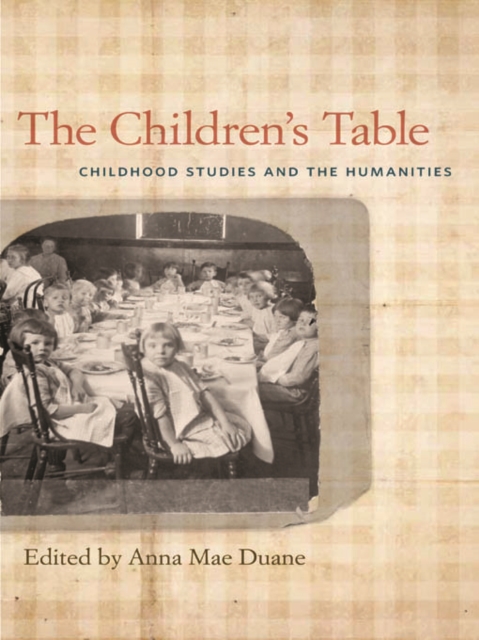
The Children's Table
Like the occupants of the children's table at a family dinner, scholars working in childhood studies can seem sidelined from the \"adult\" labor of humanities scholarship. The Children's Table brings together scholars from architecture, philosophy, law, and literary and cultural criticism to provide an overview of the innovative work being done in childhood studies-a transcript of what is being said at the children's table. Together, these scholars argue for rethinking the academic seating arrangement in a way that acknowledges the centrality of childhood to the work of the humanities. The figure we now recognize as a child was created in tandem with forms of modernity that the Enlightenment generated and that the humanities are now working to rethink. Thus the growth of childhood studies allows for new approaches to some of the most important and provocative issues in humanities scholarship: the viability of the social contract, the definition of agency, the performance of identity, and the construction of gender, sexuality, and race. Because defining childhood is a means of defining and distributing power and obligation, studying childhood requires a radically altered approach to what constitutes knowledge about the human subject. The diverse essays in The Children's Table share a unifying premise: to include the child in any field of study realigns the shape of that field, changing the terms of inquiry and forcing a different set of questions. Taken as a whole, the essays argue that, at this key moment in the state of the humanities, rethinking the child is both necessary and revolutionary. Contributors: Annette Ruth Appell, Sophie Bell, Robin Bernstein, Sarah Chinn, Lesley Ginsberg, Lucia Hodgson, Susan Honeyman, Roy Kozlovsky, James Marten, Karen Sánchez-Eppler, Carol Singley, Lynne Vallone, John Wall.
eBook

Complete guide to sport education
\"This is a textbook for undergraduate students and professional in the physical education field. It gives readers the complete guide on how to do Sport Education, a physical education instructional model. The book describes the model and why it is beneficial to students. It takes teachers through the steps of designing and implementing the model. And it concludes with content on how to integrate the model within a teacher's daily responsibilities\"-- Provided by publisher.
Book
Critical childhood studies and the practice of interdisciplinarity
This book analyzes different figurations of childhood in contemporary culture and politics with a particular focus on interdisciplinary methodologies of critical childhood studies. It argues that while the figure of the child has been traditionally located at the peripheries of academic disciplines, perhaps most notably in history, sociology and literature, the proposed critical discussions of the ideological, symbolic and affective roles that children play in contemporary societies suggest that they are often the locus of larger societal crises, collective psychic tensions, and unspoken prohibitions and taboos. As such, this book brings into focus the prejudices against childhood embedded in our standard approaches to organizing knowledge, and asks: is there a natural disciplinary home for the study of childhood? Or is this field fundamentally interdisciplinary, peripheral or problematic to notions of disciplinary identity? In this respect, does childhood force innovation in thinking about disciplinarity? For instance, how does the analysis of childhood affect how we think about methodology? What role do understandings of childhood play in delimiting how we conceive of our society, our future, and ourselves? How does thinking about childhood affect how we think about culture, history, and politics?This book brings together researchers working broadly in critical child studies, but from various disciplines in the humanities and social sciences (including philosophy, literary studies, sociology, cultural studies and history), in order to stage a conversation between these diverse perspectives on the disciplinary or (interdisciplinary) character of 'the child'as an object of research. Such conversation builds on the assumption that childhood, far from being marginal, is a topic that is hidden in plain sight. That is to say, while the child is always a presence in culture, history, literature and philosophy--and is often even a highly charged figure within those fields--its operation and effects are rarely theoretically scrutinized, but rather are more likely drawn upon, surreptitiously, for another purpose.
eBook

Inclusion, diversity, and intercultural dialogue in young people's philosophical inquiry
The ever-shifting cultural and linguistic landscapes in contemporary societies create new urgency for an intersectional thematic study of diversity, philosophy, and education. As educators, how do we transform the vision of cultural and linguistic diversity into a wealth of resources for learning? How do we actively engage cultural and linguistic diversities in philosophical inquiry with young people? How do we translate the philosophical notion of cultural and linguistic diversity into pedagogical practices? The chapters in this book respond to the task of teaching philosophy in the context of increased mobility in the new global reality. By complicating the situated and fluid nature of contemporary classrooms, this book challenges the normalizing tendency often associated with philosophy education. Each chapter offers a unique perspective in understanding the profound embeddedness of philosophy education in broader sociocultural contexts and prioritizes diversity in the classroom community of inquiry. By carefully incorporating a broad range of theoretical perspectives and empirical research, this book provides a rich resource for school teachers and educators who wish to engage diverse learners in philosophical inquiry. In doing so, it reaffirms the value of philosophy education as a proactive approach to democratic education.
Book

The Social Play Record
Social play is about relating to others, playing and making friends - all of which are key elements for social inclusion, adjustment and well-being. The Social Play Record is a practical resource for assessing and developing social play in children with autistic spectrum disorders (ASDs) or difficulties with social interaction.
This toolkit is designed to be used collaboratively with children, parents, carers and practitioners. It is suitable for assessing children of all learning abilities and stages of development, from early infancy to adolescence, and includes photocopiable assessment and intervention materials. The toolkit is divided into user-friendly sections, including:
* a guidance section, which also gives information on what constitutes social play, its significance, development and how to address social interaction difficulties
* an assessment section for recording stages of social play and key abilities, such as independent and peer play, friendship and advanced group skills
* an intervention section, which gives step-by-step directions for developing key social play skills.
Parents, teachers and professionals working with or caring for a child with social interaction difficulties will find this toolkit an essential assessment resource.
eBook

Social skills games for children
Featuring a wealth of familiar and easy-to-learn games, this practical handbook is designed to foster successful social strategies for children aged 5-12, and will help adults to understand and reflect constructively on children's social skills.
The book covers the theory behind the games in accessible language, and includes a broad range of enjoyable activities: active and passive, verbal and non-verbal, and for different sized groups. Deborah Plummer addresses issues that might arise when supporting children with a range of communication differences, including children with learning differences, and offers a variety of cognitive and behavioural strategies to help children to reinforce the skills explored in the games.
This is an ideal resource for teachers, parents, carers and all those working to improve the social skills of children.
eBook


Coaching Children in Sport
This book has arisen out of a need for a text which tackles the special issues relating to coaching children (from 6 - 16) in sport. Academics (many with coaching experience) and practitioners have been commissioned to write on their specialist areas.
eBook