
Catalogue Search | MBRL


Are you sure you want to remove the book from the shelf?

{{itemTitle}}
7,579
result(s) for
"Children of alcoholics"
Sort by:

Parents who misuse drugs and alcohol
This book presents original research outlining the key elements in responding to parental misuse of drugs and alcohol.Offers a definition of \"misuse\" and \"addiction\" and the factors that influence the nature of misuse or addiction Reviews extensively the nature and impact of parental substance misuse on children and families using the latest.
eBook
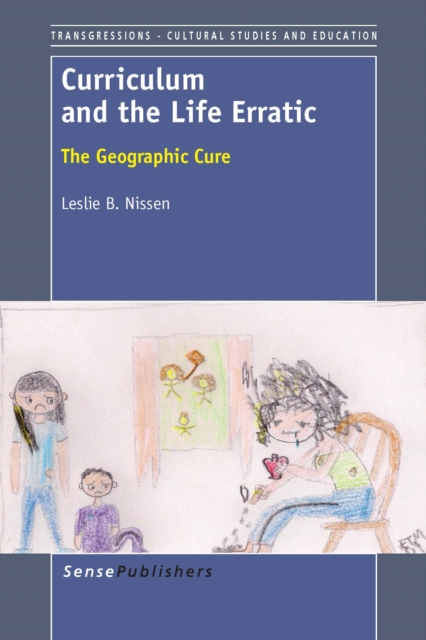
Curriculum and the Life Erratic
Curriculum and the Life Erratic: The Geographic Cure lays bare the untold damage done to children who are forced to endure the toxic combination of \"fermented parenting\" (as author Leslie Nissen has termed it) and frequent family moves at the hands of alcoholic parents who perpetually seek the elusive Geographic Cure.
eBook

My so-called ruined life
After her mother is murdered and her father is accused, 16-year-old Tate McCoy tries to prove her father's innocence and to enjoy the summer with her best friend Kale, a crush on her swim instructor, and time outdoors.
BOOK

The attachment adaptation process model: Developing attachment security after experiencing addiction in the family
Objective: The purpose of this study is to explore the adaptation processes of building attachment security later in life when one's attachment style has been affected by growing up in a household with a parent who uses substances. Background: Parental substance use may have negative effects on children who grow up in those homes, including developing an insecure attachment style. Limited studies have focused on adult children of alcoholics/addicts' (ACOAs) attachment adaptation processes into adulthood. Method: Using a constructivist grounded theory approach, we explored the process ACOA's use to build attachment security. The first author interviewed 14 participants using a semistructured interview format through the video conferencing platform Zoom. Results: Through analysis of the data, we identified a fourphase process: (a) confusion, (b) transition, (c) restoration, and (d) dedication. This information provides a framework to show clients the attachment adaptation process model (AAPM), developed in this study, and helps them to visualize the process by which they may learn to develop more attachment security. Conclusion: ACOAs may incur adverse experiences in childhood that influence their attachment development later in life. The researchers in this study built a model of how ACOAs build attachment security later in life. Implications: Practitioners can help clients connect with community support groups, places of worship, and other small groups that the participants identified as instrumental in the healing process. Overall, helping clients find a place for safe and healthy connections is crucial during their journey to attachment security.
Journal Article

The perfect plan : a novel
\"Liam Brennan teeters on the edge. Early one morning, he snaps, kidnapping a young woman who works for Drew Brennan, Liam's older brother and the upstart candidate in a heated election. This sudden, vicious attack appears to be the beginning of an unthinkable spiral. But when it comes to the Brennan brothers, nothing is what it seems. To the rest of the world, Liam is the troubled problem child who grew up to be his brother's enforcer, while Drew has always been the perfect son and a charismatic leader who has his sights set on the Governor's Mansion with his charming and beautiful wife, Patsy, by his side. Now, as Liam tries to stay one step ahead of the authorities and his brother, every passing minute provides a deeper glimpse into the brothers' past, long hidden behind a picture-perfect suburban veneer. With the threat of the truth surfacing, Liam and Drew are driven toward one final, desperate act. Alternating between tense, twisting present-day action and heart-wrenching vignettes from Liam's past, The Perfect Plan is a gripping race to a shocking showdown between brothers--and an unforgettable tale of a family's dark secrets\"-- Provided by publisher.
BOOK

The relevant research of adverse childhood experiences and “risky drinking” in children of alcoholics in China
Objective
To determine whether adverse childhood experiences (ACEs) of children of alcoholics (COA) in male were associated with their current “risky drinking”.
Methods
This case–control study used the Alcohol Use Disorder Identification Test (AUDIT, cutoff is 7) to divide the participants into two groups, a “risky drinking” group (N = 53) and a \"non-risky drinking” group (N = 97). Demographic data, Adverse Childhood Experiences-International Questionnaire (ACE-IQ), the Hamilton Anxiety Rating Scale (HAMA), the Hamilton Depression Rating Scale (HAMD) and the Mini-International Neuropsychiatric Interview (MINI) were used for assessment. The specific relationships between ACEs and “risky drinking” were explored.
Results
Respondents ranged in age from 29.70 ± 6.72 years; 74.5% were females; 94.7% were of Han nationality; 56.7% had a level of education above high school; 12% had no formal or stable job. There was difference in attitude to self-drinking between two groups (
P
< 0.001). The “risky drinking” group was more likely to have experienced a major depressive episode (
P
< 0.05), nonalcohol psychoactive substance use disorder (
P
< 0.01) and bulimia nervosa (
P
< 0.05), and they also experienced more physical abuse (
P
< 0.05), community violence (
P
< 0.001) and collective violence (
P
< 0.01). In a single factor logistic regression, physical abuse, community violence and collective violence were associated with a two to 11- fold increase in “risky drinking” in the adult COA, and in multiple factor logistic regression, community violence showed a graded relationship with “risky drinking”.
Conclusion
The childhood adverse experiences contribute to “risky drinking” in COA. This finding in the Chinese context have significant implications for prevention not only in China but in other cultures. There must be greater awareness of the role of ACEs in the perpetuation of alcoholism.
Journal Article

Sal
\"Sal planned it for almost a year before they ran. She nicked an Ordnance Survey map from the school library. She bought a compass, a Bear Grylls knife, waterproofs, and a first aid kit from Amazon using credit cards she'd robbed. She read the SAS Survival Handbook and watched loads of YouTube videos. And now Sal knows a lot of stuff. Like how to build a shelter and start a fire. How to estimate distances, snare rabbits, and shoot an airgun. And how to protect her sister, Peppa. Because Peppa is ten, which is how old Sal was when Robert started on her. Told in Sal's distinctive voice, and filled with the silent, dizzying beauty of rural Scotland, 'Sal' is a disturbing, uplifting story of survival, of the kindness of strangers, and the irrepressible power of sisterly love; a love that can lead us to do extraordinary and unimaginable things\"--Amazon.com.
Book
Adult Drug and Alcohol Problems, Children's Needs : An Interdisciplinary Training Resource for Professionals -- with Practice and Assessment Tools, Exercises and Pro Formas
Parental drug use can cause serious harm to children. Adult Drug and Alcohol Problems, Children's Needs supports practitioners in their work with families where parental drug use leads to concerns about children's welfare. The training resource contains: summaries of the key messages for practitioners, tools and tips to support effective practice, training and development activities, practice examples from around the UK. This second edition has an increased focus on alcohol misuse and reflects recent changes to both policy and practice. The book will be useful for all individuals and agencies involved with families where parents are struggling with substance abuse, including children's social workers, substance misuse workers, primary care and school staff, criminal justice agencies, obstetric and paediatric teams, substitute carers and a range of voluntary and community services.
eBook