
Catalogue Search | MBRL


Are you sure you want to remove the book from the shelf?

{{itemTitle}}
7
result(s) for
"China -- Foreign economic relations -- Persian Gulf Region"
Sort by:
China and the gulf cooperation council countries
This book examines China's relations with member states of the Gulf Cooperation Council.It highlights the depth of China's ties with the region bilaterally and multilaterally on a five-dimensional approach: political relations, trade relations, energy security, security cooperation, and cultural relations.
eBook

China and global oil: vulnerability and opportunity
China has grown increasingly dependent on imports of oil and, as a consequence, has become a major and very visible player in the international energy markets. For a country which has traditionally been strongly committed to the principle of self-reliance, this dependence on foreign oil has been a source of vulnerability and anxiety. But it has also been a strategic opportunity for China to chart its own ambitions and objectives as a global economic and political actor. This article addresses the various ways in which China has incorporated its energy import needs within its foreign policy. There are, it is argued, three dimensions to this. There is, first, integration and cooperation with the West and other large oil-importing countries and a shift away from neo-mercantilism to a growing reliance on international markets. Second, there is a complementary strategy of balancing, which seeks to develop the energy resources close to its borders, in Russia and Central Asia, which are not so vulnerable to western intervention. And third, there is the construction, though preliminary and nascent at the moment, of a hegemonic order which challenges the US and the West in the critical maritime routes from the Pacific to the Indian Ocean and through to the Persian Gulf region.
Journal Article

China, Global Energy, and the Middle East
China has significantly enhanced its position and interest in the Persian Gulf region over the past 25 years, making it an important newcomer in regional dynamics. Evidence clearly shows that it has expanded, in some cases dramatically, its diplomatic contacts, economic ties, and arms
sales to regional states. This represents a novel development which is likely to accelerate in the future as China's dependence on Persian Gulf oil grows. China's rising position in the region has put Beijing and Washington at odds and could generate serious friction points in the future.
Policy recommendations are sketched to avoid such an outcome.
Journal Article

STRENGTHENING GEO-STRATEGIC BOND OF PAKISTAN AND CHINA THROUGH GEO-ECONOMIC CONFIGURATION
An intimate relationship between Pakistan and China is not a novel phenomenon. For decades, they have been ‘all-weather’ friends – both countries enjoy enduring and deep-rooted ties. Initially, China and Pakistan were involved in a geo-strategic context, but since the end of the Cold War, their relations have increasingly become multidimensional. China emerged as an economic regional power, and over the years has been successful in generating her own sphere of influence by developing a huge export capacity along with a robust market. Pakistan had her own way with a long history of rivalry with India and then fighting the war against terror that dragged her into destitute economic conditions. India’s increasing interest and influence in the region and her growing cooperation with the US alarmed both Pakistan and China. Reciprocating, Pakistan and China agreed to build a “One Belt One Road” project; also known as the China Pakistan Economic Corridor. This study helps in analyzing the addition of the geo-economic aspect in the geo-strategic Sino-Pak relationship with reference to the China Pakistan Economic Corridor in the transitioning geo-political scenario.
Journal Article

China's Policy in the Persian Gulf
From 1978 to 2005, China's economy has grown at the unprecedented rate of 9 percent a year, and continues to grow. With this economic development comes increased demand for petroleum, and China is behind only the United States in consumption of oil and natural gas. This demand for oil has led China to turn to the Persian Gulf, which contains 55 percent of the world's proven oil supply, to meet its energy needs. This article looks at China's relations with the Persian Gulf countries and its attempts to create economic interdependence with them through investment, arms sales, and trade, thereby securing a supply of oil. The paper also discusses the issue of Chinese competition with the United States for petroleum supplies from the Persian Gulf and the difficulty involved in balancing the needs for Iranian oil and U.S. cooperation in economic and security issues. Adapted from the source document.
Journal Article
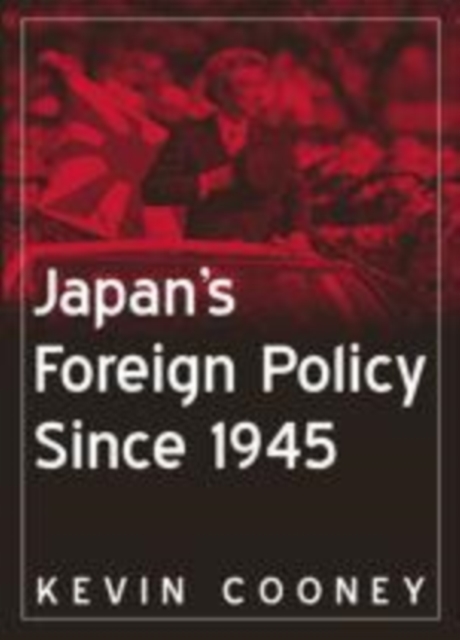
Japan's Foreign Policy Since 1945
This student-friendly text provides a detailed and up-to-date assessment of Japan's foreign policy since 1945, including policy options and choices that Japan faces in the twenty-first century. Using information based on interviews with policymakers in Japan, the author provides new insight into Japan's foreign policy options and analyzes the nation's evolving role in international affairs. The book begins with a brief overview of major issues related to Japan's foreign policy since the mid-nineteenth century, and then focuses on the direction of Japanese foreign policy from 1945 to the present. It examines issues such as Article Nine of the Japanese Constitution, national security needs, the way Japan views the world around it, the role of nationalism in setting policy, and the influence of big industry. It also includes material on Japan's response to 9/11 and the war in Iraq. Designed for both undergraduate and graduate level courses, the text includes Discussion Questions, maps, a detailed bibliography with suggestions for further reading, and an Appendix with the Japanese Constitution for easy reference.
1. Introduction: The Story of Japan after World War II; 2. The Legacy of the Occupation: An \"Abnormal\" Foreign Policy; 3. The Gulf War Requires Change; 4. Theoretically Speaking: Realism, and Alternative Security; 5. Foreign Policy Restructuring in Japan; 6. Planning for Japan's Future Security; 7. The \"Myth\" of Gaiatsu: How Japan Views Its Place in the World; 8. Triangulating Politics: America, China, and Japan; 9. Where Is Japan Going?
eBook
China and the Persian Gulf: Energy and Security
Energy cooperation is the dominant aspect of expanding relations between China and the Persian Gulf countries. Propelling this is China's increasing reliance on Gulf oil imports. In pursuing its objectives in the Gulf, China has encountered as many challenges as opportunities-in the form of regional crises and conflicts, as well as US pressure. In seeking to balance its geopolitical and economic interests in the Gulf, China has proceeded cautiously and pragmatically. Yet, the possibility that China's arms transfers to Gulf countries and its positions on Gulf issues may have a negative impact on regional security cannot be ruled out.
Journal Article