
Catalogue Search | MBRL


Are you sure you want to remove the book from the shelf?

{{itemTitle}}
144
result(s) for
"China -- History -- Qing dynasty, 1644-1912"
Sort by:


The oxford illustrated history of modern China
This lavishly illustrated volume explores the history of China from the founding of the Qing Dynasty (1644-1912) through to the present day. Essential reading for anyone who wants to understand this rising superpower on the verge of what promises to be the 'Chinese century'.
eBook

China's last empire : the great Qing
In a brisk revisionist history, William Rowe challenges the standard narrative of Qing China as a decadent, inward-looking state that failed to keep pace with the modern West.
Book
Chinese History in Geographical Perspective
The authors in this volume believe that long-term, profound, and sometimes tumultuous changes in the last five hundred years of the history of China have been no less geographical than social, political, or economic. From the dialectics of local-empire relations to the imperial state’s persistent array of projects for absorbing and transforming ethnic regions on the margins of empire; from the tripling of imperial territories in the Qing to the disputes over the identity of the former “outer zones” in the early Republican era; and from the universalistic imagination of “all-under-heaven” to the fraught processes of re-drawing a new set of nation-state boundaries in the twentieth century, the study of the dynamics of geography, broadly conceived, promises to provide insight into the contested development of the geographical entity which we, today, call 'China.'
eBook


From Frontier Policy to Foreign Policy
Between the mid-eighteenth and mid-nineteenth centuries, Qing rulers, officials, and scholars fused diverse, fragmented perceptions of foreign territory into one integrated worldview. In the same period, a single \"foreign\" policy emerged as an alternative to the many localized \"frontier\" policies hitherto pursued on the coast, in Xinjiang, and in Tibet. By unraveling Chinese, Manchu, and British sources to reveal the information networks used by the Qing empire to gather intelligence about its emerging rival, British India, this book explores China's altered understanding of its place in a global context. Far from being hobbled by a Sinocentric worldview, Qing China's officials and scholars paid close attention to foreign affairs. To meet the growing British threat, they adapted institutional practices and geopolitical assumptions to coordinate a response across their maritime and inland borderlands. In time, the new and more active response to Western imperialism built on this foundation reshaped not only China's diplomacy but also the internal relationship between Beijing and its frontiers.
eBook

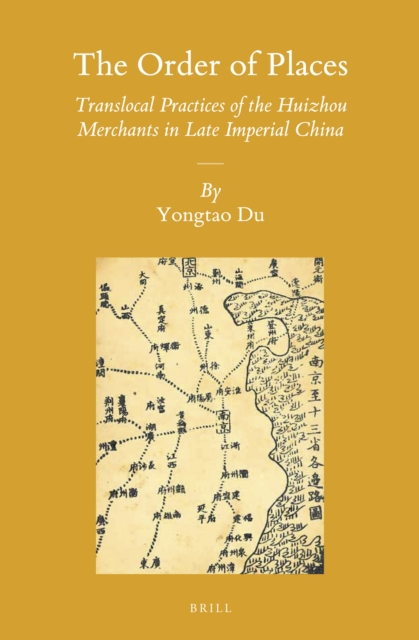
The Order of Places
In The Order of Places Yongtao Du tells a story of how the increase in geographical mobility in sixteenth through eighteenth century China brought about new understandings of spatial order in the world's most enduring empire.
eBook

The Oxford illustrated history of modern China
This lavishly illustrated volume explores the history of China from the founding of the Qing Dynasty (1644-1912) through to the present day. Essential reading for anyone who wants to understand this rising superpower on the verge of what promises to be the 'Chinese century'.
Book
British Naturalists in Qing China
In the eighteenth and nineteenth centuries, Western scientific
interest in China focused primarily on natural history. Prominent
scholars in Europe as well as Westerners in China, including
missionaries, merchants, consular officers, and visiting plant
hunters, eagerly investigated the flora and fauna of China. Yet
despite the importance and extent of this scientific activity, it
has been entirely neglected by historians of science.
This book is the first comprehensive study on this topic. In a
series of vivid chapters, Fa-ti Fan examines the research of
British naturalists in China in relation to the history of natural
history, of empire, and of Sino-Western relations. The author gives
a panoramic view of how the British naturalists and the Chinese
explored, studied, and represented China's natural world in the
social and cultural environment of Qing China.
Using the example of British naturalists in China, the author
argues for reinterpreting the history of natural history, by
including neglected historical actors, intellectual traditions, and
cultural practices. His approach moves beyond viewing the history
of science and empire within European history and considers the
exchange of ideas, aesthetic tastes, material culture, and plants
and animals in local and global contexts. This compelling book
provides an innovative framework for understanding the formation of
scientific practice and knowledge in cultural encounters.
Table of Contents:
Acknowledgments
Introduction
I. The Port 1. Natural History in a Chinese
Entrepôt 2. Art, Commerce, and Natural History
II. The Land 3. Science and Informal Empire 4.
Sinology and Natural History 5. Travel and Fieldwork in the
Interior
Epilogue
Appendix: Selected Biographical Notes Abbreviations Notes
Index
Fa-ti Fan's study of the encounter between the British culture of
the naturalist and the Chinese culture of the Qing is both a
delight and a revelation. The topic has scarcely been addressed by
historians of science, and this work fills important gaps in our
knowledge of British scientific practice in a noncolonial context
and of Chinese reactions to Western science in the eighteenth and
nineteenth centuries. In addition to the culture of Victorian
naturalists and Sinology, Fan shows an admirable grasp of visual
representation in science, Chinese taxonomic schemes, Chinese
export art, British imperial scholarship, and journeys of
exploration. His treatment of the China trade and descriptions of
Chinese markets and nurseries are especially welcome. I learned a
great deal, and I strongly recommend this book. --Philip Rehbock,
author of Philosophical Naturalists: Themes in Early
Nineteenth-Century British Biology By focusing on the
experiences of British naturalists in China during a time when it
was gradually being opened up to foreign influences, Fan makes at
least two important contributions to history of science: He gives
us an authoritative study of British naturalists in China (as far
as I know the only one of its kind), and he forces us to rethink
some of our categories for doing history of science, including how
we conceive of the relationship between science and imperialism,
and between Western naturalist and native. Fan's scholarship is
meticulous, with careful attention to detail, and his prose is
clear, controlled, and succinct. --Bernard Lightman, editor of
Victorian Science in Context
eBook