
Catalogue Search | MBRL


Are you sure you want to remove the book from the shelf?

{{itemTitle}}
6
result(s) for
"China -- Politics and government -- 221 B.C.-220 A.D"
Sort by:

Writing and the ancient state : early China in comparative perspective
\"Writing and the Ancient State explores the early development of writing and its relationship to the growth of political structures. The first part of the book focuses on the contribution of writing to the state's legitimating project. The second part deals with the state's use of writing in administration, analyzing both textual and archaeological evidence to reconstruct how the state used bookkeeping to allocate land, police its people, and extract taxes from them. The third part focuses on education, the state's system for replenishing its staff of scribe-officials. The first half of each part surveys evidence from Mesopotamia, Egypt, the Maya lowlands, Central Mexico, and the Andes; against this background the second half examines the evidence from China. The chief aim of this book is to shed new light on early China (from the second millennium BC through the end of the Han period, ca. 220 AD) while bringing to bear the lens of cross-cultural analysis on each of the civilizations under discussion. The compiling of lists - lists of names, or of names and numbers - is a recurring theme throughout all three parts. A concluding chapter argues that there is nothing accidental about the pervasiveness of this theme: in both origin and function, early writing is almost synonymous with the listing of names\"-- Provided by publisher.
Book

Problems of Han Administration
China's early emperors must pay their respects to their predecessors in the correct form; the conduct of government and commercial practice depended on a generally accepted system of weights and measures; critics needed a secure means of expressing their views.
eBook

Problems of Han administration : ancestral rites, weights and measures, and the means of protest
\"Michael Loewe calls on literary and material evidence to examine three problems that arose in administering China's early empires. Religious rites due to an emperor's predecessors must both pay the correct services to his ancestors and demonstrate his right to succeed to the throne. In practical terms, tax collectors, merchants, farmers and townsmen required the establishment of a standard set of weights and measures that was universally operative and which they could trust. Those who saw reason to criticise the decisions taken by the emperor and his immediate advisors, whether on grounds of moral principles or political expediency, needed opportunities and the means of expressing their views, whether as remonstrants to the throne, by withdrawal from public life or as authors of private writings\"--Provided by publisher.
Book

Communication and Cooperation in Early Imperial China
This revealing book challenges longstanding notions of the Qin dynasty, China's first imperial dynasty (221–206 BCE). The received history of the Qin dynasty and its founder is one of cruel tyranny with rule through fear and coercion. Using a wealth of new information afforded by the expansion of Chinese archaeology in recent decades as well as traditional historical sources, Charles Sanft concentrates on cooperative aspects of early imperial government, especially on the communication necessary for government. Sanft suggests that the Qin authorities sought cooperation from the populace with a publicity campaign in a wide variety of media—from bronze and stone inscriptions to roads to the bureaucracy. The book integrates theory from anthropology and economics with early Chinese philosophy and argues that modern social science and ancient thought agree that cooperation is necessary for all human societies.
eBook
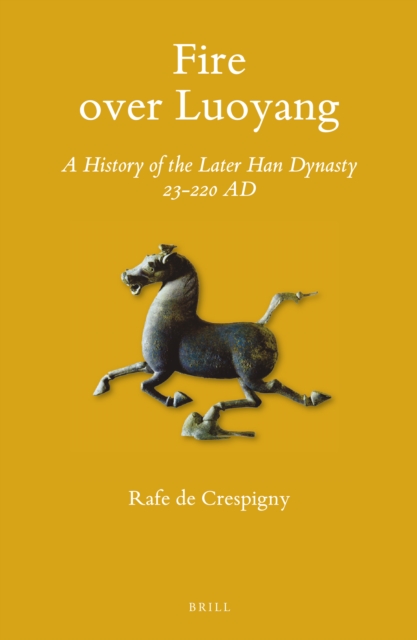
Fire over Luoyang
Rafe de Crespigny provides the first account in a Western language of one of the great dynasties of China, which dominated east Asia but collapsed in dramatic fashion at the end of the second century AD.
eBook

The Politics of Mourning in Early China
The Politics of Mourning in Early China reevaluates the longstanding assumptions about early imperial political culture. According to most explanations, filial piety served as the linchpin of the social and political order, as all political relations were a seamless extension of the relationship between father and son—a relationship that was hierarchical, paternalistic, and personal. Offering a new perspective on the mourning practices and funerary monuments of the Han dynasty, Miranda Brown asks whether the early imperial elite did in fact imagine political participation solely along the lines of the father-son relationship or whether there were alternative visions of political association. The early imperial elite held remarkably varied and contradictory beliefs about political life, and they had multiple templates and changing scripts for political action. This book documents and explains such diversity and variation and shows that the Han dynasty practice of mourning expressed many visions of political life, visions that left lasting legacies.
eBook