
Catalogue Search | MBRL


Are you sure you want to remove the book from the shelf?

{{itemTitle}}
1,070
result(s) for
"China -- Race relations"
Sort by:


The Blacks of Premodern China
Premodern Chinese described a great variety of the peoples they encountered as \"black.\" The earliest and most frequent of these encounters were with their Southeast Asian neighbors, specifically the Malayans. But by the midimperial times of the seventh through seventeenth centuries C.E., exposure to peoples from Africa, chiefly slaves arriving from the area of modern Somalia, Kenya, and Tanzania, gradually displaced the original Asian \"blacks\" in Chinese consciousness. In The Blacks of Premodern China, Don J. Wyatt presents the previously unexamined story of the earliest Chinese encounters with this succession of peoples they have historically regarded as black.A series of maritime expeditions along the East African coastline during the early fifteenth century is by far the best known and most documented episode in the story of China's premodern interaction with African blacks. Just as their Western contemporaries had, the Chinese aboard the ships that made landfall in Africa encountered peoples whom they frequently classified as savages. Yet their perceptions of the blacks they met there differed markedly from those of earlier observers at home in that there was little choice but to regard the peoples encountered as free.The premodern saga of dealings between Chinese and blacks concludes with the arrival in China of Portuguese and Spanish traders and Italian clerics with their black slaves in tow. In Chinese writings of the time, the presence of the slaves of the Europeans becomes known only through sketchy mentions of black bondservants. Nevertheless, Wyatt argues that the story of these late premodern blacks, laboring anonymously in China under their European masters, is but a more familiar extension of the previously untold story of their ancestors who toiled in Chinese servitude perhaps in excess of a millennium earlier.
eBook


Chinese Looks
From yellow-face performance in the 19th century to Jackie Chan in the 21st, Chinese Looks examines articles of clothing and modes of adornment as a window on how American views of China have changed in the past 150 years. Sean Metzger provides a cultural history of three iconic objects in theatrical and cinematic performance: the queue, or man's hair braid; the woman's suit known as the qipao; and the Mao suit. Each object emerges at a pivotal moment in US-China relations, indexing shifts in the balance of power between the two nations. Metzger shows how aesthetics, gender, politics, economics, and race are interwoven and argues that close examination of particular forms of dress can help us think anew about gender and modernity.
eBook

Muslims in Amdo Tibetan Society
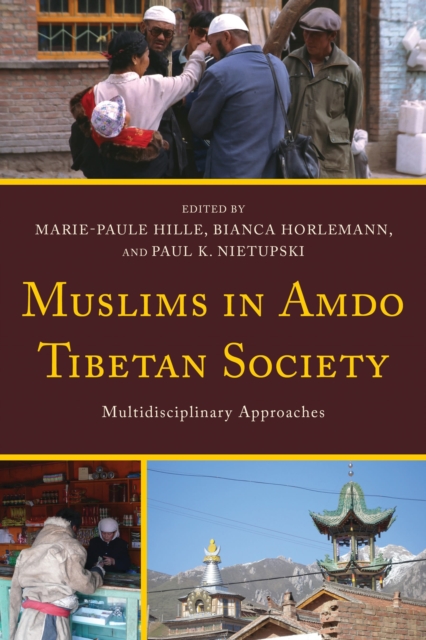
Muslims in Amdo Tibetan Society: Multi-Disciplinary Approaches offers nine case studies from several academic disciplines. The chapters describe the ethnic, cultural, linguistic, and religious diversity within the Muslim communities of Amdo and illustrate complex social interactions with other Amdo communities. While relations between Han Chinese and Tibetans, and between Han Chinese and Muslims in Qinghai and Gansu, have already attracted scholarly attention, this volume has a special focus on Tibetan-Muslim interactions. These are rarely discussed and if so, then mostly in the contexts of trade relations and conflicts. This volume challenges some established stereotypes of Tibetan-Muslim relations and also highlights new facets of cross-cultural contacts and religious and linguistic influences.
eBook

Plague and fire : battling black death and the 1900 burning of Honolulu's Chinatown
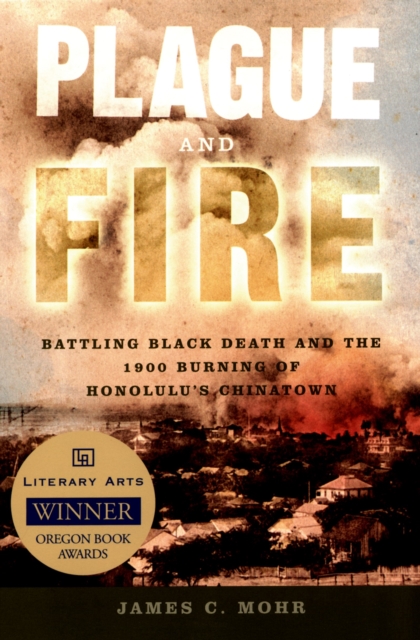
The bubonic plague reached Hawaii for the first time in 1899, just as the archipelago was being annexed by the US. To deal with the epidemic, governmental authorities granted absolute emergency powers to the Honolulu Board of Health. Committed to the new science of bacteriology, the Board physicians eventually decided to burn buildings where victims had died, hoping thereby to destroy any remaining plague bacilli. On January 20, 1900, one of those controlled burns burgeoned into a larger inferno that obliterated the Chinatown section of the city. In a few hours, over 5,000 people lost everything they had and were marched to detention camps where they were held under armed guard. Next to the bombing of Pearl Harbor, this remains the worst civic disaster in Hawaiian history, and probably the worst civic disaster ever to result from an American public health initiative. In the larger context of medical history, ethnic studies, and American imperialism, this book tells the story of how that catastrophe came about and how the principal racial and ethnic groups in Honolulu — Chinese, Japanese, Hawaiians, and whites — responded to the crisis.
eBook


The Art of Symbolic Resistance
Against the background of the Ürümchi riots (July 2009), this book provides a longitudinal study of contemporary Uyghur identities and Uyghur-Han relations. Previous studies considered China’s Uyghurs from the perspective of the majority Han (state or people). Conversely, The Art of Symbolic Resistance considers Uyghur identities from a local perspective, based on interviews conducted with group members over nearly twenty years. Smith Finley rejects assertions that the Uyghur ethnic group is a ‘creation of the Chinese state’, suggesting that contemporary Uyghur identities involve a complex interplay between long-standing intra-group socio-cultural commonalities and a more recently evolved sense of common enmity towards the Han. This book advances the discipline in three senses: from a focus on sporadic violent opposition to one on everyday symbolic resistance; from state to ‘local’ representations; and from a conceptualisation of Uyghurs as ‘victim’ to one of ‘creative agent’.
eBook