
Catalogue Search | MBRL


Are you sure you want to remove the book from the shelf?

{{itemTitle}}
217
result(s) for
"China Foreign economic relations Armenia."
Sort by:
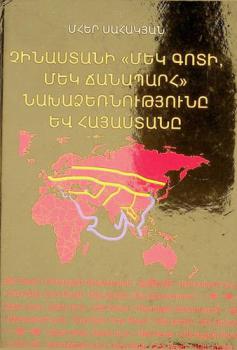

China's Belt and Road Initiative : potential transformation of Central Asia and the South Caucasus
China's Belt and Road Initiative (BRI) is a potential gamechanger for the Central Asia and South Caucasus (CASC) region. CASC countries naturally view this massive development program as a unique opportunity to accelerate their economic development through increased foreign investment, upgraded physical infrastructure, and tighter economic relationships with their neighbors.Yet embracing the BRI is not without risks. Some BRI investments may prove to be fiscally unsustainable, economically and financially unviable, and socially and environmentally harmful. Inadequate cross-border coordination and infrastructure maintenance could render some BRI investments wasteful or redundant. If not proactively addressed, these risks have the potential to leave countries worse off for having participated in the BRI.Policymakers in the CASC region and their development partners, thus, face a daunting question: how to realize the promise of the BRI for their countries while avoiding the pitfalls that lie along the way?This book attempts to answer this question by leveraging the unique insights of development experts in the CASC region. Drawing on the most comprehensive review of BRI investment data conducted to date, this book presents a dynamic policy agenda that is relevant to any country in which China is building the Belt and Road.
eBook

Do Anti-dumping Duties Still Matter? The Curious Case of Aluminum Foil
In 2009, the EU imposed anti-dumping duties on aluminum foil imported from Armenia, Brazil, and China for five years. The final determination resulted in the imposition of definitive anti-dumping duties of 13.4% (Armenia), 17.6% (Brazil), and 6.4–30% (China). This paper quantifies the direct and indirect effects of the EU anti-dumping duty on EU and US imports from targeted and unaffected countries using detailed data for the years 2006 through 2012, and controlling for exports of all products within the aluminum sheet, plate, and foil manufacturing industry from all countries. The findings point to the trade destruction, trade depression, trade diversion, and trade deflection effects typically found in the existing literature. However, the uniqueness of this case lies in the fact that the Armenian exporter is a subsidiary of a Russian firm. And as Armenia's exports to the EU declined, they expanded rapidly to the US. At the same time, the US imports from Russia, a country not directly touched by the anti-dumping ruling, declined dramatically, and were diverted to the EU. This points to the potential ineffectiveness of anti-dumping duties in the presence of multinational corporations with production facilities located across countries differentially impacted by anti-dumping duties.
Journal Article
