
Catalogue Search | MBRL


Are you sure you want to remove the book from the shelf?

{{itemTitle}}
10,910
result(s) for
"China Geography."
Sort by:

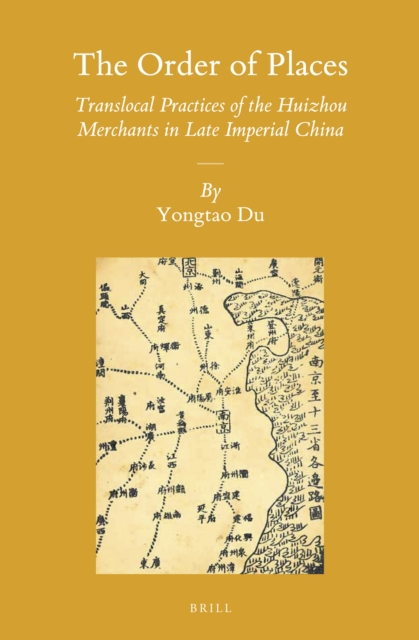
The Order of Places
In The Order of Places Yongtao Du tells a story of how the increase in geographical mobility in sixteenth through eighteenth century China brought about new understandings of spatial order in the world's most enduring empire.
eBook


The Politics of Heritage Tourism in China
This volume unravels the politics surrounding behind China’s hegemonic project of heritage tourism development in Lijiang. It provides a compelling study of the dialectical relationships between global and domestic capital, the state, tourists and locals as they collude, collaborate and contest one another to ready Lijiang for tourist consumption.
Using rich material from insightful interviews and quantitative data, the authors show how complex tourism development can be even as it strives to do good for the community. Su and Teo investigate the practices of contestation and negotiation of identity within Lijiang; analyze the negotiations that transform material and vernacular landscapes; and suggests strategies that will enable sustained tourism interest in this location. Linking Gramsci’s theory on hegemony to the cultural politics of space, this book has two major strengths: it establishes a theoretical framework to conceptualize power relations in tourism space and provides critical insights into the rapidly shifting socio-political landscape of contemporary China. Comparisons with other Chinese heritage sites are also provided.
By addressing the power struggles inevitable in the process of tourism development, The Politics of Heritage Tourism in China provides an innovative understanding of China’s dynamic politics in a period of transition. As such, it will address the needs of students and academic scholars working in the fields of China studies, tourism, cultural studies, urban studies, sociology, geography, political science and heritage studies.
1. Rethinking tourism politics 2. The cultural politics of tourism: exploring the complexity of hegemony 3. Locating Lijiang: connections and process 4. Producing heritage: Lijiang’s immersion into global tourism 5. Consuming heritage: tourists’ expectations and influence on Lijiang 7. Local agency in heritage tourism 8. Conclusion: cultural politics of heritage tourism and beyond
Xiaobo Su is Assistant Professor at the Department of Geography, University of Oregon.
Peggy Teo is an independent scholar working on tourism issues in Asia. She is also co-editor of Interconnected Worlds: Tourism in Southeast Asia (Pergamon, 2001) and Asia on Tour: Exploring the Rise of Asian Tourism (Routledge, 2009)
eBook

Empire and the environment in the making of Manchuria
\"This unique and compelling analysis of Manchuria's environmental history demonstrates how the region's geography shaped China's past. Since the seventeenth century, the call of the Manchurian wilderness, with its abundant wildlife, timber, and mining deposits, has led some of the greatest empires in the world to do battle for its riches. Chinese, Japanese, Manchu, Russian, and other imperial forces have defied unrelenting summers and unforgiving winters as they fought for sovereignty over this vast \"frontier.\" Until now, historians have focused on rivalries between Manchuria's colonizing forces. Empire and Environment in the Making of Manchuria examines the interplay of climate and competing imperial interests in the region's vibrant--and violent--cultural narrative. Families that settled this borderland reaped its riches while at the mercy of an unforgiving and hotly contested landscape. As China's strength as a world leader continues to grow, this volume invites further exploration of the indelible links between empire and environment. The role of Manchuria in China's social and political evolution provides context for understanding how the geopolitical future of this global economic powerhouse is rooted in its past.\"-- Provided by publisher.
Book

In Search of Paradise
A new revolution in homeownership and living has been sweeping the booming cities of China. This time the main actors on the social stage are not peasants, migrants, or working-class proletariats but middle-class professionals and entrepreneurs in search of a private paradise in a society now dominated by consumerism. No longer seeking happiness and fulfillment through collective sacrifice and socialist ideals, they hope to find material comfort and social distinction in newly constructed gated communities. This quest for the good life is profoundly transforming the physical and social landscapes of urban China.
Li Zhang, who is from Kunming, the capital of Yunnan province, turns a keen ethnographic eye on her hometown. She combines her analysis of larger political and social issues with fine-grained details about the profound spatial, cultural, and political effects of the shift in the way Chinese urban residents live their lives and think about themselves.In Search of Paradiseis a deeply informed account of how the rise of private homeownership is reconfiguring urban space, class subjects, gender selfhood, and ways of life in the reform era.
New, seemingly individualistic lifestyles mark a dramatic move away from yearning for a social utopia under Maoist socialism. Yet the privatization of property and urban living have engendered a simultaneous movement of public engagement among homeowners as they confront the encroaching power of the developers. This double movement of privatized living and public sphere activism, Zhang finds, is a distinctive feature of the cultural politics of the middle classes in contemporary China. Theoretically sophisticated and highly accessible, Zhang's account will appeal not only to those interested in China but also to anyone interested in spatial politics, middle-class culture, and postsocialist governing in a globalizing world.
eBook


From Frontier Policy to Foreign Policy
Between the mid-eighteenth and mid-nineteenth centuries, Qing rulers, officials, and scholars fused diverse, fragmented perceptions of foreign territory into one integrated worldview. In the same period, a single \"foreign\" policy emerged as an alternative to the many localized \"frontier\" policies hitherto pursued on the coast, in Xinjiang, and in Tibet. By unraveling Chinese, Manchu, and British sources to reveal the information networks used by the Qing empire to gather intelligence about its emerging rival, British India, this book explores China's altered understanding of its place in a global context. Far from being hobbled by a Sinocentric worldview, Qing China's officials and scholars paid close attention to foreign affairs. To meet the growing British threat, they adapted institutional practices and geopolitical assumptions to coordinate a response across their maritime and inland borderlands. In time, the new and more active response to Western imperialism built on this foundation reshaped not only China's diplomacy but also the internal relationship between Beijing and its frontiers.
eBook
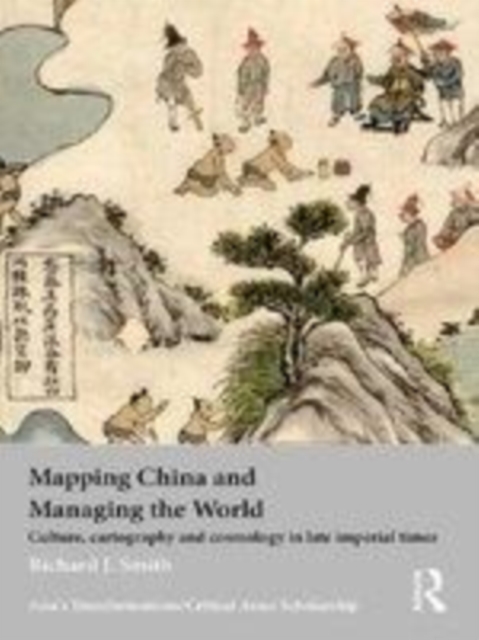
Mapping China and Managing the World
From the founding of the Qin dynasty in 221 bce to the present, the Chinese have been preoccupied with the notion of ordering their world. Efforts to create and maintain order are expressed not only in China's bureaucratic institutions and methods of social and economic organization but also in Chinese philosophy, religious and secular ritual, and comprehensive systems of classifying all natural and supernatural phenomena.
Mapping China and Managing the World focuses on Chinese constructions of order (zhi) and examines the most important ways in which elites in late imperial China sought to order their vast and variegated world. This book begins by exploring the role of ancient texts and maps as the two prominent symbolic devices that the Chinese used to construct cultural meaning, and looks at how changing conceptions of 'the world' shaped Chinese cartography, whilst both shifting and enduring cartographic practices affected how the Chinese regarded the wider world. Richard J. Smith goes on to examine the significance of ritual in overcoming disorder, and by focusing on the importance of divination shows how Chinese at all levels of society sought to manage the future, as well as the past and the present. Finally, the book concludes by emphasizing the enduring relevance of the Yijing (Classic of Changes) in Chinese intellectual and cultural life as well as its place in the history of Sino-foreign interactions.
Bringing together a selection of essays by Richard J. Smith, one of the foremost scholars of Chinese intellectual and cultural history, this book will be welcomed by Chinese and East Asian historians, as well as those interested more broadly in the culture of China and East Asia.
eBook