
Catalogue Search | MBRL


Are you sure you want to remove the book from the shelf?

{{itemTitle}}
1,775
result(s) for
"China History, Local."
Sort by:

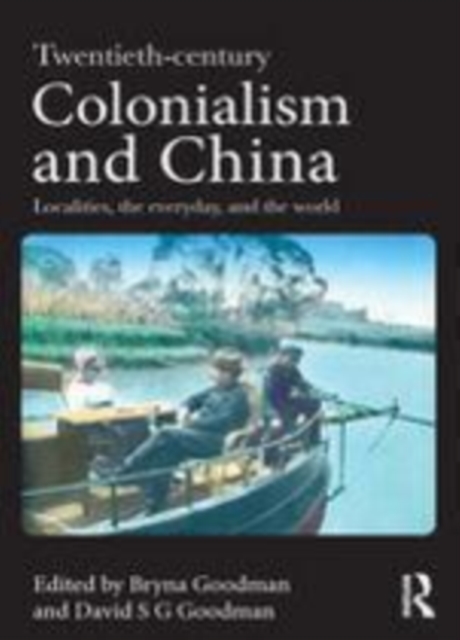
Twentieth-Century Colonialism and China
Colonialism in China was a piecemeal agglomeration that achieved its greatest extent in the first half of the twentieth century, the last edifices falling at the close of the century. The diversity of these colonial arrangements across China's landscape defies systematic characterization.
This book investigates the complexities and subtleties of colonialism in China during the first half of the twentieth century. In particular, the contributors examine the interaction between localities and forces of globalization that shaped the particular colonial experiences characterizing much of China's experience at this time. In the process it is clear that an emphasis on interaction, synergy and hybridity can add much to an understanding of colonialism in Twentieth Century China based on the simple binaries of colonizer and colonized, of aggressor and victim, and of a one-way transfer of knowledge and social understanding. To provide some kind of order to the analysis, the chapters in this volume deal in separate sections with colonial institutions of hybridity, colonialism in specific settings, the social biopolitics of colonialism, colonial governance, and Chinese networks in colonial environments.
Bringing together an international team of experts, Twentieth Century Colonialism and China is an essential resource for students and scholars of modern Chinese history and colonialism and imperialism.
eBook

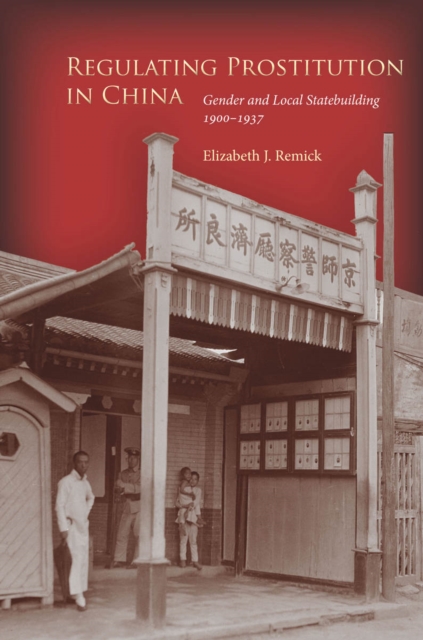
Regulating Prostitution in China
In the early decades of the twentieth century, prostitution was one of only a few fates available to women and girls besides wife, servant, or factory worker. At the turn of the century, cities across China began to register, tax, and monitor prostitutes, taking different forms in different cities. Intervention by way of prostitution regulation connected the local state, politics, and gender relations in important new ways. The decisions that local governments made about how to deal with gender, and specifically the thorny issue of prostitution, had concrete and measurable effects on the structures and capacities of the state.
This book examines how the ways in which local government chose to shape the institution of prostitution ended up transforming local states themselves. It begins by looking at the origins of prostitution regulation in Europe and how it spread from there to China via Tokyo. Elizabeth Remick then drills down into the different regulatory approaches of Guangzhou (revenue-intensive), Kunming (coercion-intensive), and Hangzhou (light regulation). In all three cases, there were distinct consequences and implications for statebuilding, some of which made governments bigger and wealthier, some of which weakened and undermined development. This study makes a strong case for why gender needs to be written into the story of statebuilding in China, even though women, generally barred from political life at that time in China, were not visible political actors.
eBook


Ballot Box China
Since 1988, China has undergone one of the largest, but least understood experiments in grassroots democracy. Across 600, 000 villages in China, with almost a million elections, some three million officials have been elected. The Chinese government believes that this is a step towards `democracy with Chinese characteristics'. But to many involved in them, the elections have been mired by corruption, vote-rigging and cronyism. This book looks at the history of these elections, how they arose, what they have achieved and where they might be going, exploring the specific experience of elections by those who have taken part in them - the villagers in some of the most deprived areas of China.
eBook

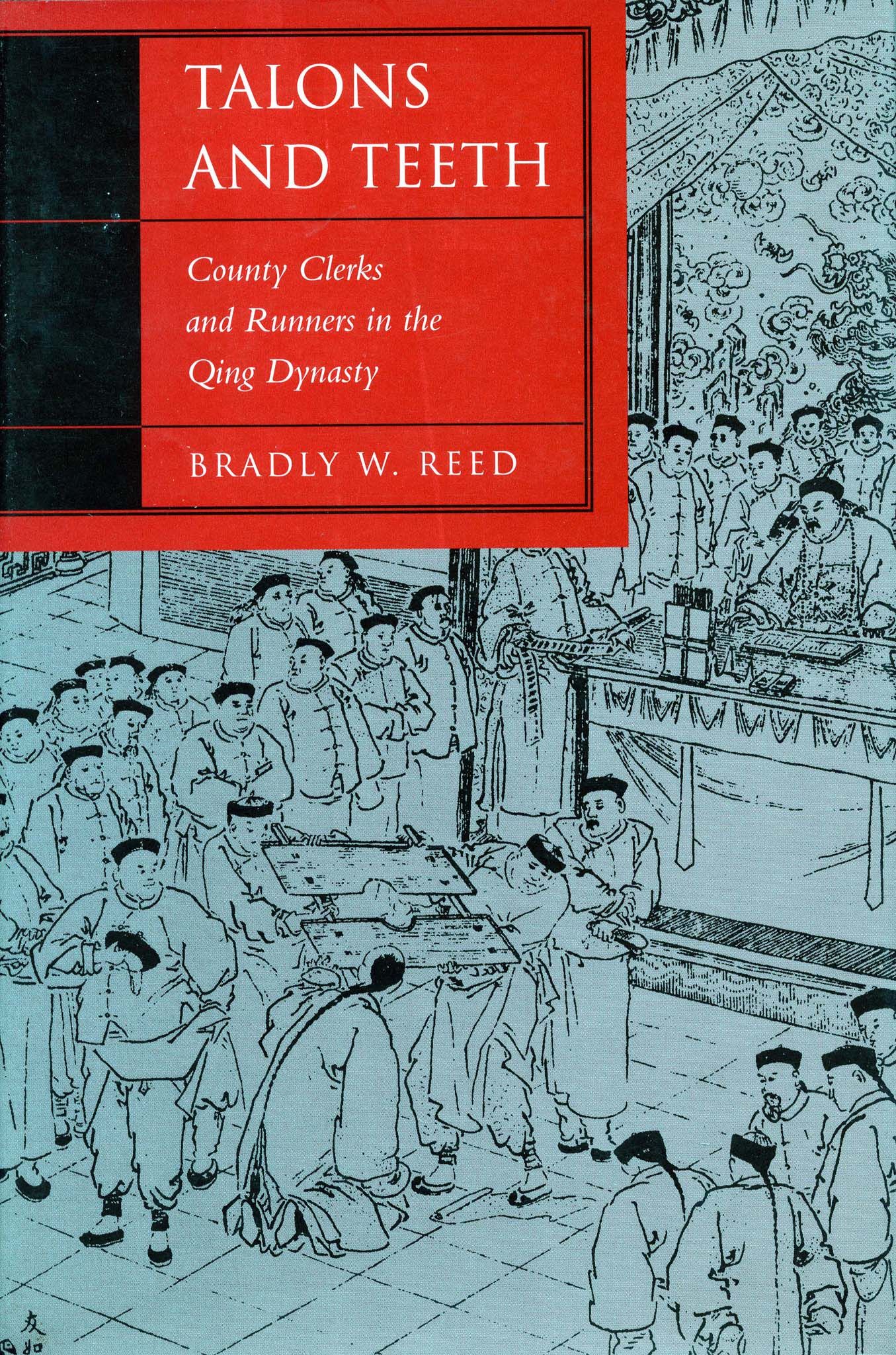
Talons and teeth : county clerks and runners in the Qing Dynasty
For commoners in the Qing dynasty, the most salient agents of the imperial state were not the emperor's appointed officials but rather the clerks and runners of the county yamen, the lowest level of functionaries in the Qing state's administrative hierarchy. Yet until now we have known very little about these critically important persons beyond the caricatured portrayals of corruption and venality left by Qing high officials and elites.
Drawing from the rich archival records of Ba county, Sichuan, the author challenges the simplicity of these portrayals by taking us inside the county yamen to provide the first detailed look at local administrative practice from the perspective of those who actually carried it out. Who were the county clerks and runners? How were they recruited, organized, disciplined, and rewarded? What was the economic basis for a career in the yamen? How did clerks and runners view themselves as well as legitimize their role in Qing government? And what impact did their interests and practices have on symbolically laden elements of imperial government such as the magistrate's court?
In addressing these questions, the author traverses the disjuncture between statutory regulations and the realities of daily administrative practice, uncovering a realm of informal, semiautonomous, yet highly structured and even rationalized procedures. Although frequently in violation of formal law, this extra-statutory system nevertheless remained an irreducible component of local government under the Qing. Recognizing the centrality of such informal practice to yamen administration forces us to rethink not only traditional assumptions concerning local corruption in the Qing, but also the ways in which we conceptualize the boundaries between state and society in late imperial China.
eBook

The Everlasting Empire
Established in 221 BCE, the Chinese empire lasted for 2,132 years before being replaced by the Republic of China in 1912. During its two millennia, the empire endured internal wars, foreign incursions, alien occupations, and devastating rebellions--yet fundamental institutional, sociopolitical, and cultural features of the empire remained intact.The Everlasting Empiretraces the roots of the Chinese empire's exceptional longevity and unparalleled political durability, and shows how lessons from the imperial past are relevant for China today.
Yuri Pines demonstrates that the empire survived and adjusted to a variety of domestic and external challenges through a peculiar combination of rigid ideological premises and their flexible implementation. The empire's major political actors and neighbors shared its fundamental ideological principles, such as unity under a single monarch--hence, even the empire's strongest domestic and foreign foes adopted the system of imperial rule. Yet details of this rule were constantly negotiated and adjusted. Pines shows how deep tensions between political actors including the emperor, the literati, local elites, and rebellious commoners actually enabled the empire's basic institutional framework to remain critically vital and adaptable to ever-changing sociopolitical circumstances. As contemporary China moves toward a new period of prosperity and power in the twenty-first century, Pines argues that the legacy of the empire may become an increasingly important force in shaping the nation's future trajectory.
eBook