
Catalogue Search | MBRL


Are you sure you want to remove the book from the shelf?

{{itemTitle}}
6
result(s) for
"China gnd"
Sort by:
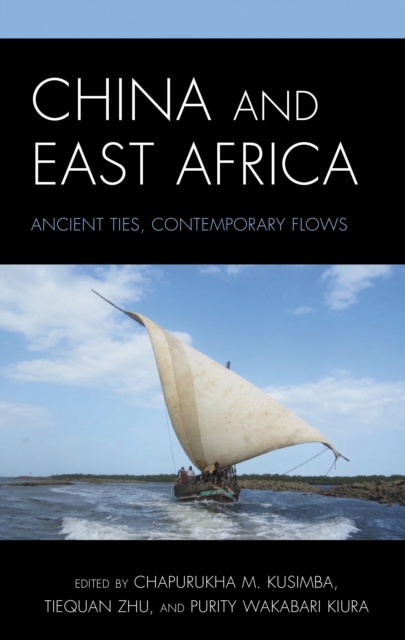
China and East Africa : ancient ties, contemporary flows
China and East Africa: Ancient Ties and Contemporary Flows marks the culmination of a new round of archaeological and historical research on the relations between China and Africa, from the origins to the present.Africa and Asia have always been in constant contact, through land and seas.
eBook
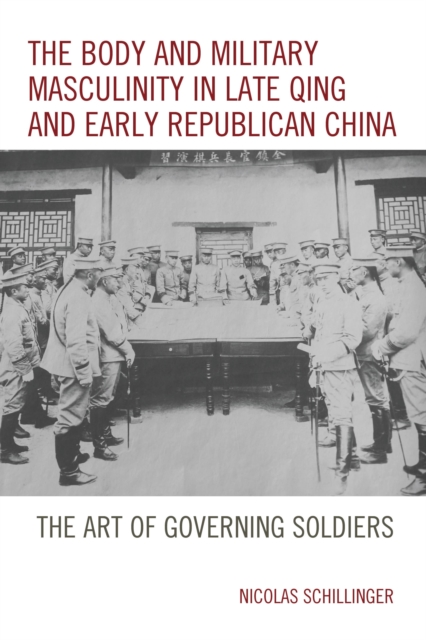
The body and military masculinity in late qing and early republican China
In 1894-1895, after suffering defeat against Japan in a war primarily fought over the control of Korea, the Qing government initiated fundamental military reforms and established \"New Armies\" modeled after the German and Japanese military.
eBook
China and the gulf cooperation council countries
This book examines China's relations with member states of the Gulf Cooperation Council.It highlights the depth of China's ties with the region bilaterally and multilaterally on a five-dimensional approach: political relations, trade relations, energy security, security cooperation, and cultural relations.
eBook
A brief history of finance in China (Economic history in China series)
This is a short history of finance in China, covering the development of native financial institutions and practices, the influx of foreign banks, the financial policies of governments in modern China, and the beginnings of the Chinese Communist Party financial system.
eBook
Learning to be Tibetan
Since the founding of the People’s Republic of China in 1949, the Chinese Community Party (CCP) has launched a nation-wide ethnic identification project to recognize ethnic minorities, which are widely considered as “peripheral,” “barbarian,” “inferior,” “backward,” and “distrusted.” State schooling is expected to play a significant political role in civilizing and integrating these ethnic minorities. As an important part of Chinese state schooling, fifteen tertiary minority institutions have been established, assuming a primary goal of cultivating minority officials who are loyal to the CCP. This study, situating in the context of Minzu University of China (MUC), the best university designated specifically for the education of ethnic minorities, seeks to explore the intersection between state schooling and ethnic identity construction of Tibetan students. Ethnographic data has revealed how educational backgrounds of MUC’s Tibetan students have influenced the ways in which they interpret, negotiate and assert their Tibetan-ness. Four patterns of ethnic identification are discussed: (1) For the min kao min students (meaning having received bilingual education in Chinese and Tibetan prior to MUC) in Tibetan studies, being Tibetan means assuming an ethnic mission of promoting Tibetan language and culture; (2) For the min kao min students in other majors, being Tibetan embodies having a different physical appearance, wearing different clothing, engaging in different religious practices, holding cultural beliefs and generally under-achieving academically in Han-dominant settings; (3) For the inland Tibetan school graduates, being Tibetan means having a reflective awareness of their cultural and language loss due to their dislocated schooling and a determination to make up for the past by innovatively initiating, organizing or participating in Tibetan cultural programs; (4) For the min kao han (meaning having received mainstream education the same as Han Chinese prior to MUC) students, being Tibetan is simply a symbolic identity that they sometimes utilize to gain preferential treatments. With the exception of most of the min kao han students, Tibetan identity has been revitalized and strengthened after studying and living in MUC. In the process, the unity of the Tibetan group has been promoted and enhanced. Tibetan students’ different approaches to ethnic identification provide us with useful lessons about ethnic identity dynamics in relation to education, culture, and ethnic politics. As opposed to other interpretations that see Tibetans as exotic ethnic others, this study reveals that Tibetan students’ ethnic identification is meaningful when they strategically negotiate with the Han-Chinese-dominant narratives. This study contributes to the understanding of ethnic politics and interethnic dynamics in China.
eBook
Elinor Ostrom's Rules for Radicals
Elinor Ostrom was the first woman to win the Nobel Prize for Economics. Her theorising of the commons has been celebrated as groundbreaking and opening the way for non-capitalist economic alternatives, yet, many radicals know little about her. This book redresses this, revealing the indispensability of her work for green politics, left economics and radical democracy.
Ostrom has often been viewed as a conservative or managerial thinker; but Derek Wall’s analysis of her work reveals a how it is invaluable for developing a left political programme in the twenty-first century. Central to Ostrom’s work was the move ‘beyond panaceas’; transforming institutions to widen participation, promote diversity and favour cooperation over competition. She regularly challenged academia as individualist, narrow and elitist and promoted a radical take on education, based on participation. Her investigations into how we share finite resources has radical implications for the Green movement and her rubric for a functioning collective ownership is highly relevant in order in achieving radical social change.
As activists continue to reject traditional models of centralised power, Ostrom’s work will become even more vital, offering a guide to creating economics that exists beyond markets and states.
eBook