
Catalogue Search | MBRL


Are you sure you want to remove the book from the shelf?

{{itemTitle}}
1,271
result(s) for
"China medicinal plants"
Sort by:


Chinese medicinal plants, herbal drugs and substitutes : an identification guide
The product of fifteen years of collecting activity throughout China, this book offers the first comprehensive, botanically authoritative, and practical illustrated identification guide to Chinese medicinal plants and drugs and their substitutes.
eBook

China Medicinal Plants of the Ampelopsis grossedentata—A Review of Their Botanical Characteristics, Use, Phytochemistry, Active Pharmacological Components, and Toxicology
Ampelopsis grossedentata (AG) is mainly distributed in Chinese provinces and areas south of the Yangtze River Basin. It is mostly concentrated or scattered in mountainous bushes or woods with high humidity. Approximately 57 chemical components of AG have been identified, including flavonoids, phenols, steroids and terpenoids, volatile components, and other chemical components. In vitro studies have shown that the flavone of AG has therapeutic properties such as anti-bacteria, anti-inflammation, anti-oxidation, enhancing immunity, regulating glucose and lipid metabolism, being hepatoprotective, and being anti-tumor with no toxicity. Through searching and combing the related literature, this paper comprehensively and systematically summarizes the research progress of AG, including morphology, traditional and modern uses, chemical composition and structure, and pharmacological and toxicological effects, with a view to providing references for AG-related research.
Journal Article

The complete plastome genome sequence of Cynanchum otophyllum (Asclepiadaceae), a unique medicinal species in China
Schneid is an important medicinal plant in China. In this paper, the chloroplast genome of
was sequenced based on high-throughput technology, and the chloroplast genome structure characteristics and phylogenetic relationship of
were analyzed. The results showed the complete plastome genome size of
is 160,874bp, including one small single copy (SSC, 19,851bp) and one large single copy (LSC, 92,009bp) regions isolated by a pair of inverted repeat regions (IRs, 24,507bp). The whole plastome genome including 84 protein encoding genes, 8 rRNA and 37 tRNA. Based on the phylogenetic topologies,
shows close association with additional
and
genus. This study contributes to an enhanced understanding of the genetic information of
and provides a theoretical basis for the development of molecular markers and phylogeographic of the species, as well as for constructing the phylogenetic tree of Asclepiadaceae.
Journal Article

High performance liquid chromatography fingerprinting technology of the commonly-used traditional Chinese medicine herbs
This book provides a comprehensive and up-to-date account of the HPLC technology and fingerprints of commonly-used Chinese herbs. It contains HPLC fingerprints of over 40 traditional Chinese medicinal herbs and details of their sources, production and quality control. The book provides a practical review of the techniques, relevant materials, and the particular demands for using HPLC in traditional Chinese medicinal herb applications. It also covers HPLC methods used to analyze the herbs.
eBook
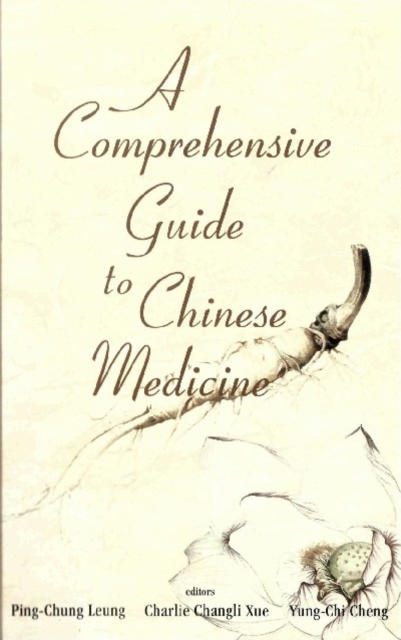
A comprehensive guide to Chinese medicine
This invaluable book is aimed at those who are concerned about Chinese medicine - how it works, what its current state is and, most important, how to make full use of it. The audience therefore includes clinicians who want to serve their patients better and patients who are eager to supplement their own conventional treatment.
The authors of the book belong to three different fields, viz. clinical and basic sciences, Chinese medicine and pharmacology. They provide information from their areas of expertise and concern, attempting to make it comprehensive for users. The approach is macroscopic and philosophical; readers convinced of the philosophy are to seek specific assistance.
eBook

Integrated physiological, biochemical and transcriptomic analyses elucidate the response of alpine plant Lamiophlomis rotata (Benth.) Kudo to Low-Nitrogen stress
Lamiophlomis rotata
(Benth.) Kudo, an endangered medicinal plant endemic to the Qinghai-Tibet Plateau (altitude of 3100–5000 m), faces conservation challenges due to wild resource scarcity and cultivation difficulties. This investigation employed a gradient nitrogen stress system (N1-N4) with a nitrogen-free control (CK) to decipher its nitrogen adaptation mechanisms. Key findings revealed: (1) superior biomass accumulation, SPAD content, and total nitrogen levels in N1 compared to N4; (2) N4-induced suppression of antioxidant enzymes concurrent with elevated secondary metabolites; (3) transcriptomic perturbations in nitrogen metabolism, monoterpenoid biosynthesis, and photosynthetic pathways; (4) identification of eight nitrogen metabolism-related genes and eight iridoid synthase-associated genes exhibiting stress intensity-dependent expression patterns. Notably, key enzymatic activities (NR, Nrt, CA, GS, FM, DXS, NM) demonstrated unimodal responses peaking at N3 intensity. The species demonstrated nitrogen conservation strategies through enhanced assimilation and metabolic diversion into secondary biosynthesis, providing critical insights for alpine medicinal plant cultivation.
Journal Article

Variation analysis of growth traits and medicinal components in different provenances of Polygonatum cyrtonema based on heterogeneous garden experiment
Polygonatum cyrtonema is a valuable medicinal and edible plant whose sustainable utilization is challenged by wild resource depletion and germplasm degradation. This study established a multi-site provenance trial across three heterogeneous garden environments in Zhejiang Province, China, to evaluate 11 geographically diverse provenances. We systematically measured growth traits (plant height, stem diameter, leaf morphology) and medicinal components (polysaccharides, saponins, flavonoids, total phenolics), and applied combined ANOVA, correlation analysis, principal component analysis, and cluster analysis to quantify provenance variation patterns and environmental drivers. Results revealed highly significant differences (P < 0.01) among provenances, sites, and their interactions for all traits. Substantial phenotypic (PCV: 7.41%–46.89%) and genotypic (GCV: 5.99%–44.92%) coefficients of variation were observed, with particularly high variation in polysaccharides and key growth traits, coupled with substantial provenance repeatability (0.63–0.99), indicated strong potential for selective breeding. Correlation analysis showed significant positive associations between growth traits and key medicinal components. Geo-climatic analysis identified distinct environmental drivers: saponin content increased with altitude and temperature, while flavonoid accumulation was promoted in drier conditions. Based on principal component analysis (cumulative contribution: 85.20%), Songyang (3.34) and Yunhe (2.98) provenances achieved the highest comprehensive evaluation scores. Cluster analysis further classified the provenances into three groups, with Songyang and Yunhe forming a distinct cluster characterized by superior growth and medicinal compound accumulation. These provenances are recommended as elite materials for breeding programs. This study provides a scientific basis for the selective breeding of P. cyrtonema and holds significant practical implications for enhancing the quality and efficiency of the understory economy and promoting the sustainable use of medicinal plant resources.
Journal Article

Ethnobotanical study on medicinal plants used by Mulam people in Guangxi, China
Background
The Mulam are an ethnic group native to Guangxi, and nearly 80% of the Mulam population lives in Luocheng Mulam Autonomous County, northern Guangxi, southern China. They have accumulated rich medicinal folk knowledge through practice and experience in their long-term struggles with disease and the harsh natural environment. However, their traditional medicinal knowledge is threatened due to a lack of written records, conservative inheritance patterns, and rapid economic development. Therefore, the investigation and documentation of medicinal plants and their associated indigenous wisdom are necessary.
Method
Ethnobotanical data were collected from 12 villages and five communities in Luocheng County from January 2013 to April 2017. A total of 128 informants were interviewed through semistructured interviews, field observations, group discussions, and guided field walks. Quantitative indices such as use categories, preference ranking exercises, the informant consensus factor (ICF), and the fidelity level (FL) were used to evaluate the importance of medicinal plant species. Additionally, group discussions were conducted about the conservation of and threats to medicinal plants and traditional knowledge.
Results
A total of 456 medicinal plant species from 350 genera and 132 families were recorded and documented in our ethnobotanical investigation. Most of them (335 species, 73.47%) were obtained from wild habitats. Most of the documented species (246) were herbaceous (54%), followed by shrubs, with 76 species (17%), lianas, with 75 species (16%), and trees, with 59 species (13%). The most common method of administration was oral administration, which was used for 390 species (62.70%). The most common method of preparation was decoction (316 species, 54.11%). The plants were used to treat 312 human diseases in 12 disease categories, and most of the categories had a high ICF value. The highest ICF value was recorded for gynecological ailments (0.92), followed by nervous and psychosomatic problems (0.90) and digestive system diseases (0.89). Traditional medicinal knowledge and medicinal plants are under threat due to conservative inheritance processes and anthropogenic pressures for various reasons.
Conclusion
A rich diversity of medicinal plants is distributed in the Mulam area, and these plants play an important role in healthcare among the Mulam people. Mulam people are skilled in using the plants in their surroundings to treat diseases in their daily lives. However, their traditional medicinal knowledge and medicinal plants are greatly threatened by rapid economic development for various reasons. Thus, policies and practices for the conservation of medicinal plants and the associated traditional knowledge are necessary.
Journal Article
Genome assembly and multi-omics analyses of Isodon lophanthodies provide insights into the distribution of medicinal metabolites induced by exogenous methyl jasmonate
Background
Isodon lophanthodies
is a perennial herb and the whole plant has medicinal value distributed in southern China and southeast Asia. The absence of a reference genome has hindered evolution and genomic breeding research of this species. Results: In this study, we present a high-quality, chromosome-level genome assembly of
I. lophanthodies
with integrating PacBio and Hi-C sequencing data. We assembled a genome of 412.78 Mb with a scaffold N50 of ~ 33.43 Mb, organized into 12 pseudochromosomes. This assembly includes 36,324 genes and 209.51 Mb of repetitive sequences. Phylogenetic analysis revealed that
I. lophanthodies
and its sister species
Isodon rubescens
diverged approximately 9.99 million years ago (MYA), and shared a recent whole-genome duplication (WGD) event. Combined with the gene expression profile and metabolite fluctuation in response to methyl jasmonate, two key enzymes involved in salicin synthesis pathway were further identified. Conclusions: This genome assembly provides an essential reference for future research on
I. lophanthodies
, and enhances our understanding of salicin synthesis and medicinal metabolite profiles in response to exogenous methyl jasmonate.
Journal Article