
Catalogue Search | MBRL


Are you sure you want to remove the book from the shelf?

{{itemTitle}}
623
result(s) for
"Chinese Hegemony"
Sort by:

Embracing 'Asia' in China and Japan : Asianism discourse and the contest for hegemony, 1912-1933
This book examines how Asianism became a key concept in mainstream political discourse between China and Japan and how it was used both domestically and internationally in the contest for political hegemony. It argues that, from the early 1910s to the early 1930s, this contest changed Chinese and Japanese perceptions of?Asia?, from a concept that was foreign-referential, foreign-imposed, peripheral, and mostly negative and denied (in Japan) or largely ignored (in China) to one that was self-referential, self-defined, central, and widely affirmed and embraced. As an ism, Asianism elevated?Asia? as a geographical concept with culturalist-racialist implications to the status of a full-blown political principle and encouraged its proposal and discussion vis-à-vis other political doctrines of the time, such as nationalism, internationalism, and imperialism. By the mid-1920s, a great variety of conceptions of Asianism had emerged in the transnational discourse between Japan and China. Terminologically and conceptually, they not only paved the way for the appropriation of?Asia? discourse by Japanese imperialism from the early 1930s onwards but also facilitated the embrace of Sino-centric conceptions of Asianism by Chinese politicians and collaborators.
Book

IS CHINA RECOLONIZING AFRICA?
This study assesses Sino-African cooperation with a view to understanding its nature and subsequently identifying ways to improve it. Using a mixed method that combined in-depth interviews, Afrobarometer, and Johns Hopkins’ China Africa Research Initiative (CARI) data, I find that, despite a few gains, China takes the lion’s share of benefits from the cooperation. Indeed, the balance of trade is skewed toward China, and there is very little Chinese foreign direct investment (FDI) flowing to Africa. Moreover, ‘debt trap diplomacy’ is crippling African economies, raising alarm over whether China intends to recolonize the continent. Also, while Chinese aid is negligible, the amount of contracts revenues and diplomatic support it gets from the continent makes one think Africa deserves more from the cooperation. Nevertheless, China, just like any other country, acts in its nation’s interest. Therefore, it is incumbent upon African countries to ensure that they demand more from the cooperation. In the end, to address China’s hegemony over Sino-African cooperation, Africa should prioritize the development of local content through technological and skill transfers, curb corruption, and build a critical mass of negotiators.
Este estudio buscó evaluar la cooperación entre China y África con el fin de comprender su naturaleza y, posteriormente, identificar formas de mejorarla. Utilizando un método mixto que combinó entrevistas en profundidad, datos de Afrobarometer y Johns Hopkins (CARI) encontramos que, a pesar de algunas pocas ganancias, China se lleva la mayor parte de los beneficios de la cooperación. De hecho, la balanza comercial está sesgada hacia China y hay muy poca IED china que fluye hacia África. Por otra parte, la diplomacia de la trampa de la deuda está paralizando las economías africanas al punto de alarmar si China tiene la intención de recolonizar el continente. Además, si bien la ayuda china es insignificante, la cantidad de ingresos por contratos y el apoyo diplomático que recibe del continente hace pensar que África merece más cooperación. Sin embargo, se observa que, al igual que cualquier otro país, China actúa en interés de su nación, por lo tanto, corresponde a los países africanos garantizar que exijan más cooperación. Al final, para abordar la hegemonía de China sobre la cooperación chino-africana, África debe priorizar el desarrollo de contenido local a través de transferencias tecnológicas y de habilidades, frenar la corrupción y construir una masa crítica de negociadores.
本研究旨在评估中非合作,以了解中非合作的性质,并找出改进中非合作的途径。通过结合深度访谈、非洲晴雨表,约翰•霍普金数据以及CARI的研究方法,笔者发现,尽管合作取得了一些成果,中国仍然从合作中获得了最大利益。事实上,贸易平衡向中国倾斜,中国对非直接投资很少。此外,债务陷阱外交正在使非洲经济陷入瘫痪,以至于中国是否打算重新占领非洲大陆的话题引起了恐慌。再者,尽管中国的援助微不足道,但它从非洲大陆获得的契约收入和外交支持,让人认为非洲应该从合作中获益更多。然而,笔者注意到,中国同其他任何国家一样采取符合本国利益的行动。因此非洲国家有责任确保自己对合作提出更多的要求。最后,为了解决中国在中非合作问题上的霸主地位,非洲应优先通过技术和技能转让来发展当地内容,遏制腐败,并培养众多的谈判家。
Journal Article

Tianxia (All-Under-Heaven): An Alternative System or a Rose by another Name?
Tianxia, uluslararası sistemi yönetmek için alternatif bir kurumsallaşma olarak kabul edilmektedir. Dünya çapında bir kurum tarafından düzenlenen dünya yönetimini ifade eder. Buna göre, bir dünya kurumu bu sistemde uyumlaştırıcı bir rol oynamaktadır. Devletler ise kendi ekonomik modellerini seçerler ve lider de farklı birimler arasındaki ilişkileri düzenler. Dolayısıyla bu makale, Tianxia'mn Batı yönelimli Uluslararası İlişkiler teorilerine alternatif bir çerçeve olduǧunu savunmaktadır. Bu anlamda, bu makale Tianxia'mn felsefi fikri ile Batı yönelimli Uluslararası İlişkiler Teorisi arasındaki benzerlikleri araştırmayı amaçlamaktadır. Daha spesifik olarak, makale konuyu uluslararası sistem perspektifinden incelemekte, iki çerçeve arasındaki epistemolojik boşluklar ve ontolojik benzerlikleri göstermektedir.
Journal Article

Hydropower infrastructure and regional order making in the Sub-Mekong region
This paper conceptualizes the interplay between infrastructures and the reconstruction of regional order. We analyze the promotion of hydropower development in the Greater Mekong Sub-Region in relation to the potential emergence of a Chinese hegemony. Dams, electricity grids and monitoring systems have enabled cross-border linkages and dependencies, enmeshing Chinese actors in various places, markets, and knowledge systems. Yet knowledge controversies over impact assessments and diverging sociotechnical imaginaries indicate that it is too early to talk about a China-centered regional order.
Journal Article
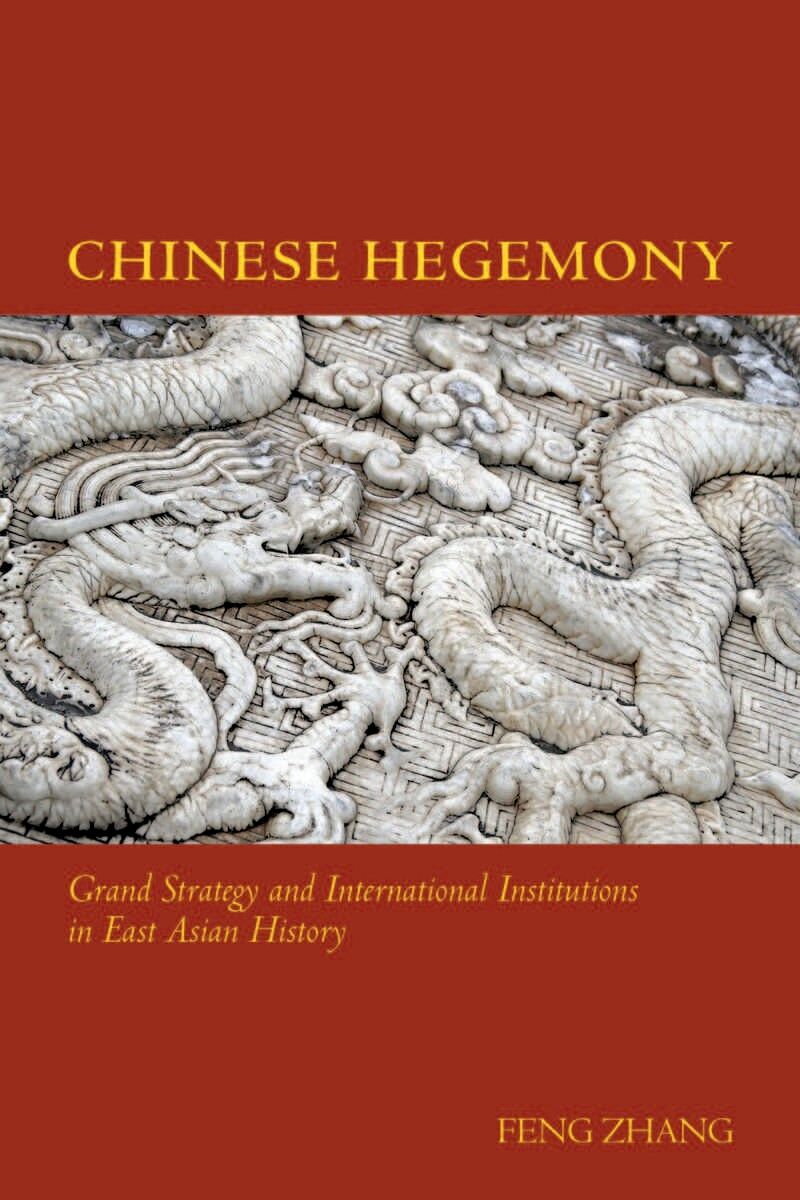
Chinese Hegemony
Chinese Hegemony: Grand Strategy and International Institutions in East Asian History joins a rapidly growing body of important literature that combines history and International Relations theory to create new perspectives on East Asian political and strategic behavior. The book explores the strategic and institutional dynamics of international relations in East Asian history when imperial China was the undisputed regional hegemon, focusing in depth on two central aspects of Chinese hegemony at the time: the grand strategies China and its neighbors adopted in their strategic interactions, and the international institutions they engaged in to maintain regional order-including but not limited to the tribute system.
Feng Zhang draws on both Chinese and Western intellectual traditions to develop a relational theory of grand strategy and fundamental institutions in regional relations. The theory is evaluated with three case studies of Sino-Korean, Sino-Japanese, and Sino-Mongol relations during China's early Ming dynasty-when a type of Confucian expressive strategy was an essential feature of regional relations. He then explores the policy implications of this relational model for understanding and analyzing contemporary China's rise and the changing East Asian order. The book suggests some historical lessons for understanding contemporary Chinese foreign policy and considers the possibility of a more relational and cooperative Chinese strategy in the future.
eBook
A Relational Theory of Grand Strategy
International relations in East Asian history can be studied with various theoretical approaches. Realism, constructivism, and the English School, in particular, have been applied to generate important insights.¹ But international relations (IR) is also a fertile field for new theories to produce novel insights that enrich our understanding. I propose a relational approach that focuses on the structured patterns of relations among political units as a promising theoretical alternative.
The advantage of relationalism derives from three considerations, one practical and the other two theoretical. First, the practical consideration is that in this area the relationships between imperial China and other
Book Chapter
Fundamental Institutions of Chinese Hegemony
The case studies of Sino-Korean, Sino-Japanese, and Sino-Mongol relations during the early Ming period have examined the processes of grand strategic interactions in these relationships. They have evaluated my relational theory and demonstrated its explanatory power and insights into strategic patterns in regional relations. Did these strategic processes also reveal the fundamental institutional practices that sustained regional order? This chapter, in deducing the institutional implications of the theoretical and empirical analyses of the preceding four chapters, will answer that question.
The existing literature provides a ready answer to the institutional question. The famous paradigm of the tribute system, invented by
Book Chapter
UNDERSTANDING THE TRIBUTE SYSTEM
What exactly is a “tribute system”? How is the tribute system related to the concept of hegemony in Asian international relations (IR)? Although many scholars believe that the tribute system is the key to understanding the early modern East Asian international order, few have attempted to elucidate empirically just how the tribute system is linked to Chinese hegemony. To understand the varying degrees of receptivity to Chinese hegemony, we must first investigate the specific rules of the game and what compliance looked like in early modern East Asia. This chapter begins by providing a review of the tribute system and
Book Chapter

The historical perspective of the Chinese Nation: An analytical framework grounded in the critique of exogenous historiographies
China maintains the most enduring and uninterrupted cultural tradition and civilizational system among major ancient civilizations. As a unified multi-ethnic nation since ancient times, throughout historical development, China’s vast territory was jointly pioneered by all its ethnicities, its enduring history collectively authored, its splendid culture co-created, and its great national spirit mutually cultivated—thereby forging an inseparable community of the Chinese Nation. This community, bound by shared subjective and objective characteristics, derives its foundational cohesion from commonalities, which are the crucial catalyst for fostering communal consciousness among its members. To conduct rigorous research into Chinese history, particularly the formative processes of the Chinese Nation, adherence to the correct historical perspective of the Chinese Nation is paramount. However, under the influence of Western cultural hegemony, exogenous historiographies and theories such as the “New Qing History”—under the guise of theoretical or discursive innovation—systematically deconstruct China’s historical narratives and the Chinese Nation’s historical discourse, either attacking or undermining the correct understanding of Chinese history, which poses challenges to a proper grasp of ethnic relations in Chinese history and the construction of the community of the Chinese Nation. Through critical analysis of the so-called “New Qing History” and similar “new historical paradigms,” this article exposes their inherent historical and logical flaws, while demonstrating the necessity to uphold the correct historical perspective of the Chinese Nation.
Journal Article

“Does Chinese philosophy count as philosophy?”: decolonial awareness and practices in international English medium instruction programs
This qualitative study integrates key theories on epistemic decolonization from Asia, Africa, and Latin America to investigate the decolonial awareness and curriculum practices of teachers and international students in an English as a medium of instruction (EMI) program on Chinese philosophy and culture at a top-rated university in China. Content analysis of the in-depth, semi-structured interviews with 17 informants reveals that the teachers and students all demonstrated varying degrees of decolonial awareness related to the marginalized status of Chinese philosophy in Anglo–-Eurocentric disciplinary systems and adopted the following strategies to decolonialize the curriculum and foster epistemic justice in the unequal geopolitics associated with knowledge production: (1) historicizing Chinese philosophy as a modern discipline that has emerged from inter-knowledge dialogues across philosophical traditions and is still in constant tension with the complex interplay of the semi-colonial, imperial, and Cold War legacies; (2) abandoning the Anglo-Eurocentric benchmark by pluralizing the disciplinary contemporaneity, and (3) cultivating epistemic trust in Chinese through intercultural translation. Moreover, the flexible shuttling between Chinese and English in EMI classrooms and tutorial sessions helped the informants to observe the decolonial awareness that was inherent in their understanding of the discipline-specific ontology. The findings suggest the agentive potential of teachers and international students to foster epistemic justice in EMI curriculum design and implementation that counters the hegemony of English as a colonial force. Finally, implications for decoloniality-informed EMI policymaking and curriculum internationalization are discussed.
Journal Article