
Catalogue Search | MBRL


Are you sure you want to remove the book from the shelf?

{{itemTitle}}
144
result(s) for
"Chinese Jews"
Sort by:
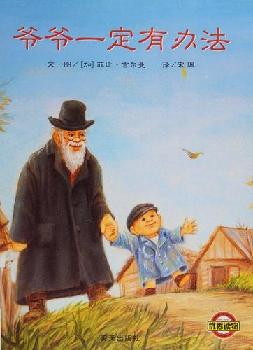
Ye ye yi ding you ban fa
In this retelling of a traditional Jewish folktale, Joseph's baby blanket is transformed into ever smaller items as he grows until there is nothing left--but then Joseph has an idea.
BOOK

Holistic Wisdom from Abrahamic Faiths’ Earliest Encounters with Ancient China: Towards a Constructive Chinese Natural Theology
Philosophies in the East and West have favored wisdom in their search for truths. The Chinese civilization has sought holistic wisdom in its long history of absorbing the Abrahamic faiths since the seventh century. This paper aims to investigate how the Abrahamic faiths have interacted with ancient Chinese culture. In particular, this paper will examine the earliest written records in Chinese of the Luminous Religion (or Jingjiao), the earliest Jews in Kaifeng, and the earliest Muslims in China. By analyzing their theology of creation with reference to the Holy Spirit and qi (wind/breath/pneuma), this paper attempts a constructive Chinese natural theology based on a sympathetic and critical assessment of Alister McGrath’s natural theology but makes up for his spirit deficit. This paper argues that the holistic wisdom achieved in the early integration process of the Abrahamic faiths with the Chinese culture is closely intertwined with the Spirit and qi, which provides a fruitful ground to construct a Chinese natural theology. The contribution of this paper lies in its original research into the earliest written records of the three Abrahamic faiths in China from the perspective of the doctrine of creation and its relationship with the Spirit and qi.
Journal Article
Reshaping Abraham’s Image in Early Qing China: A Comparative Study of Catholic and Jewish Interpretations
In the early Qing dynasty, the Jesuit missionary Louis de Poirot’s (He Qingtai 賀清泰, 1735–1814) Chinese rendition of the Bible, Guxin Shengjing (The Ancient and New Testament) (古新聖經), reshaped the figure of Abraham. Contrary to the depiction by Chinese Jews of the era, de Poirot portrayed Abraham as a sage, resonating with the traditional Chinese concept of the “five cardinal relationships” (rulers to subjects, fathers to sons, husbands to wives, among siblings, and between friends), and an exemplar of virtue and faith, devoid of human flaws. Key differences emerged in translating Abraham’s name, religious stature, and national identity, influenced by distinct belief systems, attitudes towards Confucian culture, and political dynamics. Analyzing these Catholic and Jewish perspectives on Abraham enhances our understanding of the Bible’s contextualization and informs contemporary religious localization.
Journal Article

The Ambiguous Racial Gaze: Jews and the German Colonization in China
In this article I investigate Jews' conceptualization of German colonial expansion into China and their attitudes toward the colonized population. The ambivalent postures of Jews toward the Chinese rebels reflects the complexity of Jewish identity formation. While Jews were disturbed by the 1904 massacre of the population in southwest Africa, the dominant tone was one of racial arrogance. A similar sense of racial superiority was evident among German Jews toward the Chinese people. Jews depicted them as anti-cultural people who behave like the \"cannibals in Africa\" At the same time, Jews called attention to their own similarities with the Chinese and they supported their cause. As a people under attack by Germans because of their \"racial traits\" the Chinese won Jews' empathy; they were different \"Others\" I conclude that Jews' attitude toward the colonized people brought them to cross the Germanness-Jewishness duality and rendered their identity in the colonial age as more hybrid.
Journal Article
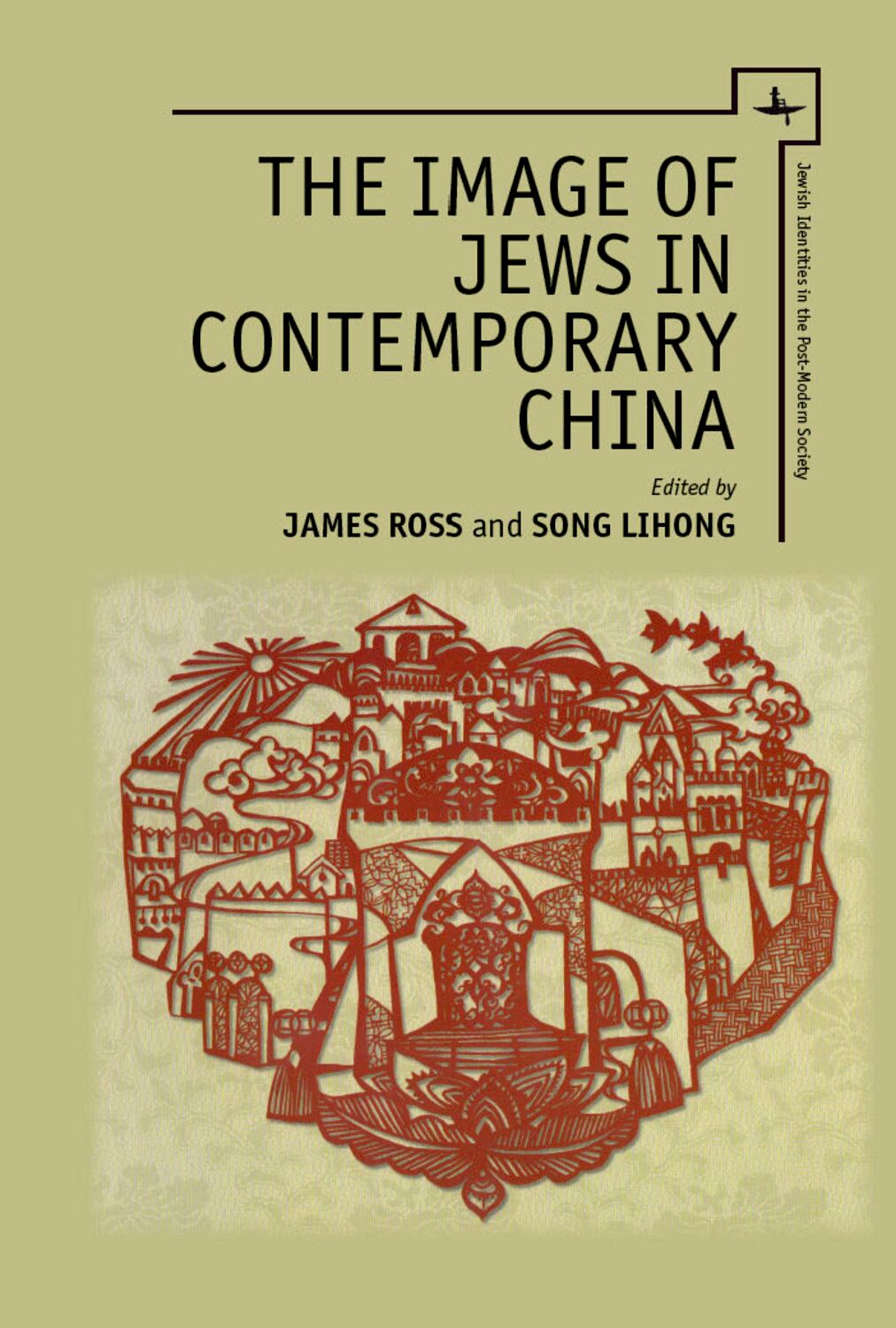
The Image of Jews in Contemporary China
Bookstores in Chinese cities are stocked with dozens of Chinese-language books on how Jews conduct business, manage the world, and raise their children. At least ten universities throughout China offer popular Jewish Studies programs, some with advanced degrees. Yet there are virtually no Jews in China. The Chinese are constructing an identity for a people that the large majority of them will never meet. This edited volume critically examines the image of Jews from the contemporary perspective of ordinary Chinese citizens. It includes chapters on Chinese Jewish Studies programs, popular Chinese books and blogs about Jews, China’s relations with Israel, and innovative examinations of the ancient Jewish community of Kaifeng.
eBook

My Father and I
\"It is a living museum of a long-gone Jewish life and, supposedly, a testimony to the success of the French model of social integration. It is a communal home where gay men and women are said to stand in defiance of the French model of social integration. It is a place of freedom and tolerance where people of color and lesbians nevertheless feel unwanted and where young Zionists from the suburbs gather every Sunday and sometimes harass Arabs. It is a hot topic in the press and on television. It is open to the world and open for business. It is a place to be seen and a place of invisibility. It is like a home to me, a place where I feel both safe and out of place and where my father felt comfortable and alienated at the same time. It is a place of nostalgia, innovation, shame, pride, and anxiety, where the local and the global intersect for better and for worse. And for better and for worse, it is a French neighborhood.\"-fromMy Father and I
Mixing personal memoir, urban studies, cultural history, and literary criticism, as well as a generous selection of photographs,My Father and Ifocuses on the Marais, the oldest surviving neighborhood of Paris. It also beautifully reveals the intricacies of the relationship between a Jewish father and a gay son, each claiming the same neighborhood as his own. Beginning with the history of the Marais and its significance in the construction of a French national identity, David Caron proposes a rethinking of community and looks at how Jews, Chinese immigrants, and gays have made the Marais theirs.
These communities embody, in their engagement of urban space, a daily challenge to the French concept of universal citizenship that denies them all political legitimacy. Caron moves from the strictly French context to more theoretical issues such as social and political archaism, immigration and diaspora, survival and haunting, the public/private divide, and group friendship as metaphor for unruly and dynamic forms of community, and founding disasters such as AIDS and the Holocaust. Caron also tells the story of his father, a Hungarian Jew and Holocaust survivor who immigrated to France and once called the Marais home.
eBook

Chinese Policy Toward Kaifeng Jews
As China is the only country in the Far East in which Jews have continually lived for more than 1,000 years, “Chinese Judaism”—referring to the religious practice and life of those Jews who had lived or are now living in China—is unique. Within this long history, a significant distinction must be made. Jews who came before modern times, in other words before 1840, became part of Chinese society and were considered as “native” Chinese or Chinese citizens; while those who arrived since 1840 have remained aliens.¹ This paper attempts to address the Chinese policy issue with a special
Book Chapter

The chosen few
In 70 CE, the Jews were an agrarian and illiterate people living mostly in the Land of Israel and Mesopotamia. By 1492 the Jewish people had become a small group of literate urbanites specializing in crafts, trade, moneylending, and medicine in hundreds of places across the Old World, from Seville to Mangalore. What caused this radical change?The Chosen Fewpresents a new answer to this question by applying the lens of economic analysis to the key facts of fifteen formative centuries of Jewish history.
Maristella Botticini and Zvi Eckstein show that, contrary to previous explanations, this transformation was driven not by anti-Jewish persecution and legal restrictions, but rather by changes within Judaism itself after 70 CE--most importantly, the rise of a new norm that required every Jewish male to read and study the Torah and to send his sons to school. Over the next six centuries, those Jews who found the norms of Judaism too costly to obey converted to other religions, making world Jewry shrink. Later, when urbanization and commercial expansion in the newly established Muslim Caliphates increased the demand for occupations in which literacy was an advantage, the Jews found themselves literate in a world of almost universal illiteracy. From then forward, almost all Jews entered crafts and trade, and many of them began moving in search of business opportunities, creating a worldwide Diaspora in the process.
The Chosen Fewoffers a powerful new explanation of one of the most significant transformations in Jewish history while also providing fresh insights to the growing debate about the social and economic impact of religion.
eBook

Music and Exile
Fresh research on the experiences of music and musicians in exile from Nazi Europe, exploring refugee experiences in Europe, the USA, Australia and Shanghai, the role of institutions, and the reception of individual creative work during and after the Second World War.
eBook

Drawing the Jewish Propter Nos: Nineteenth-Century Missions and the Making of Race
This paper traces discourse and practices among Jewish communal leaders in Western Europe and the United States regarding the need for Jewish missions to China and Ethiopia. Though thousands of miles apart, China and Ethiopia became closely entwined in their racial imagination. Beginning in the 1840s, the Jewish international press depicted both as biblical lost tribes, languishing in isolation and ignorance, and in need of a guiding hand with the mounting threat of Christian missionizing. Jewish communal leaders began to call for Jewish missions in the 1850s, and they looked to contemporary scientific, evangelical, and civilizing missions as models, merging elements from all three. Throughout the 1860s, in debates over who should lead a Jewish mission, three different types surfaced: an explorer, rabbinic emissary, and Orientalist. Each of these reframed prophetic calls for the return of the lost tribes within a modern scientific and imperial project. Drawing on the work of Sylvia Wynter, I argue that these communities in China and Ethiopia came to serve as boundary markers, demarcating the outer limits of the Jewish world, of Jewishness, and Judaism as it became increasingly circumscribed through theological, behavioral, and racial norms. Not only does this upend assumptions about Jewish solidarity and internationalism, but it also points to how missionizing was deployed by minoritized communities in the nineteenth century.
Journal Article