
Catalogue Search | MBRL


Are you sure you want to remove the book from the shelf?

{{itemTitle}}
107
result(s) for
"Chinese language Dialects Grammar."
Sort by:

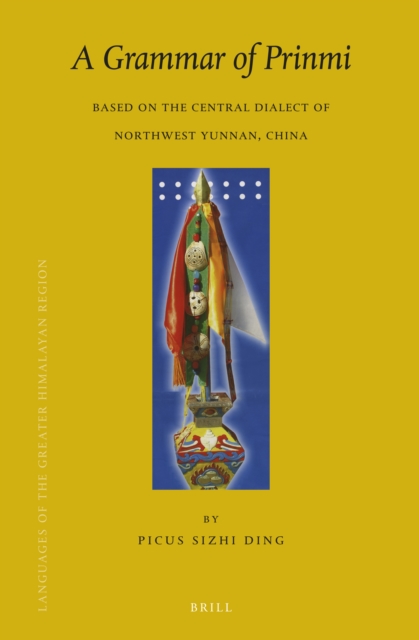
A Grammar of Prinmi
In A Grammar of Prinmi Picus Ding provides the first in-depth description of a Tibeto-Burman language spoken by the Pǔmǐ Nationality and the Zàng Nationality in southwest China. Prinmi is closely related to the extinct language of Tangut.
eBook

A grammar of Gan Chinese : the Yichun language
China is very rich in language resources, and Mandarin is undoubtedly its most prestigious and well-known representative.Unfortunately, most of these languages remain understudied or even unstudied.Such is the case of Yichun Gan.
eBook

Directional particles in Cantonese : form, function, and grammaticalization
This book is the first on Cantonese that deals with the grammaticalization phenomenon systematically. Focusing on a group of twelve directional particles, this book tracks their grammaticalization pathways from full-fledged directional verbs, to directional particles.
eBook

15 minute Mandarin Chinese : learn in just 12 weeks
Learn Mandarin Chinese in just 15 minutes a day with this revolutionary language learning system, now with an accompanying free app that is available in the App Store and Google Play.Practicing your language skills is quick, easy, and fun with 15-Minute Mandarin. There's no homework. Instead, use the visual guide and the free app to test yourself as you learn. Perfect your pronunciation by listening to native speakers, and learn from real-life examples that cover every holiday and business situation. Each full-color course book has themed chapters and common everyday scenarios, a menu guide, and translation dictionaries.Whether you're just starting to learn Mandarin Chinese or you want to brush up, there's no easier way to learn.
Book

Chinese “Dialects” and European “Languages”: A Comparison of Lexico-Phonetic and Syntactic Distances
In this article, we tested some specific claims made in the literature on relative distances among European languages and among Chinese dialects, suggesting that some language varieties within the Sinitic family traditionally called dialects are, in fact, more linguistically distant from one another than some European varieties that are traditionally called languages. More generally, we examined whether distances among varieties within and across European language families were larger than those within and across Sinitic language varieties. To this end, we computed lexico-phonetic as well as syntactic distance measures for comparable language materials in six Germanic, five Romance and six Slavic languages, as well as for six Mandarin and nine non-Mandarin (‘southern’) Chinese varieties. Lexico-phonetic distances were expressed as the length-normalized MPI-weighted Levenshtein distances computed on the 100 most frequently used nouns in the 32 language varieties. Syntactic distance was implemented as the (complement of) the Pearson correlation coefficient found for the PoS trigram frequencies established for a parallel corpus of the same four texts translated into each of the 32 languages. The lexico-phonetic distances proved to be relatively large and of approximately equal magnitude in the Germanic, Slavic and non-Mandarin Chinese language varieties. However, the lexico-phonetic distances among the Romance and Mandarin languages were considerably smaller, but of similar magnitude. Cantonese (Guangzhou dialect) was lexico-phonetically as distant from Standard Mandarin (Beijing dialect) as European language pairs such as Portuguese–Italian, Portuguese–Romanian and Dutch–German. Syntactically, however, the differences among the Sinitic varieties were about ten times smaller than the differences among the European languages, both within and across the families—which provides some justification for the Chinese tradition of calling the Sinitic varieties dialects of the same language.
Journal Article
Cantonese GIVE and double-object construction : grammaticalization and word order change
GIVE is a versatile morpheme in many languages. While there have been extensive studies on the interplay between the syntax and semantics of GIVE in many languages, not much has been done in a similar manner on Cantonese, a member of the Yue dialect group of the Chinese language family. This monograph reports on the study of GIVE and its associated functions and syntactic constructions in Cantonese from diachronic, synchronic, and typological perspectives. Drawing on cross-linguistic data, and 19th century Cantonese dialect materials, this study first traces the chronological development of the various functions played by GIVE in Cantonese. It then examines the double-object construction. Besides the typological features of this construction in Cantonese, this study investigates the use of the northern pattern in Cantonese as a result of the increasing influence of Putonghua and Modern Standard Chinese by means of a sociolinguistic survey with 40 native speakers of Cantonese.
eBook

Encoding motion events in Mandarin Chinese : a cognitive functional study
This book is a corpus-based description and discussion of how Modern Mandarin Chinese encodes motion events, with a focus on how the distribution of verbal motion morphemes is closely associated with the meanings they lexicalize. The book is not only the first work that proposes a finer-grained classification and diagnostics of Chinese motion morphemes from the perspective of scale structure, but also the first to more comprehensively account for the ordering of Chinese motion morphemes. The findings of this study will not only enrich the literature on motion events, but more importantly, further our understanding of the nature of motion events and the way motion events are conceived and represented in the Chinese language. The major proposals and the cognitive functional approach of this work will also shed light on studies beyond motion. The book will be a valuable resource for scholars interested in motion events, syntax-semantic interface, and typology.
eBook