
Catalogue Search | MBRL


Are you sure you want to remove the book from the shelf?

{{itemTitle}}
13
result(s) for
"Chinese literature 220-589 History and criticism."
Sort by:

Reading philosophy, writing poetry : intertextual modes of making meaning in early medieval China
\"Examines how early medieval writers in China understood and manipulated a shared intellectual lexicon to produce meaning. Focusing on works by the most important and innovative poets of the period, it explores intertextuality--the transference, adaptation, or rewriting of signs--as a mode of reading and a condition of writing\"--Provided by publisher.
Book

Letters and Epistolary Culture in Early Medieval China
Honorable Mention for the 2016 Kayden Book Award
This first book-length study in Chinese or any Western language of personal letters and letter-writing in premodern China focuses on the earliest period (ca. 3rd-6th cent. CE) with a sizeable body of surviving correspondence. Along with the translation and analysis of many representative letters, Antje Richter explores the material culture of letter writing (writing supports and utensils, envelopes and seals, the transportation of finished letters) and letter-writing conventions (vocabulary, textual patterns, topicality, creativity). She considers the status of letters as a literary genre, ideal qualities of letters, and guides to letter-writing, providing a wealth of examples to illustrate each component of the standard personal letter. References to letter-writing in other cultures enliven the narrative throughout.
Letters and Epistolary Culture in Early Medieval Chinamakes the social practice and the existing textual specimens of personal Chinese letter-writing fully visible for the first time, both for the various branches of Chinese studies and for epistolary research in other ancient and modern cultures, and encourages a more confident and consistent use of letters as historical and literary sources.
eBook


Interpretation and Literature in Early Medieval China
Covering a time of great intellectual ferment and great influence on what was to come, this book explores the literary and hermeneutic world of early medieval China. In addition to profound political changes, the fall of the Han dynasty allowed new currents in aesthetics, literature, interpretation, ethics, and religion to emerge during the Wei-Jin Nanbeichao period. The contributors to this volume present developments in literature and interpretation during this era from a variety of methodological perspectives, frequently highlighting issues hitherto unremarked in Western or even Chinese and Japanese scholarship. These include the rise of new literary and artistic values as the Han declined, changing patterns of patronage that helped reshape literary tastes and genres, and new developments in literary criticism. The religious changes of the period are revealed in the literary self-presentation of spiritual seekers, the influence of Daoism on motifs in poetry, and Buddhist influences on both poetry and historiography. Traditional Chinese literary figures, such as the fox and the ghost, receive fresh analysis about their particular representation during this period.
eBook
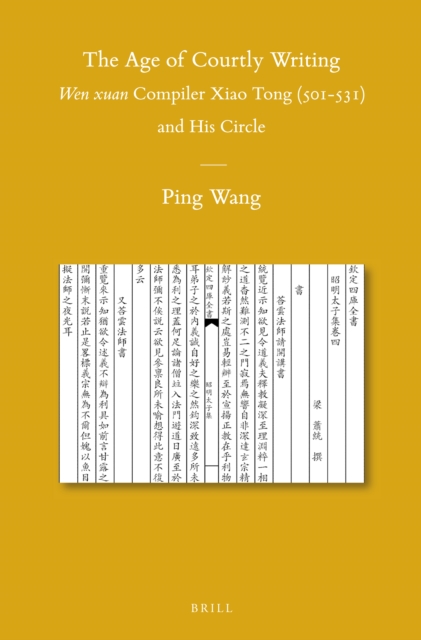
The Age of Courtly Writing: Wen xuan Compiler Xiao Tong (501-531) and His Circle
Scholarship on Xiao Tong in both China and the West has paid little attention to his own writings beyond the influential anthology compiled by the Liang Crown Prince. Adopting a philological approach, this book thorougly examines a multitude of texts written by Xiao Tong and his entourage, many of whom were powerful writers in their own right. In addition to drawing a picture of important aspects of Liang court culture such as education, literary composition, personal relations, and ideological and religious trends, this study also redresses a long-standing bias against court poetry. It will enhance our understanding not only of the early sixth-century but also, indirectly, of a significant portion of pre-modern Chinese literature in general.
eBook

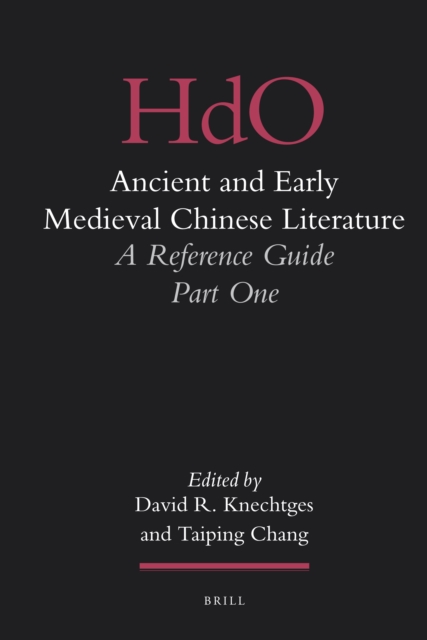
Ancient and early medieval Chinese literature : a reference guide
At last here is the long-awaited, first Western-language reference guide focusing exclusively on Chinese literature from ca. 700 B.C.E. to the early seventh century C.E. Alphabetically organized, it contains no less than 1095 entries on major and minor writers, literary forms and \"schools,\" and important Chinese literary terms. In addition to providing authoritative information about each subject, the compilers have taken meticulous care to include detailed, up-to-date bibliographies and source information. The reader will find it a treasure-trove of historical accounts, especially when browsing through the biographies of authors.Indispensable for scholars and students of pre-modern Chinese literature, history, and thought. Part One contains A to R.
eBook


Reading Philosophy, Writing Poetry
In a formative period of Chinese culture, early medieval writers made extensive use of a diverse set of resources, in which such major philosophical classics as Laozi, Zhuangzi, and Classic of Changes featured prominently. Reading Philosophy, Writing Poetry examines how these writers understood and manipulated a shared intellectual lexicon to produce meaning. Focusing on works by some of the most important and innovative poets of the period, this book explores intertextuality—the transference, adaptation, or rewriting of signs—as a mode of reading and a condition of writing. It illuminates how a text can be seen in its full range of signifying potential within the early medieval constellation of textual connections and cultural signs. If culture is that which connects its members past, present, and future, then the past becomes an inherited and continually replenished repository of cultural patterns and signs with which the literati maintains an organic and constantly negotiated relationship of give and take. Wendy Swartz explores how early medieval writers in China developed a distinctive mosaic of ways to participate in their cultural heritage by weaving textual strands from a shared and expanding store of literary resources into new patterns and configurations.
eBook