
Catalogue Search | MBRL


Are you sure you want to remove the book from the shelf?

{{itemTitle}}
12
result(s) for
"Chinese poetry 221 B.C.-960 A.D. History and criticism."
Sort by:

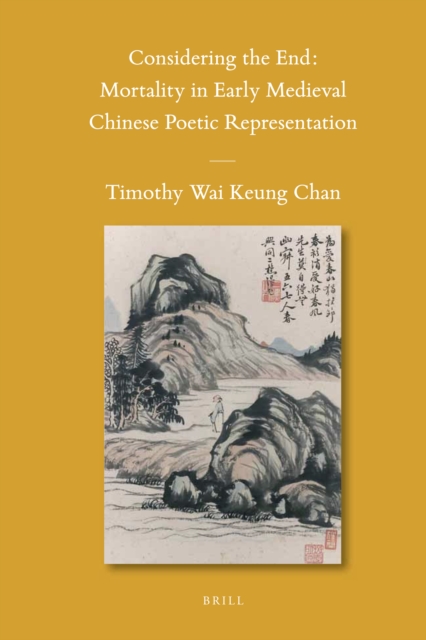
Considering the End: Mortality in Early Medieval Chinese Poetic Representation
This book focuses on the representation of human mortality in early medieval Chinese literature. This theme is observed and reconstructed through the contextual and intertextual analysis of the work of eminent writers of the period, texts that have never been examined from an eschatological perspective. Through this perspective, and the careful use of research from the fields of religion and anthropology, the book offers a fresh view of commentator Wang Yi (fl. 89-158), well-known poets Ruan Ji (210-63), Tao Qian (365?-427), and Xie Lingyun (385-433), and also brings into the discussion relevant works by several previously neglected authors. The book contributes a new angle from which to appreciate literature of this and other periods in Chinese history.
eBook

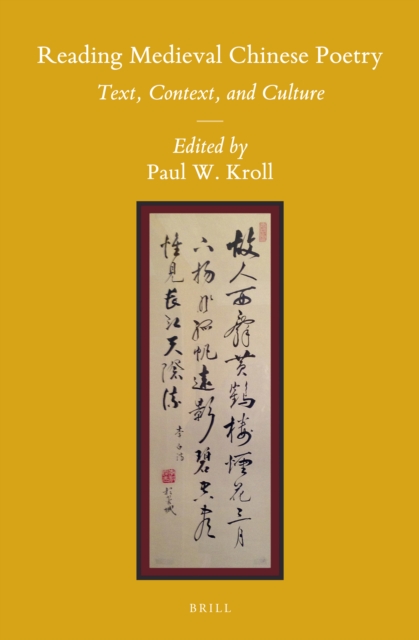
Reading Medieval Chinese Poetry
Nine renowned sinologists present a range of studies that display the riches of medieval Chinese verse in varied guises. All major verse-forms, including shi, fu, and ci, are examined, with a special focus on poetry's negotiation with tradition and historical context.
eBook


Southern Identity and Southern Estrangement in Medieval Chinese Poetry
From ancient times, China’s remote and exotic South—a shifting and expanding region beyond the Yangtze River—has been an enduring theme in Chinese literature. For poets and scholar-officials in medieval China, the South was a barbaric frontier region of alienation and disease. But it was also a place of richness and fascination, and for some a site of cultural triumph over exile. The eight essays in this collection explore how tensions between pride in southern culture and anxiety over the alien qualities of the southern frontier were behind many of the distinctive features of medieval Chinese literature. They examine how prominent writers from this period depicted themselves and the South in poetic form through attitudes that included patriotic attachment and bitter exile. By the Tang dynasty, poetic symbols and clichés about the exotic South had become well established, though many writers were still able to use these in innovative ways. Southern Identity and Southern Estrangement in Medieval Chinese Poetry is the first work in English to examine the cultural south in classical Chinese poetry. The book incorporates original research on key poets, such as Lu Ji, Jiang Yan, Wang Bo, and Li Bai. It also offers a broad survey of cultural and historical trends during the medieval period, as depicted in poetry. The book will be of interest to students of Chinese literature and cultural history.
eBook


Considering the End
This book focuses on the representation of human mortality in medieval Chinese literature. This theme is observed and reconstructed through analysis of the work of eminent writers of the period, texts that have never been examined from an eschatological perspective.
eBook
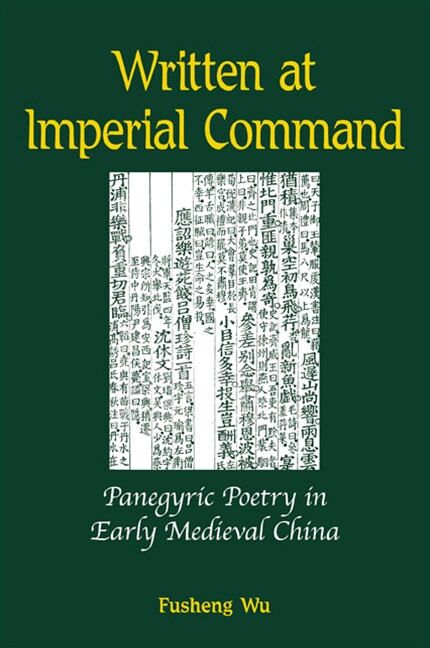
Written at Imperial Command
This is the first book-length study of panegyric poetry—yingzhao shi or poetry presented to imperial rulers—in the Chinese tradition. Examining poems presented during the Wei-Jin Nanbeichao, or early medieval period (220–619), Fusheng Wu provides a thorough exploration of the sociopolitical background against which these poems were written and a close analysis of the formal conventions of the poems.
By reconstructing the human drama behind the composition of these poems, Wu shows that writing under imperial command could be a matter of grave consequence. The poets' work could determine the rise and fall of careers, or even cost lives. While panegyric poetry has been largely dismissed as perfunctory and insincere, such poems reveal much about the relations between monarchs and the intellectuals they patronized and also compels us to reexamine the canonical Chinese notion of poetic production as personal, spontaneous expression.
eBook
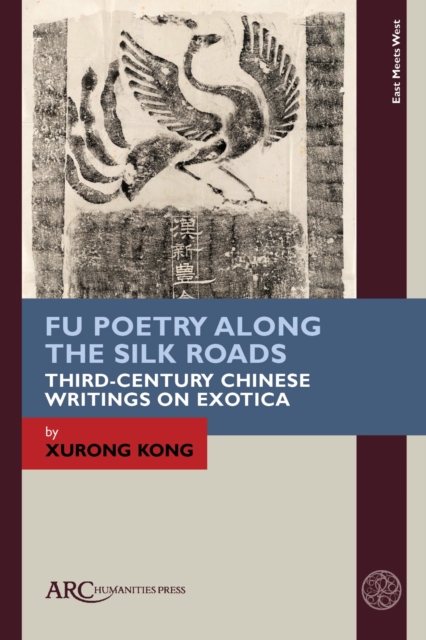
Fu Poetry Along the Silk Roads
This book explores the dissemination of ideas and information on the early silk roads between Europe and China, through the first detailed study of the Sinicization of foreign objects in Chinese poetic writing of the third century CE. Third-century literary developments and the prevailing literary works from that era leave us with an impressive amount of information concerning exotic objects, such as plants, animals, and crafts, and record the cultural exchange between distant peoples whose goods, ideas, and technologies entered China. These hitherto-forgotten rhapsodies express the profound interest and excitement of learned men for foreign objects. They bear witness to the cultural exchanges between China and other civilizations and provide a more nuanced insight of early medieval China as an integrated society rather than an isolated one.
eBook