
Catalogue Search | MBRL


Are you sure you want to remove the book from the shelf?

{{itemTitle}}
13
result(s) for
"Chinese poetry Tang dynasty, 618-907 History and criticism"
Sort by:

Manifest in words, written on paper : producing and circulating poetry in Tang Dynasty China
\"This study aims to engage the textual realities of medieval literature by shedding light on the material lives of poems during the Tang, from their initial oral or written instantiation through their often lengthy and twisted paths of circulation\"--Provided by publisher.
Book
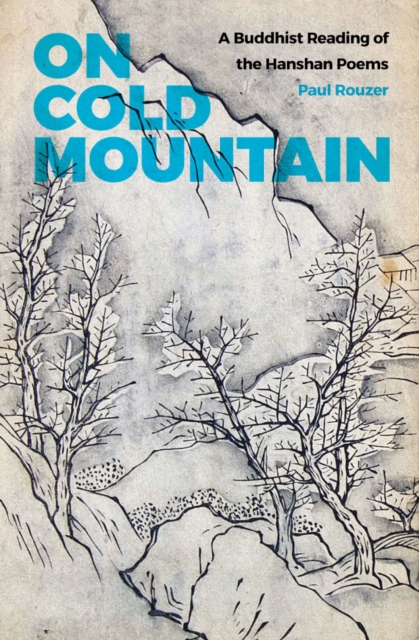
On Cold Mountain
In this first serious study of Hanshan (\"Cold Mountain\"), Paul Rouzer discusses some seventy poems of the iconic Chinese poet who lived sometime during the Tang dynasty (618-907). Hanshan's poems gained a large readership in English-speaking countries following the publication of Jack Kerouac's novelThe Dharma Bums(1958) and Gary Snyder's translations (which began to appear that same year), and they have been translated into English more than any other body of Chinese verse.
Rouzer investigates how Buddhism defined the way that believers may have read Hanshan in premodern times. He proposes a Buddhist poetics as a counter-model to the Confucian assumptions of Chinese literary thought and examines how texts by Kerouac, Snyder, and Jane Hirshfield respond to the East Asian Buddhist tradition.
eBook

Du Fu Transforms
Often considered China’s greatest poet, Du Fu (712–770) came of age at the height of the Tang dynasty, in an era marked by confidence that the accumulated wisdom of the precedent cultural tradition would guarantee civilization’s continued stability and prosperity. When his society collapsed into civil war in 755, however, he began to question contemporary assumptions about the role that tradition should play in making sense of experience and defining human flourishing.In this book, Lucas Bender argues that Du Fu’s reconsideration of the nature and importance of tradition has played a pivotal role in the transformation of Chinese poetic understanding over the last millennium. In reimagining his relationship to tradition, Du Fu anticipated important philosophical transitions from the late-medieval into the early-modern period and laid the template for a new and perduring paradigm of poetry’s relationship to ethics. He also looked forward to the transformations his own poetry would undergo as it was elevated to the pinnacle of the Chinese poetic pantheon.
eBook


Lyric poets of the Southern Tʿang : Feng Yen-ssu, 903-960, and Li Yü, 937-978
No detailed description available for \"Lyric Poets of the Southern T'ang\".
eBook

The banished immortal : a life of Li Bai (Li Po)
\"With the instincts of a ... novelist, Ha Jin draws on a wide range of historical and literary sources to weave the life story of Li Bai (701-762), whose poems--shaped by Daoist thought and characterized by their passion, romance, and lust for life--rang throughout the Tang Dynasty and continue to be celebrated today\"-- Provided by publisher.
Book

The Five-Colored Clouds of \u2028Mount Wutai
In this work, Mary Anne Cartelli introduces a significant corpus of Chinese Buddhist poems from the Dunhuang manuscripts celebrating Mount Wutai. They offer important literary evidence for the transformation of the mountain into the earthly paradise of the bodhisattva MañjuÔsri by the Tang dynasty.
eBook

Poetic archaicization: A study of Li Bo's fifty -nine “Gufeng” poems
This dissertation focuses on the “Gufeng” (Ancient Airs), a set of fifty-nine old style pentasyllabic poems that constitutes a significant portion of the poetic corpus of Li Bo (701–762), the most fascinating, if not the greatest, poet in the history of Chinese literature. It commences with an introductory chapter setting the scope as well as explicating the methodology of study. Basic issues pertaining to the set such as how it came into form and the authenticity of the poems included in it are carefully examined so as to provide grounds for the interpretation of these oeuvres later on. Chapters 1–2 are devoted to surveying the background of the “Gufeng.” The former chapter discusses the various factors contributing to the political situation of the early eighth-century China, which stirred deep feelings in the poet and triggered his composition of the “Gufeng.” They are the emperor Xuanzong himself, the powerful interest groups from his inner palace, the dominant ministers at his court, and the relation his government formed with the neighbors of China. The latter chapter probes into the development of the pentasyllabic poetry and the literary milieu of Li Bo's time, explaining how his concept of poetic archaicization arose and what it comprises. Then presented in chapter 3 is a critical analysis of the five subject topics of the fifty-nine poems. It provides a full view of Li Bo's inner universe reflected in these works. Chapter 4 offers a detailed discussion of the artistry of the “Gufeng” from three aspects: prosody, syntax and metaphor. Both of these chapters demonstrate that the intrinsic values of the “Gufeng” are in accord with the poet's idea of poetic archaicization. The closing chapter is a complete rendering of the poems studied, with elaborate annotation explaining the difficult lines studded with allusions. It is the hope of the author that through this dissertation the true nature and values of the poems are brought to light.
Dissertation

The footprints of the Buddha : the text and the language
This book deals with Chinese and Japanese inscriptions (8th century AD) about the footprints of Buddha. The language of the Japanese inscription reflects the contemporary dialect of Nara. Its writing system presents a special interest being practically monophonic.
eBook