
Catalogue Search | MBRL


Are you sure you want to remove the book from the shelf?

{{itemTitle}}
8
result(s) for
"Chinese river dolphin."
Sort by:

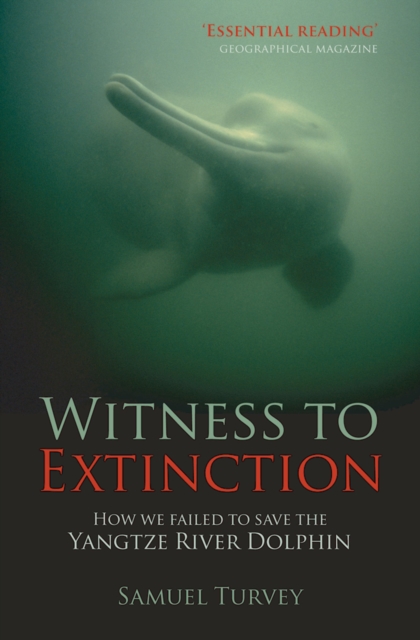
Witness to extinction : how we failed to save the Yangtze River dolphin
Witness to Extinction tells the story of the plight of the Yangtze River Dolphin. It is both a celebration of a beautiful and remarkable animal that once graced China's greatest river, and also a personal, eyewitness account of the failures of policy and the struggle to get funds that led to the tragic demise of a unique species.
eBook

Chinese White Dolphins in the Anthropocene: Human-animal Relations Among the Islands of the Pearl River Delta
The Chinese white dolphin (Indo-Pacific humpback dolphin, Sousa chinensis ) has become a symbol of China’s Pearl River Delta in the Anthropocene. However, little scholarly attention has been paid to its role in the region’s culture. This paper takes a human-animal relations approach to ask how and why this threatened species of dolphin rose to symbolic importance in a particular delta island geography within its vast range. The paper undertakes an exploratory literature review of historical and more recent texts concerning dolphins in China and more specifically Chinese white dolphins in the Pearl River Delta. These texts range from discussions of dolphin physiology, to religious associations with dolphins, to industrial-economic explorations, to illustrated children’s books, to postage stamps and amusement park exhibits. They combine to show that Anthropocene processes have produced the Chinese white dolphin as symbolic of Hong Kong’s reunification with China and ultimately for the cohesiveness of the Pearl River Delta crossborder region as a whole, even as these spatioeconomic developments have placed the species at risk.
Journal Article

Hong Kong’s Indo-Pacific Humpback Dolphins (Sousa chinensis): Assessing Past and Future Anthropogenic Impacts and Working Toward Sustainability
Within the past several decades, Indo-Pacific humpback dolphins (Sousa chinensis) in Hong Kong have gone from being virtually unknown to being probably the best-studied dolphin population in Southeast Asia. Essentially nothing was known of their status prior to 1993, but they are now understood to be part of a large population (> 2,000 individuals) that inhabits the Pearl River Estuary of southern China. Approximately 130 to 200 dolphins occurred within Hong Kong's boundary in the late 1990s and early 2000s, but the numbers have declined since then, with currently only about 65 to 70 dolphins found within the region at any one time. Despite an ambitious management scheme by the Hong Kong Agriculture, Fisheries, and Conservation Department, mostly involving Hong Kong's Environmental Impact Assessment (EIA) legislation, the dolphins appear to be at risk locally. A series of recommendations are hereby made to encourage improved management of these animals and include (1) management at the population level; (2) better assessment of cumulative impacts; (3) protection of critical habitat, especially along the west coast of Lantau Island; and (4) management with \"teeth.\" If these suggested approaches are vigorously followed, I remain optimistic about the future of humpback dolphins in Hong Kong. Historical data show us that these animals can indeed recover from anthropogenic impacts but only if important habitat areas receive better protection than they are getting at present.
Journal Article

The microbiomic and environmental analysis of sediments in the Indo-Pacific humpback dolphin (Sousa chinensis) habitat in the Northern Beibu Gulf, China
The northern Beibu Gulf is one of the major habitats for the Indo-Pacific humpback dolphin (
Sousa chinensis
) in China. In this habitat, the core distribution zone of humpback dolphins was confined to the Sanniang Bay (SNB) and Dafengjiang River Estuary (DRE) areas. In our present research, the sediments of 14 sampling sites across the SNB and DRE waters were collected and further conducted for microbiomic and environmental analysis to explore the ecosystem characteristics of major humpback dolphin habitats in Northern Beibu Gulf. The environmental condition includes ammonia nitrogen (NH
4
+
-N), nitrate nitrogen (NO
3
−
-N), dissolved reactive phosphorus (DRP), sulfur content in the form of sulfuric acid (SO
4
2−
-S), Fe, and heavy metals (including Cu, Zn, Cd, Pb, and As). The composition of the bacterial community was characterized by 16S ribosomal DNA analysis of the V3–V4 regions using the Illumina-based sequencing platform. The environmental characteristic of the nutrient elements and heavy metals indicated that SNB suffered more anthropogenic impact than DRE. The comparably higher concentration of NH
4
+
-N, NO
3
−
-N, DRP, Pb, and Cd in the SNB region was detected. The comparably higher nutrients in the SNB may have resulted in higher biomass and lower dissolved oxygen (DO) profile, which was further proved by Landsat thermal image data. The microbiome analysis showed that the DRE region was oligotrophic and SNB reflected an anaerobic environment in the sediments. Environmental factors rather than the spatial distance determined the similarity of bacterial community among different sites. Ecological associations between environmental, oceanographic, and bacterial characteristics were illustrated, which exhibited strong mutual associations. Our findings presented a feasibility that integrates empirical and remote sensing data to distinguish ecological features and evaluate ecosystem healthiness for the humpback dolphin habitats.
Journal Article

Indo-Pacific humpback dolphins (Sousa chinensis) in Hong Kong: Modelling demographic parameters with mark-recapture techniques
Indo-Pacific humpback dolphins (Sousa chinensis) inhabiting Hong Kong waters are thought to be among the world's most anthropogenically impacted coastal delphinids. We have conducted a 5-year (2010-2014) photo-ID study and performed the first in this region comprehensive mark-recapture analysis applying a suite of open population models and robust design models. Cormack-Jolly-Seber (CJS) models suggested a significant transient effect and seasonal variation in apparent survival probabilities as result of a fluid movement beyond the study area. Given the spatial restrictions of our study, limited by an administrative border, if emigration was to be considered negligible the estimated survival rate of adults was 0.980. Super-population estimates indicated that at least 368 dolphins used Hong Kong waters as part of their range. Closed robust design models suggested an influx of dolphins from winter to summer and increased site fidelity in summer; and outflux, although less prominent, during summer-winter intervals. Abundance estimates in summer (N = 144-231) were higher than that in winter (N = 87-111), corresponding to the availability of prey resources which in Hong Kong waters peaks during summer months. We point out that the current population monitoring strategy used by the Hong Kong authorities is ill-suited for a timely detection of a population change and should be revised.
Journal Article

First record of the Indo-Pacific humpback dolphins (Sousa chinensis) southwest of Hainan Island, China
Background
Populations of Indo-Pacific humpback dolphins (
Sousa chinensis
) in China were known to be distributed from the Beibu Gulf near the border with Vietnam to the mouth of the Yangtze River. According to existing studies, the waters around Hainan Island, China, were not considered to be part of the humpback dolphins’ distribution.
Results
In 2014, for the first time, we recorded humpback dolphins in waters southwest of Hainan Island.
Conclusions
This record expands the known southern distribution range of this dolphin in Chinese waters by more than 300 km.
Journal Article

So long, and thanks for all the fish
THE FIRST time I went in search of the Yangtze river dolphin, or baiji, was in 1988 with Douglas Adams, author of The Hitch Hiker's Guide to the Galaxy, as part of a year spent travelling the world in search of endangered species for a book and radio series called Last Chance to See. Accidental deaths due to fishing and shipping, overfishing, the rapid deterioration of the Yangtze river, an outrageous lack of funds, ineffective project management and incessant bickering between the Chinese authorities and western scientists sealed its fate a long time ago. In 1992, it set aside five protected areas along roughly 350 kilometres of the Yangtze river and established five baiji protection stations, each with two observers and a small motor boat, to conduct daily patrols, make observations and investigate illegal fishing.
Magazine Article