
Catalogue Search | MBRL


Are you sure you want to remove the book from the shelf?

{{itemTitle}}
11
result(s) for
"Chipko movement"
Sort by:

Ecology Is Permanent Economy
For decades, Sunderlal Bahuguna has been an environmental activist in his native India, well known for his efforts on behalf of the Himalayas and its people. In the 1970s, he was instrumental in the successful Chipko (or \"hug\") movement during which local people hugged trees to prevent logging for outside concerns. He was also a leader of the long opposition to the Tehri Dam. In both conflicts, the interests of outsiders threatened the interests of local people living relatively traditional lives.
George Alfred James introduces Sunderlal Bahuguna's activism and philosophy in a work based on interviews with Bahuguna himself, his writings, and journalistic accounts. James writes that Bahuguna's work in the Indian independence movement and his admiration for the nonviolence of Gandhi has inspired a vision and mode of activism that deserves wider attention. It is a philosophy that does not try to win the conflict, but to win the opponent's heart.
eBook

Perception of local people towards conservation of forest resources in Nanda Devi Biosphere Reserve, north-western Himalaya, India
This article examines the perception of the Bhotiya tribal community on the use and conservation of natural resources in Nanda Devi Biosphere Reserve (NDBR), north-western Himalaya in India with an objective of identifying the bottlenecks in the sustainable management of forest resources of NDBR through people's participation. Despite, 85% of the respondents supporting the concept of conservation of forest resources, management decisions such as ban on mountaineering activities by creation of the Nanda Devi National Park (NDNP) in 1982 and NDBR in 1988, developed negative attitude among local people towards NDBR management, mainly because of restricted access to the forest resources for their livelihood. Promotion of some alternative income generating activities to reduce the dependence on natural resources was responded positively by the local people.
Journal Article

Women and the Sacred Earth: Hindu and Christian Ecofeminist Perspectives
Women's voices within the Christian and Hindu traditions contain theoretical and practical resources for dealing with issues of ecological concern. Hinduisms teachings about Mother Earth and newly crafted eco-feminist theories in Christianity provide a philosophical context for regarding the earth as sacred. The Chipko movement, organized and implemented by local women, prevented the commercial harvesting of lumber and its consequent habitat destruction in Indias Uttaranchal Province. In North America, members of Christian women's religious orders have converted many of their properties to organic gardening and teaching centers, and into wildlife sanctuaries. Both movements are providing models for ecological sustainability.
Journal Article


Hug the Trees movement in India is alive and well
GARDNER - An expert on the Chipko Movement in India told a group of Mount Wachusett Community College students Friday that the movement is not dead despite recent economic troubles in that nation. Professor Krishna Mallick, a philosophy professor at Salem State College, said the \"Hug the Trees\" (Chipko) Movement has played a major role in the reforestation of India, especially its northern Uttaar Pradesh region. She said the Chipko Movement has its roots in the 1930s when Indians attempted to halt British plans for forest auctions and massive log fellings. It blossomed in the 1970s when residents literally encircled trees with their hands to prevent logging operations.
Newspaper Article

The Environmentalism of the Poor: Its Origins and Spread
This chapter contains sections titled:
Introduction
Causes of Environmental Conflicts
The Chipko Movement and the Environmentalism of the Poor
Southern Europe and Latin America
The GDP of the Poor
Two Ecuadorean Women
In India
In Mexico
Conclusion
References
Book Chapter

Ecology Movements in India
1970s; based on conference paper. Partial contents: \"Chipko\" movement; Ecology movement in Dehradun; The politics of forestry science and the dialectics of nature; The politics of development.
Journal Article
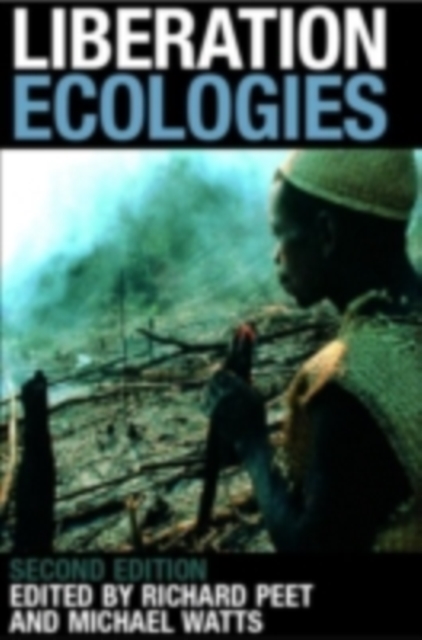
Liberation ecologies: environment, development, social movements
Liberation Ecologies brings together some of the most exciting theorists in the field to explore the impact of political ecology in today's developing world. The book casts new light on the crucial interrelations of development, social movements and the environment in the South - the 'bigger' half of our planet - and raises questions and hopes about change on the global scale. The in-depth case material is drawn from across the Developing World, from Latin America, Africa and Asia. The issues raised in contemporary political, economic and social theory are illustrated through these case studies. Ultimately, Liberation Ecologies questions what we understand by 'development', be it mainstream or alternative, and seeks to renew our sense of nature's range of possibilities.
eBook


From Chipko to Uttaranchal
In November 2000, ten districts in the Himalayan tracts of northwestern Uttar Pradesh (UP) were carved out to form a new state of Uttaranchal within the Indian Union. Its creation culminated after nearly a decade of popular protest that demanded statehood for the Himalayan regions of Garhwal and Kumaon. For the men and women involved in the struggle, statehood was the necessary condition for extricating their region from its backwardness. They claimed that the hill regions were afflicted by poverty and high unemployment because the politicians and bureaucrats of Uttar Pradesh were mainly concerned with the interests of the plains (maidan) and cared little for the distinctive culture and needs of the mountains (pahar). Garhwal and Kumaon lacked development because a callous and inefficient state administration merely saw them as sites of resource exploitation rather than of economic investment. Separation from Uttar Pradesh, the advocates for statehood argued, was the only way in which development would occur in this mountainous region (Dhoundiyal et al. 1993;
Himachal Times 1990a; Jayal 2000; Kumar 2000).
Book Chapter