
Catalogue Search | MBRL


Are you sure you want to remove the book from the shelf?

{{itemTitle}}
88
result(s) for
"Chocolate Fiction."
Sort by:

Chocolate fever
From eating too much chocolate, Henry breaks out in brown bumps that help him foil some hijackers and teach him a valuable lesson about self-indulgence.
Book

The Enthusiastic Objectifications of Skaz
Skaz, an experimental narrative form popular in the early Soviet years, has been defined by its orientation toward orality and the voice of a lower-class other. Skaz's most widely read practitioner, Mikhail Zoshchenko claimed to speak on behalf of proletarian writers, who, according to revolutionary vanguardist theory, could not yet speak for themselves. Sympathetic and antagonistic critics alike have presented Zoshchenko as a pessimist hostilely inclined to the linguistic consciousnesses depicted in his fiction and to the revolutionary project as a whole. In this article, skaz is reconsidered in relation to its roots in enthusiastic aesthetics and politics, an ancient philosophical tradition which since became central to the analysis of feeling and class in revolutionary societies. Following the Russian Revolution, populist intellectuals “spoke in the tongues” of the lower-class other in an attempt to step outside their own subjective vantage points. The result was a dialectic made up of the “illusory” objectification of the revolutionary subject and a reciprocal defamiliarizing self-objectification through this imagined consciousness. The enthusiastic aesthetics of skaz do not enable their object to speak, but they do facilitate a movement toward it. This article makes this case using the example of Zoshchenko's 1927 “Simplicity of Soul,” a prose miniature about Soviet shoving framed by the narrator's recollections of remarks on the matter made by members of a so-called “Negro-Operetta.” The anecdote originates in a real feuilleton recounting the impressions of the Chocolate Kiddies, an African-American jazz ensemble that toured the Soviet Union in 1926. Read alongside Soviet reviews of the Chocolate Kiddies, the story is revealed to be a nuanced critical response to the misguided, racist, and, at the same time, well-meaning internationalist enthusiasm that defined the Soviet response to jazz. Zoshchenko's point in exploring the crude objectifications which obscured Soviet critics' reading of this emancipatory, transnational art form is to articulate–and offer a qualified defense of–the contingent, illusory, and problematic images produced by his own enthusiastic performances of proletarian voice.
Journal Article

Love Monster and the last chocolate
When Love Monster receives a box of chocolates as a gift, he has second thoughts about sharing them with all of his friends.
Book
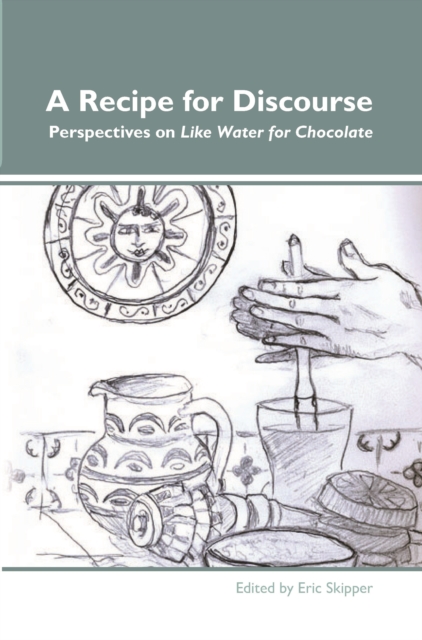
A Recipe for Discourse
Slender and yet panoramic in scope, historical and yet relevant to current-day concerns, Laura Esquivel's Like Water for Chocolate has provoked from the outset a divergent range of critical opinions. The essays in A Recipe for Discourse: Perspectives on Like Water for Chocolate represent the novel's problematic nature in their many diverse approaches, perspectives that are certain to awaken in the reader new ways of approaching the text while challenging old ones. This volume's 'dialogue' format, in which essays are grouped thematically, is particularly effective in presenting such a diverse range of viewpoints. The reader will find herein lively discussion on LWFC as it relates to such themes as gastronomy, superstition, mythology, folklore, the Mexican Revolution, magical realism, female identity, alteration, and matriarchy/ patriarchy. It is the editor's hope that a diverse readership, from undergraduate students to seasoned scholars, will find this volume engaging and enlightening.
eBook

Reading Willy Wonka in the ERA of Anti-Thinking
Whether encountered as a movie or novel, Roald Dahl's Charlie and the Chocolate Factory is a childhood staple of postwar Anglophone culture. Originally published in 1964, Dahl's story of “Willie Wonka” is a morality tale for our times addressed by the present essay in relation to the precariousness, violence, intergenerational faith, and materialist fantasies reflective of contemporary life in the early twenty-first century. Compensating for the precarity of contemporary life's impoverishment as assumptions of societal stability are overthrown, this chronicle of the Bucket family details: envious desire validated by large group chosen trauma; authoritarian enslavement of inferior, colonized peoples with murderous, industrial-level human experimentation; toward gratification of the greedy fantasy of unlimited sweetness under the sway of lethal identification with the aggressor.
Journal Article

Hooey Higgins and the shark
Hooey Higgins and his best friend Twig plan to capture a shark and charge people to see it in order to raise money to buy a large chocolate egg in Mr. Danson's store window and end up finding something amazing.
Book

Pairing Fiction and Nonfiction Texts to Promote Literacy and Language Development of Adolescent English Learners
Based on the relevant research that highlights the impact of pairing fiction and nonfiction texts around a specific theme or a topic for enhanced motivation and reading comprehension for English learners (ELs), this article describes ways to combine texts of various genres to promote ELs' language and literacy development. A middle school example of a lesson on chocolate exemplifies how pairing a number of fiction and nonfiction texts supports differentiation and multiple opportunities for writing.
Journal Article

This book is not good for you
Cass's mom is kidnapped by sinister, blind chocolatier Seنnor Hugo. The ransom? the legendary Tuning Fork.
Book
