
Catalogue Search | MBRL


Are you sure you want to remove the book from the shelf?

{{itemTitle}}
3,598
result(s) for
"Christian Doctrines"
Sort by:


The Insight of Unbelievers
In the year 1309, Nicholas of Lyra, an important Franciscan Bible commentator, put forth a question at the University of Paris, asking whether it was possible to prove the advent of Christ from scriptures received by the Jews. This question reflects the challenges he faced as a Christian exegete determined to value Jewish literature during an era of increasing hostility toward Jews in western Europe. Nicholas's literal commentary on the Bible became one of the most widely copied and disseminated of all medieval Bible commentaries. Jewish commentary was, as a result, more widely read in Latin Christendom than ever before, while at the same moment Jews were being pushed farther and farther to the margins of European society. His writings depict Jews as stubborn unbelievers who also held indispensable keys to understanding Christian Scripture. In The Insight of Unbelievers, Deeana Copeland Klepper examines late medieval Christian use of the Hebrew Bible and Jewish interpretation of Scripture, focusing on Nicholas of Lyra as the most important mediator of Hebrew traditions.Klepper highlights the important impact of both Jewish literature and Jewish unbelief on Nicholas of Lyra and on Christian culture more generally. By carefully examining the place of Hebrew and rabbinic traditions in the Christian study of the Bible, The Insight of Unbelievers elaborates in new ways on the relationship between Christian and Jewish scholarship and polemic in late medieval Europe.
eBook

Afterlives
Simultaneously real and unreal, the dead are people, yet they are not. The society of medieval Europe developed a rich set of imaginative traditions about death and the afterlife, using the dead as a point of entry for thinking about the self, regeneration, and loss. These macabre preoccupations are evident in the widespread popularity of stories about the returned dead, who interacted with the living both as disembodied spirits and as living corpses or revenants. InAfterlives, Nancy Mandeville Caciola explores this extraordinary phenomenon of the living's relationship with the dead in Europe during the five hundred years after the year 1000.
Caciola considers both Christian and pagan beliefs, showing how certain traditions survived and evolved over time, and how attitudes both diverged and overlapped through different contexts and social strata. As she shows, the intersection of Christian eschatology with various pagan afterlife imaginings-from the classical paganisms of the Mediterranean to the Germanic, Celtic, Slavic, and Scandinavian paganisms indigenous to northern Europe-brought new cultural values about the dead into the Christian fold as Christianity spread across Europe. Indeed, the Church proved surprisingly open to these influences, absorbing new images of death and afterlife in unpredictable fashion. Over time, however, the persistence of regional cultures and beliefs would be counterbalanced by the effects of an increasingly centralized Church hierarchy. Through it all, one thing remained constant: the deep desire in medieval people to bring together the living and the dead into a single community enduring across the generations.
eBook

A Collection of Insights Flowing from the Book of Mormon
This collection of insights about the Book of Mormon adds to and complements the author's legal publications about freedom of conscience, evidence and comparative constitutional law. The book includes insights distilled from contemporary anthropology, careful analysis of the doctrine of resurrection taught in the Book of Mormon, philosophical questions about the rule of law which inform life in contemporary society, and how reflection on the pervasive New Testament intertexuality in the Book of Mormon should increase the knowledge of modern readers. Important reading for scholars of religion and faith, and particularly those interested in understanding the beliefs and practices of member of The Church of Jesus Christ of latter-day Saints around the world.
eBook

Carlo Passaglia on Church and Virgin
In Carlo Passaglia on Church and Virgin, Valfredo Maria Rossi offers an account of the Trinitarian ecclesiology and Mariology of Carlo Passaglia (1812-1887), one of the most neglected but brilliant theologian of the nineteenth century.
eBook

The Method of Christian Theology
In The Method of Christian Theology, Rhyne Putman guides readers through the essential \"first words\" of systematic theology. Written for entry-level theology students, this book gives clear suggestions about how to use theological sources, how to reason through difficult problems, and how to apply theological reflection to paper writing and preaching. By studying the foundations of theology, readers will be better equipped to serve God's people in whatever ministry they are called to.
eBook

Trinity and Organism
This book explores the organic motif found throughout the writings of the Dutch Calvinist theologian Herman Bavinck (1854-1921). Noting that Bavinck uses this motif at key points in the most important loci of theology; Christology, general and special revelation, ecclesiology and so forth; it seems that one cannot read him carefully without particular attention to his motif of choice: the organic. By examining the sense in which Bavinck views all of reality as a beautiful balance of unity-in-diversity, James Eglinton draws the reader to Bavinck's constant concern for the doctrine of God as Trinity. If God is the Father, the Son and the Holy Spirit, Bavinck argues, the creation must be more akin to an organism than a machine. Trinity and organism are thus closely linked concepts. Eglinton critiques and rejects the 'two Bavincks' (one orthodox and the other modern) hermeneutic so commonplace in discussions of Bavinck's theology. Instead, this book argues for a reunited Herman Bavinck as a figure committed to the participation of historic orthodox theology in the modern world.
eBook
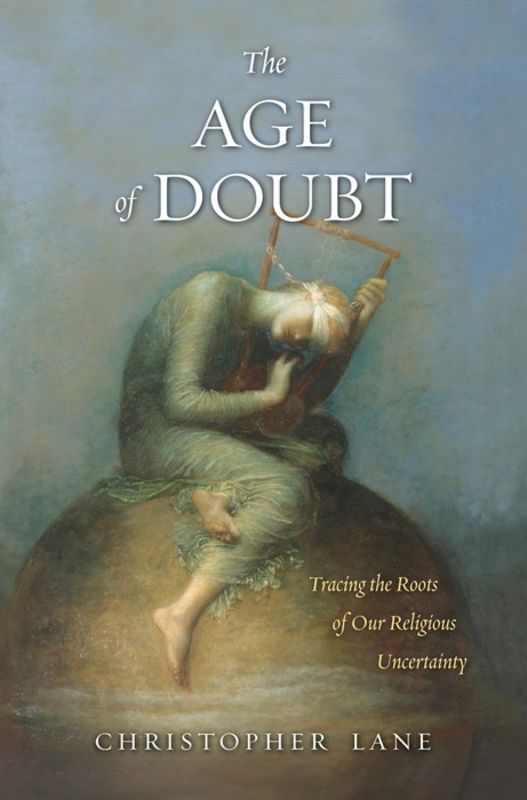
The Age of Doubt
The Victorian era was the first great \"Age of Doubt\" and a critical moment in the history of Western ideas. Leading nineteenth-century intellectuals battled the Church and struggled to absorb radical scientific discoveries that upended everything the Bible had taught them about the world. InThe Age of Doubt, distinguished scholar Christopher Lane tells the fascinating story of a society under strain as virtually all aspects of life changed abruptly.
In deft portraits of scientific, literary, and intellectual icons who challenged the prevailing religious orthodoxy, from Robert Chambers and Anne Brontë to Charles Darwin and Thomas H. Huxley, Lane demonstrates how they and other Victorians succeeded in turning doubt from a religious sin into an ethical necessity.
The dramatic adjustment of Victorian society has echoes today as technology, science, and religion grapple with moral issues that seemed unimaginable even a decade ago. Yet the Victorians' crisis of faith generated a far more searching engagement with religious belief than the \"new atheism\" that has evolved today. More profoundly than any generation before them, the Victorians came to view doubt as inseparable from belief, thought, and debate, as well as a much-needed antidote to fanaticism and unbridled certainty. By contrast, a look at today's extremes-from the biblical literalists behind the Creation Museum to the dogmatic rigidity of Richard Dawkins's atheism-highlights our modern-day inability to embrace doubt.
eBook

Pentecostal Theology and Ecumenical Theology
Pentecostal Theology and Ecumenical Theology: Interpretations, Intersections, and Inspirations is a collection of essays from both globally recognized and newer scholars on the complex relationship between Pentecostalism and the Ecumenical Movement.
eBook