
Catalogue Search | MBRL


Are you sure you want to remove the book from the shelf?

{{itemTitle}}
37,095
result(s) for
"Christian Science"
Sort by:

Healing the Nation
Exploring the surprising presence of Christian Science in American literature at the turn of the 20th century, L. Ashley Squires reveals the rich and complex connections between religion and literature in American culture. Mary Baker Eddy's Church of Christ, Scientist was one of the fastest growing and most controversial religious movements in the United States, and it is no accident that its influence touched the lives and work of many American writers, including Frances Hodgson Burnett, Willa Cather, Theodore Dreiser, Upton Sinclair, and Mark Twain. Squires focuses on personal stories of sickness and healing-whether supportive or deeply critical of Christian Science's recommendations --penned in a moment when the struggle between religion and science framed debates about how the United States was to become a modern nation. As outsized personalities and outlandish rhetoric took to the stage, Squires examines how the poorly understood Christian Science movement contributed to popular narratives about how to heal the nation and advance the cause of human progress.
eBook

I'm still here : black dignity in a world made for whiteness
The author's first encounter with a racialized America came at age seven, when her parents told her they named her Austin to deceive future employers into thinking she was a white man. She grew up in majority-white schools, organizations, and churches, and has spent her life navigating America's racial divide as a writer, a speaker, and an expert helping organizations practice genuine inclusion. While so many institutions claim to value diversity in their mission statements, many fall short of matching actions to words. Brown highlights how white middle-class evangelicalism has participated in the rise of racial hostility, and encourages the reader to confront apathy and recognize God's ongoing work in the world.
Book
Christian Science
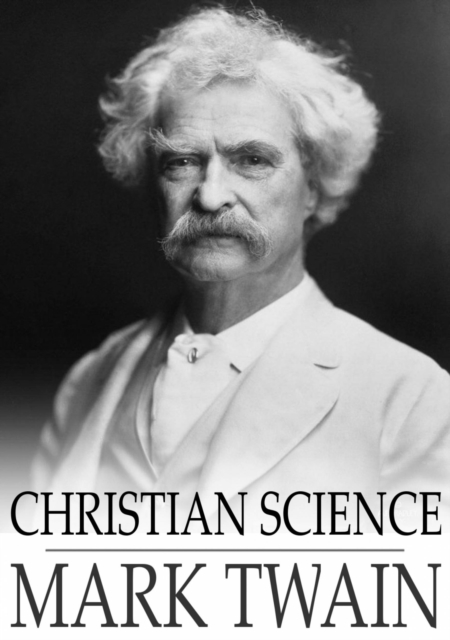
Though Mark Twain is best remembered as perhaps the quintessential American humor writer, he was also a keen observer and critic of cultural and social trends. In this vein, he undertook a book-length discussion and analysis of Christian Science and New Thought, both of which enjoyed immense popularity in the nineteenth and early twentieth centuries in the United States. The controversial text was originally rejected by Twain's publisher, a gesture that the author saw as confirming the influence and power of the religious movement.
eBook

Faithful bodies : performing religion and race in the Puritan Atlantic
\"In the seventeenth-century English Atlantic, religious beliefs and practices played a central role in creating racial identity. English Protestantism provided a vocabulary and structure to describe and maintain boundaries between insider and outsider. In this path-breaking study, Heather Miyano Kopelson peels back the layers of conflicting definitions of bodies and competing practices of faith in the Puritan Atlantic, demonstrating how the categories of 'white,' 'black,' and 'Indian' developed alongside religious boundaries between 'Christian' and 'heathen' and between 'Catholic' and 'Protestant.' Faithful Bodies focuses on three communities of Protestant dissent in the Atlantic World: Bermuda, Massachusetts, and Rhode Island. In this 'Puritan Atlantic,' religion determined insider and outsider status: at times Africans and Natives could belong as long as they embraced the Protestant faith, while Irish Catholics and English Quakers remained suspect. Colonists' interactions with indigenous peoples of the Americas and with West Central Africans shaped their understandings of human difference and its acceptable boundaries. Prayer, religious instruction, sexual behavior, and other public and private acts became markers of whether or not Blacks and Indians were sinning Christians or godless heathens. As slavery became law, transgressing people of color counted less and less as sinners in English Puritans' eyes, even as some of them made Christianity an integral part of their communities. As Kopelson shows, this transformation proceeded unevenly but inexorably during the long seventeenth century\"-- Provided by publisher.
Book

The unchanging gospel in a changing world: A theological framework for divine healing today
Divine healing remains a vital yet contested theme in Christian theology, particularly amid rapid technological advances and increasing secularisation. This study employs a qualitative literature review, using hermeneutical and comparative approaches, to explore divine healing from a Gospel perspective. The findings indicate that divine healing is not only a spiritual phenomenon but also a response to the existential needs of believers in contemporary society. Despite scepticism and marginalisation, it continues to shape religious identity, foster community solidarity and nurture spiritual resilience, especially in Pentecostal contexts, which emerged in the early 20th century with an emphasis on the Holy Spirit’s power, and Charismatic contexts, which later developed with a similar focus on spiritual gifts. Challenges posed by scientific rationalism and secular worldviews are addressed through responsible pastoral care, contextual theological education and integration with medical science and digital technology. The study is limited to a literature review without empirical data, thereby encouraging future interdisciplinary research that bridges faith and science to deepen understanding of divine healing today.Intradisciplinary and/or interdisciplinary implicationsThis study highlights the need to integrate theological reflection with pastoral practice to address challenges in divine healing. It calls for dialogue between theology, medical science and digital technology to promote a holistic healing approach. By adopting interdisciplinary perspectives, it deepens understanding of faith healing, especially in Pentecostal and Charismatic contexts. The study urges contextual theological education to help believers engage scepticism and secularisation critically. It also encourages empirical research and interfaith dialogue to enhance spiritual resilience and ethical healing ministry, supporting the church’s mission in a pluralistic, technological world.
Journal Article

Faith-Based Organizations and SARS-CoV-2 Vaccination
Mass vaccination, despite uncertainty about the duration of protection, is the safest and best hope of attaining global herd immunity against infection with the SARS-CoV-2 virus.2 Attaining herd immunity requires cooperation among diverse partners: government health ministries, nongovernmental organizations, subnational public health agencies, pharmaceutical corporations and vaccine distributors, and civil-society-sector institutions. Foremost among the latter are faith-based organizations (FBOs), key players historically in public health outreach in the United States and globally.3 This legacy includes important FBO partnerships in historical4,5 and current infectious disease control efforts, including the Bill and Melinda Gates Foundation’s malaria control program6 and the President’s Emergency Plan for AIDS Relief to prevent and treat HIV infection. Partnering with the faith sector has been at times contentious for public health. This contentiousness is owed in part to opposition from some religious groups to family planning and to antivaccinators’ increasing appeals to religion for exemptions from vaccines, including childhood vaccinations.8 The latter is particularly frustrating because (with the possible exception of Christian Science, and even there it is a matter of personal choice) no canonical basis exists in the teachings of the world’s major religions for refusing vaccination.9 Such conflict also points to competition between religion and medicine10 and religion and science11 as arbiters of matters of ultimate importance for human life. Such disputes of late have undercut the promise of partnerships between FBOs and public health agencies for prevention of acute and chronic diseases.
Journal Article

Consultations in New Prophetic Churches and African Traditional Religions: A Case Study of Divine Healing in Assessing Syncretistic Practices in the South African Context
New prophetic churches have a different approach to classical Pentecostalism when it comes to the practice of divine healing. Unlike classical Pentecostalism, new prophetic churches embrace the practice of consulting prophets in divine healing in the same way as that in which a traditional healer would be consulted in traditional African religions. During the consultation, the prophet charges a fee and prescribes sacred products that are similar to those of traditional African religious practices. This article uses a case study to illustrate the similarities between new prophetic churches and traditional African religions. Although there are similarities between the two movements, there is a need to also demonstrate their differences. The similarities are framed as continuities, and differences as discontinuities. When diagnosing the problem, a traditional healer throws traditional bones, but a prophet relies on the Holy Spirit to utter a prophetic word. When exorcising a demon causing sickness and diseases, a traditional healer uses rituals to invoke the spirits, but new prophetic churches, with all their weaknesses, would still use the name of Jesus to cast out the evil spirits. The findings in this article have some implications within the theoretical framework of syncretism. The similarities demonstrate syncretistic practices, and the discontinuities demonstrate the nonsyncretistic nature of new prophetic churches in South Africa.
Journal Article

Christian Science on trial : religious healing in America
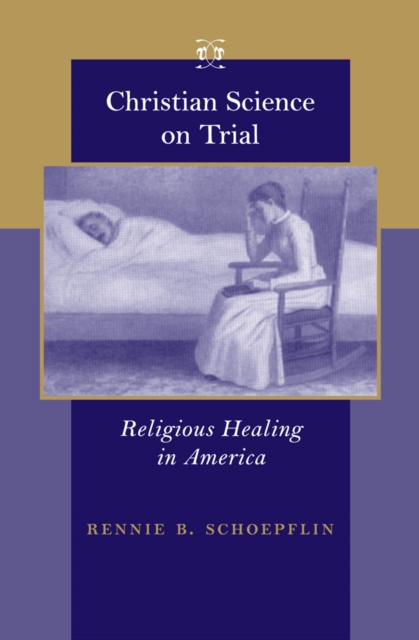
In Christian Science on Trial we gain a helpful historical context for understanding late-twentieth-century public debates over children's rights, parental responsibility, and the authority of modern medicine.
eBook