
Catalogue Search | MBRL


Are you sure you want to remove the book from the shelf?

{{itemTitle}}
816
result(s) for
"Christmas plays"
Sort by:

Bah! Humbug!
In a school theatrical production of 'A Christmas Carol', the boy who plays Scrooge is extra nervous because his very busy father is in the audience--but may leave early due to business. Will the classic story's message reach his father's distracted heart?
BOOK
Star of the Show
Serena Sweetmay is Perfect. Serena Sweetmay is beautiful and clever; she's good at school, is always chosen for the best parts in any activity, and so when Aimee's class is selected to perform the school's Christmas play, everyone knows exactly who's going to be the star of the show. But for once, just once, Aimee wants to shine, and to do that she has to out-angel the perfect Serena Sweetmay. Luckily though, she has a plan, so nothing can go wrong. Can it?
eBook
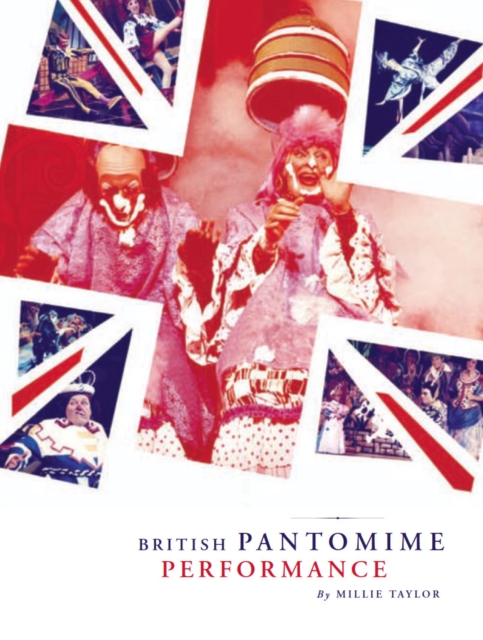
British pantomime performance
This original analysis of contemporary British pantomime addresses the question of how pantomime creates a unique interactive relationship with, and potentially transformative experience for, its audiences.British This is an accessible and valuable text that encourages readers to review their assumptions about pantomime and reconsider its importance as a popular theatre form. Pantomime draws audiences into the story, an engagement with the hero, and an empathetic attachment to the success of the quest. Attention is held by the familiarity of the event, and the comedians draw the audience into a relationship of complicity as they unite to create the unique experience of the live interactive performance. At other times the audience is diverted by the artifice of dance, the illusion of transformation and the surreal playfulness of physical and verbal comedy. The trick of pantomime is to maintain an effective balance between the intellectual appreciation of artifice, the chaotic complicity of interactivity, and the emotional engagement of story-telling.
eBook

«Ut pictura theatrum». Escenografía navideña en el teatro de Juan del Encina y Gil Vicente
El presente trabajo examina el espacio escenográfico del teatro navideño de Juan del Encina y Gil Vicente. Para realizar este análisis dramatúrgico, se empleará una metodología ecléctica e interdisciplinar basada en la semiótica teatral y en la iconografía artística con el propósito de mostrar los recursos escenográficos empleados por los dramaturgos de ambas coronas en las representaciones de sus respectivas piezas navideñas. De este modo, se señalará la posible utilización de soportes pictóricos y escultóricos y de objetos litúrgicos en la puesta en escena de sus respectivas obras sacras.
Journal Article

Directing the Nativity: The Research and Process of a Creative Theater and Ministry Project
This thesis documents the research conducted in order to successfully mount the nativity musical, Star of Bethlehem, and the process of the production. Star of Bethlehem is the product of merging children's theater and community theater with a drama ministry to create a single show. The purposes of this creative project are to fulfill graduation requirements, to achieve Bethany Church's ministry goal of \"reach up and reach out,\" meaning up toward a higher understanding of the Lord and out into the community, and to unite community theater with children's theater effectively. Included are notes relevant to the biblical source material and to the script utilized to tell the story. This document details pre-production research, production notes and a post-production conclusion.
Dissertation

Dating \As You like It,\ Epilogues and Prayers, and the Problems of \As the Dial Hand Tells O'er\
Terminal prayers may have been as common at court and private performances as terminal jigs were in the amphitheater playhouses. Because there are no positive terms, we must resist the temptation to construct a single narrative out of such evidence as we have. 2 Hints for Dating As You Like It does not appear in the list of plays by Shakespeare in Francis Meres's Palladis Tamia, entered in the Stationers' Register on 7 September 1598.
Journal Article

Shakespeare and the Cobham Controversy: the Oldcastle/Falstaff and Brooke/Broome Revisions
\"12 As Robert J. Fehrenbach has observed, this \"evidence\" - indeed the only \"evidence\" ever offered to support the allegation of Cobham' s antitheatrical Puritanism - identifies the death of Henry Carey and the opposition of the officers of the London Corporation as the causes of uncertainty for the former Lord Chamberlain's Men, but says nothing at all about the new Lord Chamberlain, William Brooke.13 The frequently repeated claim that Cobham disliked players is a classic case of post hoc ergo propter hoc fallacious reasoning. The characterization of Sir John Oldcastle as loyal subject of the Crown and martyr for the faith in such sixteenth-century historical works as Foxe's Acts and Monuments and the second edition of Holinshed's Chronicle has been well documented.19 Likewise, Shakespeare's satire of sixteenthcentury Puritanism through his parody of Sir John Oldcastle has also received extensive critical attention.20 The critical stage has been set for the Lord Chamberlain's timely intervention to damp down the inflamed Puritan opposition to the stage. \"23 Thomas A. Pendleton argues that Shakespeare misgauged the sympathy of his audience for Oldcastle - \"Shakespere must have been surprised to find that his proto-Puritan figure of fun was for much of his audience a proto-Protestant martyr\" - and was forced by public opinion both to change the characterisation of the fat knight in 2 Henry IV and to issue a disclaimer in the epilogue - \"The change from 'Oldcastle' to 'Falstaff seems to have been motivated not just by Sir William Brooke's displeasure, but as much - and in the greatest likelihood, much more - by the displeasure of a significant part of Shakespeare's audience at his treatment of a hero of their religion. \"25 More recently, in 1955, Rudolph Fiehler explained the position thus: \"The Puritans, on the other hand, were mightily disturbed by continued portrayal of John Foxe' s martyr-hero as a clown, and it was they, sometime after Shakespeare had recast the old chronicle play, who demanded the sort of apology that was appended to 2 Henry IV.
Journal Article

Sermons, Exegesis, and Performance: The Laon Ordo Prophetarum and the Meaning of Advent
The author discusses the \"Ordo Prophetarum\" (\"Procession of the Prophets), a play for Advent from the town of Laon in France. Lagueux suggests that the thorough detail about casting, costume, props, and iconographic symbolism is a form of \"enacted exegesis,\" which made manifest the way the Laon community understood the aggregate meaning of the lessons and readings of the previous weeks, literally and metaphorically setting the stage for the Christmas season to follow.
Journal Article