
Catalogue Search | MBRL


Are you sure you want to remove the book from the shelf?

{{itemTitle}}
1,868
result(s) for
"Chronically ill"
Sort by:

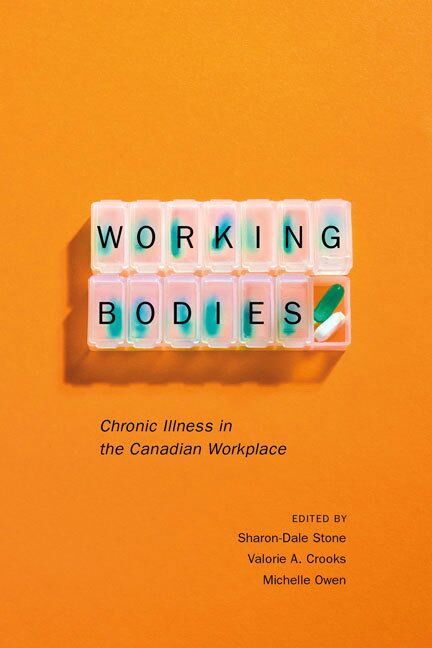
Working Bodies
While significant research has been produced in the field of disability studies, little attention has been paid to experiences of chronic illness. Working Bodies emphasizes the workplace as an important site for understanding such experiences, as employment status has an enormous impact on social and economic standing in Canadian society. The essays in this collection examine the perspectives of both workers and employers, painting a disturbing picture of the challenges that people with chronic illness face in an already demanding labour market. The focus on the Canadian workplace allows for an in-depth understanding of this context and for meaningful comparisons between populations and across workplace environments. Contributors include scholars and practitioners in disability studies, health sciences, geography, occupational therapy, sociology, and labour relations, their expert knowledge ranging from the imperatives of employers, to lived experiences of chronic illness, to the application of workplace policy. By combining research-based chapters with personal reflections on work and chronic illness, Working Bodies grounds itself in existing scholarship while opening up new avenues of discussion. Contributors include Terri Aversa, Andrea Black, Keri Cameron (McMaster University), Nicolette Carlan (University of Waterloo), Vera Chouinard (McMaster University), Valorie A, Crooks (Simon Fraser University), Julie Devaney, Le-Ann Dolan, Adam Gilgoff, Nancy Hutchinson (Queen's University), Vicki Kristman (Lakehead University), Terry Krupa (Queen's University), Rosemary Lysaght (Queen's University), Margaret Oldfield (University of Toronto), Michelle Owen (University of Winnipeg), Melissa Popiel, Wendy Porch, William S. Shaw (University of Massachusetts), Corinne Stevens, Iffath Syed (York University), Joan Versnel (Dalhousie University), and Kelly Williams-Whitt (University of Lethbridge).
eBook


The paradox of hope
Grounded in intimate moments of family life in and out of hospitals, this book explores the hope that inspires us to try to create lives worth living, even when no cure is in sight. The Paradox of Hope focuses on a group of African American families in a multicultural urban environment, many of them poor and all of them with children who have been diagnosed with serious chronic medical conditions. Cheryl Mattingly proposes a narrative phenomenology of practice as she explores case stories in this highly readable study. Depicting the multicultural urban hospital as a border zone where race, class, and chronic disease intersect, this theoretically innovative study illuminates communities of care that span both clinic and family and shows how hope is created as an everyday reality amid trying circumstances.
eBook


Moral laboratories
Moral Laboratoriesis an engaging ethnography and a groundbreaking foray into the anthropology of morality. It takes us on a journey into the lives of African American families caring for children with serious chronic medical conditions, and it foregrounds the uncertainty that affects their struggles for a good life. Challenging depictions of moral transformation as possible only in moments of breakdown or in radical breaches from the ordinary, it offers a compelling portrait of the transformative powers embedded in day-to-day existence. From soccer fields to dinner tables, the everyday emerges as a moral laboratory for reshaping moral life. Cheryl Mattingly offers vivid and heart-wrenching stories to elaborate a first-person ethical framework, forcefully showing the limits of third-person renderings of morality.
eBook

Ernest & Rebecca. 5, The school of nonsense
Even though Rebecca is cured, her best friend Ernest the microbe will stay nearby to help protect her from a nasty flu virus that wants to spread around her school.
BOOK
Voices of the Chronically Ill
This book describes what it is like to embody chaos and liminality in living with a physical chronic illness and how these experiences are related to the loss and remaking of one's sense of self. It also encourages readers to listen closely to the figurative language people use in trying to articulate the unspeakable. Focusing upon a wide array of narrative fragments gathered from first-person literary work and research, the author portrays how a conglomerate of sensations, feelings, and thoughts are embodied in the illness experience. The voices present in this text speak of vulnerability, suffering, and brokenness, yet also, endurance and fortitude. The ethics of philosopher Emmanuel Levinas provide the grounds for offering care lovingly. This book makes a significant contribution to helping students, practitioners and carers understand the chaos that is inherent, yet so often silenced, in the illness experience. This text could also be of interest to laypeople who are curious about how subjective illness is experienced, and to those who are ill who may be seeking affirmation for what they are experiencing.
eBook


Chronic health condition and risk of suicidal behaviours in two hospitals in Ghana
Background
The study examined the lived experiences of patients with chronic kidney condition and their risk of suicidal behaviours.
Methods
Nine chronically ill patients from two hospitals in Ghana were interviewed. Data collected through interviews were thematically analysed.
Results
The themes that emerged from the analysis highlighted participants’ perspectives on their personal conceptualisation of chronic illnesses, their experience of chronic illness, medication adherence, chronic conditions, and suicidality, as well as health services-related challenges related to their conditions and varying coping methods, including religion, information, and social support. The study revealed that chronically ill patients adopted coping strategies such as religiosity, health-seeking information, and social support to manage their condition. On the other hand, participants highlighted the negative impact of adherence-related experiences and poor attitudes among health workers on their well-being. Again, loss of meaning, feared loss of virility and chronicity and its related issues (chronic condition and suicidality) were found to increase suicide ideation in chronic kidney patients.
Recommendation.
The number of crisis intervention service providers in health centres should be expanded and equipped with adaptive skills to train families and religious bodies about proper coping skills, as they provide social support which is crucial in reducing the prevalence of both chronic conditions and patients’ risk of suicide. The National Health Insurance Scheme should be improved to cater for patients with chronic kidney conditions to ease their financial burden. Chronic kidney conditions place a heavy physical, emotional, and financial burden on those affected. Addressing these challenges requires coordinated and sustained efforts, including targeted policy interventions. A holistic approach is essential to improve the management of chronic kidney disease and reduce its incidence, as well as associated outcomes like suicide, especially in developing countries such as Ghana.
Journal Article