
Catalogue Search | MBRL


Are you sure you want to remove the book from the shelf?

{{itemTitle}}
88
result(s) for
"Chumash"
Sort by:
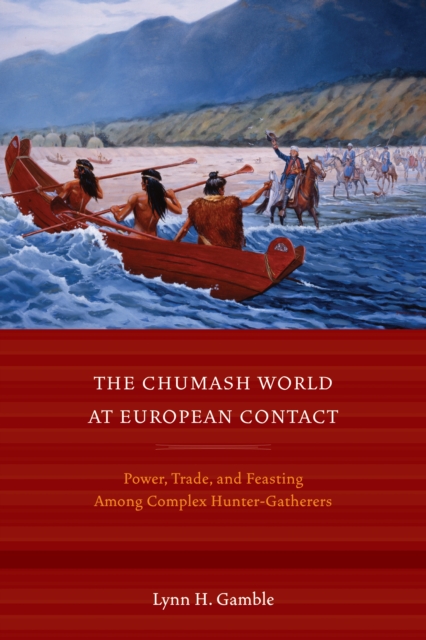
The Chumash world at European contact
When Spanish explorers and missionaries came onto Southern California's shores in 1769, they encountered the large towns and villages of the Chumash, a people who at that time were among the most advanced hunter-gatherer societies in the world. The Spanish were entertained and fed at lavish feasts hosted by chiefs who ruled over the settlements and who participated in extensive social and economic networks. In this first modern synthesis of data from the Chumash heartland, Lynn H. Gamble weaves together multiple sources of evidence to re-create the rich tapestry of Chumash society. Drawing from archaeology, historical documents, ethnography, and ecology, she describes daily life in the large mainland towns, focusing on Chumash culture, household organization, politics, economy, warfare, and more.
eBook
The Island Chumash
Colonized as early as 13,500 years ago, the Northern Channel Islands of California offer some of the earliest evidence of human habitation along the west coast of North America. The Chumash people who lived on these islands are considered to be among the most socially and politically complex hunter-gatherers in the world. This book provides a powerful and innovative synthesis of the cultural and environmental history of the chain of islands. Douglas J. Kennett shows that the trends in cultural elaboration were, in part, set into motion by a series of dramatic environmental events that were the catalyst for the unprecedented social and political complexity observed historically.
eBook


Saints and citizens
Saints and Citizens is a bold new excavation of the history of Indigenous people in California in the late eighteenth and nineteenth centuries, showing how the missions became sites of their authority, memory, and identity. Shining a forensic eye on colonial encounters in Chumash, Luiseño, and Yokuts territories, Lisbeth Haas depicts how native painters incorporated their cultural iconography in mission painting and how leaders harnessed new knowledge for control in other ways. Through her portrayal of highly varied societies, she explores the politics of Indigenous citizenship in the independent Mexican nation through events such as the Chumash War of 1824, native emancipation after 1826, and the political pursuit of Indigenous rights and land through 1848.
eBook

A Canyon through Time
Long a refuge for bootleggers and hobos, Tecolote Canyon was engulfed by an industrialized oil boom for twenty years beginning in the 1930s, and endured the only Japanese attack on the contiguous U.S. during World War II. In the postindustrial era, the lower canyon was a haven for surfers, nudists, and gravediggers before being transformed into a five-star resort in the 1990s. But this beautiful area of California’s Santa Barbara coast has been occupied by humans for at least 9,000 years.
Known by the Chumash Indians as Hel’apunitse (guitar fish), the canyon was a major nexus of Chumash village life from about 2000 to 500 years ago. After the arrival of Europeans, the canyon passed from Chumash hands through successive Spanish, Mexican, and American administrations.
In A Canyon through Time , the authors summarize the deep history of this beautiful canyon, which serves as a fascinating history in microcosm of the California coastal region. Using data from archaeology, ecology, geology, geography, and history, they weave an interdisciplinary tale of the natural and human prehistory and history of the Tecolote Canyon area.
eBook
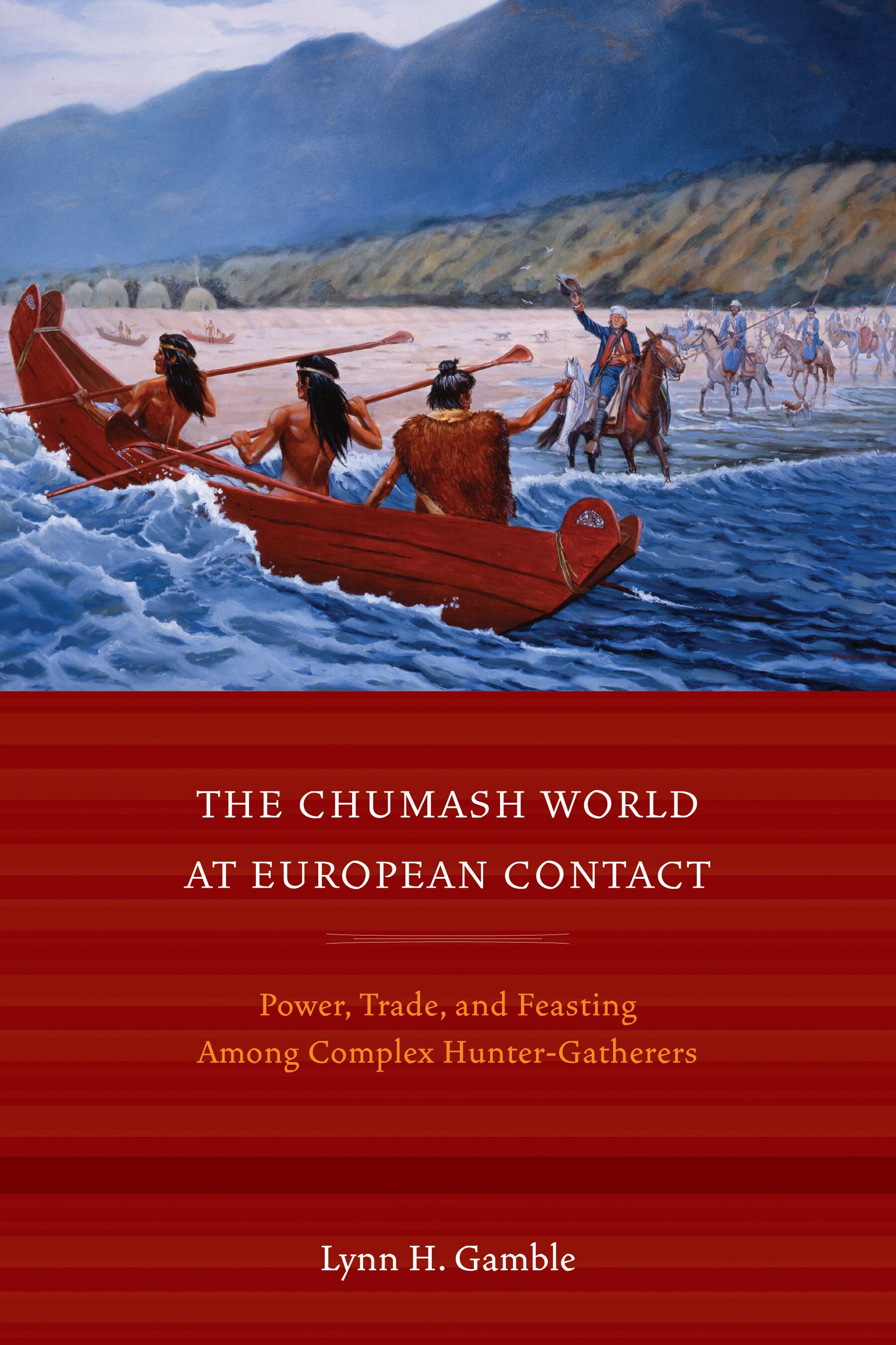
The Chumash World at European Contact
When Spanish explorers and missionaries came onto Southern California's shores in 1769, they encountered the large towns and villages of the Chumash, a people who at that time were among the most advanced hunter-gatherer societies in the world. The Spanish were entertained and fed at lavish feasts hosted by chiefs who ruled over the settlements and who participated in extensive social and economic networks. In this first modern synthesis of data from the Chumash heartland, Lynn H. Gamble weaves together multiple sources of evidence to re-create the rich tapestry of Chumash society. Drawing from archaeology, historical documents, ethnography, and ecology, she describes daily life in the large mainland towns, focusing on Chumash culture, household organization, politics, economy, warfare, and more.
eBook

In Cahoots with Neo-Indigenism
Academia’s support for neo-indigenes is a significant component of their professional success. I describe how this support operates, drawing a model of cahooting from Edward Dolnick’s analysis of art forgery in The Forger’s Spell. Cahooting reflects the importance of social relationships to the construction of perceived truth and virtue. It corrupts academia at multiple levels through these relationships, undermining the pursuit of truth and goals of equity and inclusion.
Journal Article
The Island Chumash
Colonized as early as 13,500 years ago, the Northern Channel Islands of California offer some of the earliest evidence of human habitation along the west coast of North America. The Chumash people who lived on these islands are considered to be among the most socially and politically complex hunter-gatherers in the world. This book provides a powerful and innovative synthesis of the cultural and environmental history of the chain of islands. Douglas J. Kennett shows that the trends in cultural elaboration were, in part, set into motion by a series of dramatic environmental events that were the catalyst for the unprecedented social and political complexity observed historically.
eBook


Ecological Niche Dimensionality and the Evolutionary Diversification of Stick Insects
The degree of phenotypic divergence and reproductive isolation between taxon pairs can vary quantitatively, and often increases as evolutionary divergence proceeds through various stages, from polymorphism to population differentiation, ecotype and race formation, speciation, and post-speciational divergence. Although divergent natural selection promotes divergence, it does not always result in strong differentiation. For example, divergent selection can fail to complete speciation, and distinct species pairs sometimes collapse ('speciation in reverse'). Widely-discussed explanations for this variability concern genetic architecture, and the geographic arrangement of populations. A less-explored possibility is that the degree of phenotypic and reproductive divergence between taxon pairs is positively related to the number of ecological niche dimensions (i.e., traits) subject to divergent selection. Some data supporting this idea stem from laboratory experimental evolution studies using Drosophila, but tests from nature are lacking. Here we report results from manipulative field experiments in natural populations of herbivorous Timema stick insects that are consistent with this 'niche dimensionality' hypothesis. In such insects, divergent selection between host plants might occur for cryptic colouration (camouflage to evade visual predation), physiology (to detoxify plant chemicals), or both of these niche dimensions. We show that divergent selection on the single niche dimension of cryptic colouration can result in ecotype formation and intermediate levels of phenotypic and reproductive divergence between populations feeding on different hosts. However, greater divergence between a species pair involved divergent selection on both niche dimensions. Although further replication of the trends reported here is required, the results suggest that dimensionality of selection may complement genetic and geographic explanations for the degree of diversification in nature.
Journal Article