
Catalogue Search | MBRL


Are you sure you want to remove the book from the shelf?

{{itemTitle}}
32
result(s) for
"Church and state Catholic Church History 18th century."
Sort by:


Un clero en transición
Un sector importante de la sociedad novohispana, citado a menudo en la historiografía debido a sus vínculos, a su indudable influencia en la vida religiosa, social, política y cultural de la época es, por supuesto, el clero secular. A partir de la idea de que sobre este sector hay lagunas notables en cuanto a su conocimiento –básicamente debidas a la tendencia a establecer generalizaciones que abarcan amplios espacios temporales y también al escaso trabajo de archivo–, el autor del presente libro se dio a la tarea de analizar un periodo histórico poco conocido de la Iglesia en Nueva España como lo fue la primera década del siglo XVIII en lo relativo al clero secular del arzobispado de México y a su relación con la sociedad, las instituciones, las parroquias y la política eclesiástica de Felipe V.
Así, Rodolfo Aguirre Salvador nos entrega en Un clero en transición. Población clerical, cambio parroquial y política eclesiástica en el arzobispado de México, 1700-1749, un estudio serio, riguroso y ameno sobre los intentos del monarca Borbón por reconfigurar la Iglesia; sobre cómo fue impactado el clero por esa transición política y social, y sobre cómo él mismo fue protagonista de ese cambio. [Texto de la editorial].
eBook


The Protestant Interest
During the early eighteenth century, colonial New England witnessed the end of Puritanism and the emergence of a revivalist religious movement that culminated in the evangelical awakenings of the 1740s. This engrossing book explores the religious history of New England during the period and offers new reasons for this change in cultural identity.
After England's Glorious Revolution, says Thomas Kidd, New Englanders abandoned their previous hostility toward Britain, viewing it as the chosen leader in the Protestant fight against world Catholicism. They also imagined themselves part of an international Protestant community and replaced their Puritan beliefs with a revival-centered pan-Protestantism. Kidd discusses the rise of \"the Protestant interest\" and provides a compelling argument about the origins of both eighteenth-century revivalism and the global evangelical movement.
eBook
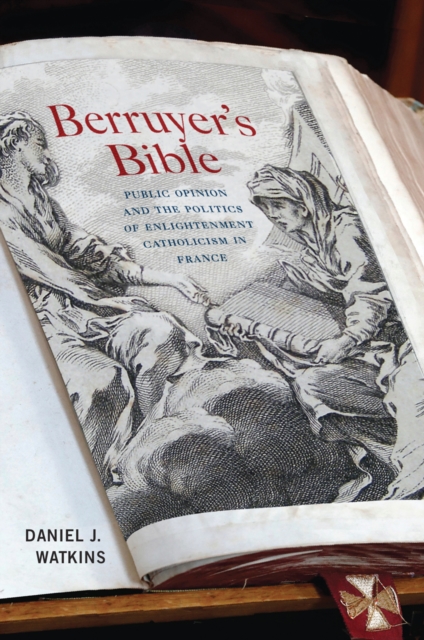
Berruyer's Bible
The French Jesuit Isaac-Joseph Berruyer's Histoire du peuple
de Dieu was an ambitious attempt to connect the ideas of the
Enlightenment with the theology of the Catholic Church. A
paraphrase of the Bible written in vernacular French, the
Histoire promoted progress, the pursuit of happiness, the
fundamental goodness of humanity, and the capacity of nature to
shape moral human beings. Berruyer aimed to update the Bible for a
new age, but his work unleashed a furor that ended with the
expulsion of the Jesuits from France. Berruyer's Bible
offers a fresh perspective on the history of the Catholic
Enlightenment. By exploring the rise and fall of Berruyer's
Histoire , Daniel Watkins reveals how Catholic attempts to
assimilate Enlightenment ideas caused conflicts within the church
and between the church and the French state. Berruyer's
Bible flips the traditional narrative of the Enlightenment on
its head by showing that the secularization of French society and
the political decline of the Catholic Church were due not solely to
the external assaults of anti-clerical philosophes but
also to the internal discord caused by Catholic theologians
themselves. Built upon extensive research in archives across
Western Europe and the United States, Berruyer's Bible
paints a vivid picture of the tumultuous intellectual world of the
Catholic Church and the power of radical ideas that shaped the
church throughout the Enlightenment, the French Revolution, and
beyond.
eBook

Religion and the Post-revolutionary Mind
The French Revolution swept away the Old Regime along with many
of its ideas about epistemology, history, society, and politics. In
the intellectual ferment that followed, debates about religion
figured prominently as diverse thinkers grappled with the
philosophical and civil status of religion in a post-revolutionary
age. Arthur McCalla demonstrates the central place of religion in
the intellectual life of post-revolutionary France in Religion
and the Post-revolutionary Mind . Certain questions - What is
the nature of religion? Does society rest on religious foundations?
What ought to be the place of religion in society? - drew sustained
attention from across the political spectrum. Idéologues viewed
religion as error and sought to eradicate it through the promotion
of secular values. Catholic Traditionalists understood religion as
a body of revealed truths of supernatural origin that ought to be
authoritative in all aspects of life. Liberals sought to replace
Christian orthodoxy with a new public faith consonant with liberal
values. But these blocs were not monolithic, and McCalla reveals
the complexities of each one, as well as the dialogues and
rivalries among them. The categories established by the concepts of
religion these thinkers constructed continue to shape debates over
liberationist critiques, liberal pluralism, laïcité , and
political theology. The place of religion in civil society is again
a matter of urgent debate. Religion and the Post-revolutionary
Mind provides essential historical context for thinking about
the status of religion in the contemporary world.
eBook

The Virgin of Guadalupe and the Conversos
Hidden lives, hidden history, and hidden manuscripts. InThe Virgin of Guadalupe and the Conversos,Marie-Theresa Hernández unmasks the secret lives ofconversosandjudaizantesand their likely influence on the Catholic Church in the New World.The termsconversoandjudaizanteare often used for descendants of Spanish Jews (the Sephardi, or Sefarditas as they are sometimes called), who converted under duress to Christianity in the fourteenth and fifteenth centuries. There are few, if any, archival documents that prove the existence ofjudaizantesafter the Spanish expulsion of the Jews in 1492 and the Portuguese expulsion in 1497, as it is unlikely that a secret Jew in sixteenth-century Spain would have documented his allegiance to the Law of Moses, thereby providing evidence for the Inquisition.On aDa Vinci Code- style quest, Hernández persisted in hunting for a trove of forgotten manuscripts at the New York Public Library. These documents, once unearthed, describe the Jewish/Christian religious beliefs of an early nineteenth-century Catholic priest in Mexico City, focusing on the relationship between the Virgin of Guadalupe and Judaism. With this discovery in hand, the author traces the cult of Guadalupe backwards to its fourteenth-century Spanish origins. The trail from that point forward can then be followed to its interface with early modern conversos and their descendants at the highest levels of the Church and the monarchy in Spain and Colonial Mexico. She describes key players who were somehow immune to the dangers of the Inquisition and who were allowed the freedom to display, albeit in a camouflaged manner, vestiges of their family's Jewish identity.By exploring the narratives produced by these individuals, Hernández reveals the existence of thoseconversosandjudaizanteswho did not return to the \"covenantal bond of rabbinic law,\" who did not publicly identify themselves as Jews, and who continued to exhibit in their influential writings a covert allegiance and longing for a Jewish past. This is a spellbinding and controversial story that offers a fresh perspective on the origins and history ofconversos.
eBook
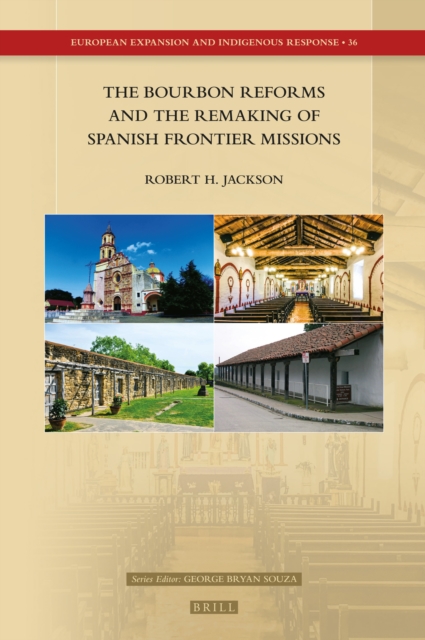
The Bourbon Reforms and the Remaking of Spanish Frontier Missions
During the eighteenth century the Spanish Bourbon monarchs attempted to transform Spanish America. This study analyses the efforts to transform frontier missions, and the consequences and particularly demographic consequences for the indigenous peoples that lived on the missions.
eBook