
Catalogue Search | MBRL


Are you sure you want to remove the book from the shelf?

{{itemTitle}}
31,484
result(s) for
"Church groups"
Sort by:


Words upon the Word
Evangelical Bible study groups are the most prolific type of small group in American society, with more than 30 million Protestants gathering every week for this distinct purpose, meeting in homes, churches, coffee shops, restaurants, and other public and private venues across the country. What happens in these groups? How do they help shape the contours of American Evangelical life? While more public forms of political activism have captured popular and scholarly imaginations, it is in group Bible study that Evangelicals reflect on the details of their faith. Here they become self-conscious religious subjects, sharing the intimate details of life, interrogating beliefs and practices, and articulating their version of Christian identity and culture.In Words upon the Word, James S. Bielo draws on over nineteen months of ethnographic work with five congregations to better understand why group Bible study matters so much to Evangelicals and for Evangelical culture. Through a close analysis of participants' discourse, Bielo examines the defining themes of group life - from textual interpretation to spiritual intimacy and the rehearsal of witnessing. Bielo's approach allows these Evangelical groups to speak for themselves, illustrating Bible study's uniqueness in Evangelical life as a site of open and critical dialogue. Ultimately, Bielo's ethnography sheds much needed light on the power of group Bible study for the ever-evolving shape of American Evangelicalism.
eBook
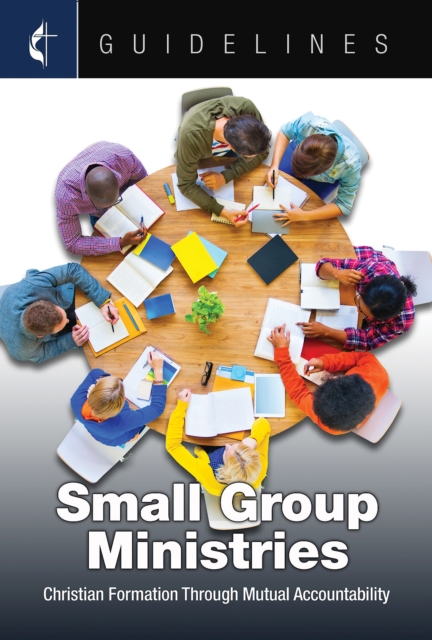
Guidelines Small Group Ministries
All small groups in the local church are, or could be, places of faith formation and disciple making. By offering a more intimate setting, small groups of every kind are uniquely able to welcome and nurture people in the church and in the faith. This Guideline is designed to help implement and guide the work of the ministry area.This is one of the twenty-six Guidelines for Leading Your Congregation 2017-2020 that cover church leadership areas including Church Council and Small Membership Church; the administrative areas ofFinance and Trustees; and ministry areas focused on nurture, outreach, and witness including Worship, Evangelism, Stewardship, Christian Education, age-level ministries, Communications, and more.
eBook

Creating Social Spaces to Tackle AIDS-Related Stigma: Reviewing the Role of Church Groups in Sub-Saharan Africa
An expanding body of literature explores the role of African church groups in facilitating or hindering the support of people living with AIDS and challenging or contributing to HIV/AIDS-related stigma. Treating church groups as social spaces in which HIV/AIDS-related stigma may potentially be challenged, we systematically review this literature, identifying five themes that highlight the complex and contradictory role of the church as a potential agent of health-enhancing social change. In many ways the church perpetuates HIV/AIDS-related stigma through (i) moralistic attitudes and (ii) its reinforcement of conservative gender ideologies. However some churches have managed move towards action that makes a more positive contribution to HIV/AIDS management through (iii) promoting various forms of social control for HIV prevention, (iv) contributing to the care and support of the AIDS-affected and (v) providing social spaces for challenging stigmatising ideas and practices. We conclude that church groups, including church leadership, can play a key role in facilitating or hindering the creation of supportive social spaces to challenge stigma. Much work remains to be done in developing deeper understandings of the multi-layered factors that enable some churches, but not others, to respond effectively to HIV/AIDS.
Journal Article

Moral ambition
In this evocative ethnography, Omri Elisha examines the hopes, frustrations, and activist strategies of American evangelical Christians as they engage socially with local communities. Focusing on two Tennessee megachurches, Moral Ambition reaches beyond political controversies over issues such as abortion, same-sex marriage, and public prayer to highlight the ways that evangelicals at the grassroots of the Christian Right promote faith-based causes intended to improve the state of social welfare. The book shows how these ministries both help churchgoers embody religious virtues and create provocative new opportunities for evangelism on a public scale. Elisha challenges conventional views of U.S. evangelicalism as narrowly individualistic, elucidating instead the inherent contradictions that activists face in their efforts to reconcile religious conservatism with a renewed interest in compassion, poverty, racial justice, and urban revivalism.
eBook
Christianity, Book-Burning and Censorship in Late Antiquity
It is estimated that only a small fraction, less than 1 per cent, of ancient literature has survived to the present day. The role of Christian authorities in the active suppression and destruction of books in Late Antiquity has received surprisingly little sustained consideration by academics. In an approach that presents evidence for the role played by Christian institutions, writers and saints, this book analyses a broad range of literary and legal sources, some of which have hitherto been little studied. Paying special attention to the problem of which genres and book types were likely to be targeted, the author argues that in addition to heretical, magical, astrological and anti-Christian books, other less obviously subversive categories of literature were also vulnerable to destruction, censorship or suppression through prohibition of the copying of manuscripts. These include texts from materialistic philosophical traditions, texts which were to become the basis for modern philosophy and science. This book examines how Christian authorities, theologians and ideologues suppressed ancient texts and associated ideas at a time of fundamental transformation in the late classical world.
eBook

Memorializing the Unsung
By the time the Capuchins arrived in the seventeenth century, Kongo had been Catholic for nearly two hundred years. The European mission could not be conversion, then, but reinforcement; the Capuchins sought to establish the sacraments and a line to Rome in a lay-led church already suffused with an enduring, creative, and complex theological culture. In Memorializing the Unsung,ElochukwuUzukwu uses the framework of this “ancient” Kongo Catholicism to explore European dependence on enslaved Kongo Catholics and the unconscionable Capuchin and Spiritan participation in the slave trade at large—a practice denounced by the lone voices of Capuchin Epifanio de Moirans and Spiritan Alexandre Monnet. Reconstructing the church that missionaries and Kongo Catholics built together on the foundations of local religion, Memorializing the Unsung contrasts the dignity denied the Kongo Catholics with the freedom they nonetheless performed. Uzukwu is particularly deft in tracing the agency of Kongo elites and laypeople from the fifteenth century through the nineteenth, carefully evaluating their deliberate engagements with southern Europeans, the role of the maestri (translator-catechists) in guiding the faithful, and the ultimate development of a unique theological vocabulary endorsed by the Kikongo catechism. Without the support and creativity of these unsung lay Catholics across west-central and eastern Africa, Uzukwu shows, the European missions in the region would have failed. Even while enslaved, the Kongo Slaves of the Church and the eastern African Slaves of the Mission served as mediators, co-creators, and reinventors of their world.
eBook
The Spirit of Jesus Unleashed on the Church
The Spirit of Jesus Unleashed on the Church is the third book in a series concerning the restoration of Jesus' people in a world where the marginalized classes longed for reconciliation to God. After Jesus' ascension the early Christians fulfilled Luke's epic theme of restoration in their new empire, inclusion of outcasts, and endurance during the resistance. As Jesus journeyed to Jerusalem, so Paul and the mission of God followed the journey to the capital of the Roman world. God's people today are likewise empowered by the Spirit to boldly live their mission for Jesus through love, compassion, and endurance in cultures that marginalize those who need God's reconciliation.
eBook
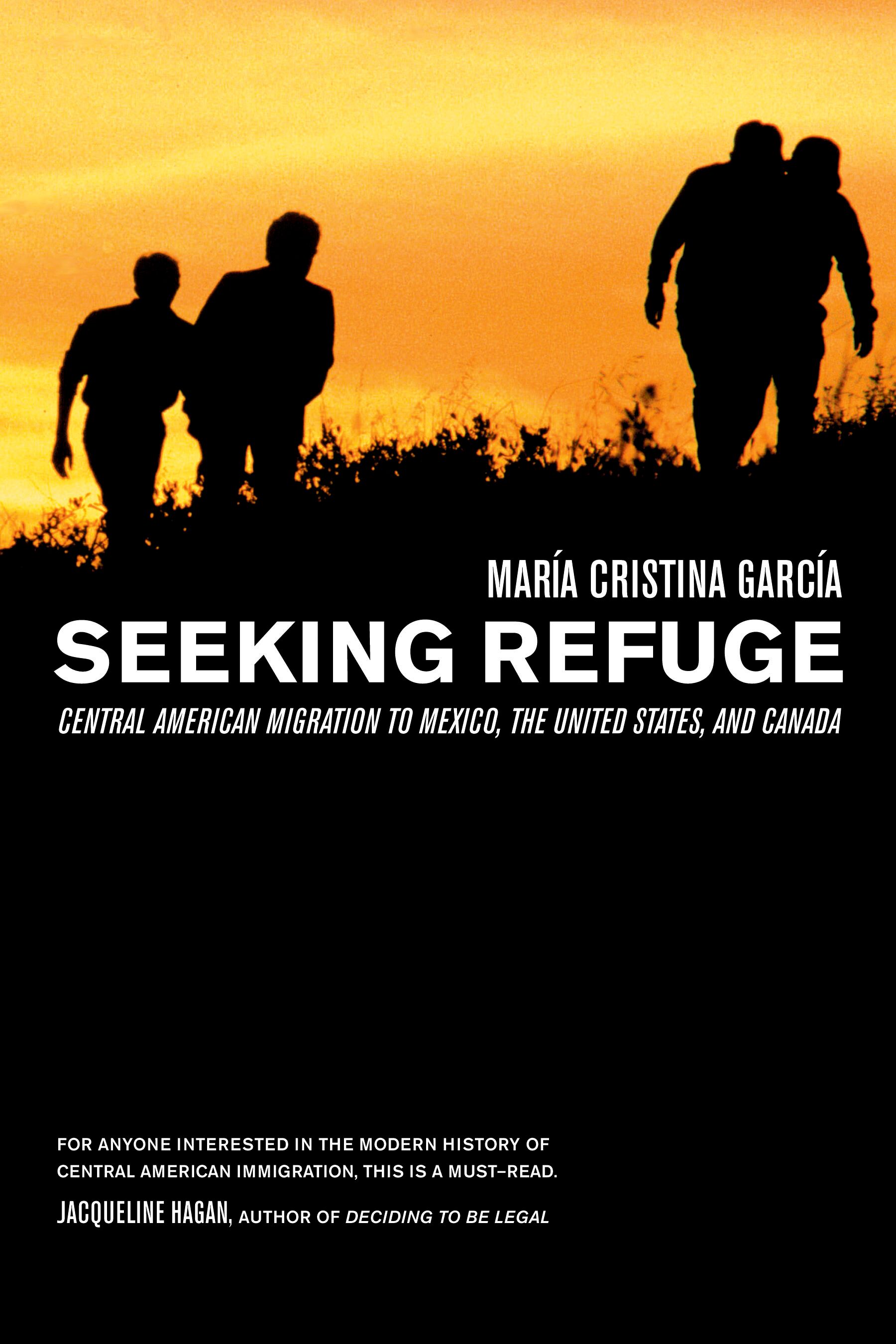
Seeking Refuge
The political upheaval in Nicaragua, El Salvador, and Guatemala had a devastating human toll at the end of the twentieth century. A quarter of a million people died during the period 1974-1996. Many of those who survived the wars chose temporary refuge in neighboring countries such as Honduras and Costa Rica. Others traveled far north, to Mexico, the United States, and Canada in search of safety. Over two million of those who fled Central America during this period settled in these three countries. In this incisive book, María Cristina García tells the story of that migration and how domestic and foreign policy interests shaped the asylum policies of Mexico, the United States, and Canada. She describes the experiences of the individuals and non-governmental organizations—primarily church groups and human rights organizations—that responded to the refugee crisis, and worked within and across borders to shape refugee policy. These transnational advocacy networks collected testimonies, documented the abuses of states, re-framed national debates about immigration, pressed for changes in policy, and ultimately provided a voice for the displaced. García concludes by addressing the legacies of the Central American refugee crisis, especially recent attempts to coordinate a regional response to the unique problems presented by immigrants and refugees—and the challenges of coordinating such a regional response in the post-9/11 era.
eBook
The Connected Life
How can our church develop or improve our small group ministry? This book is a useful how-to guide, based on the innovative, engaging, and popular approach to small group ministry at Providence United Methodist Church, where Jacob Armstrong is senior pastor.
eBook