
Catalogue Search | MBRL


Are you sure you want to remove the book from the shelf?

{{itemTitle}}
7,026
result(s) for
"Church unions"
Sort by:

Russian Bible Wars
Although biblical texts were known in Church Slavonic as early as the ninth century, translation of the Bible into Russian came about only in the nineteenth century. Modern scriptural translation generated major religious and cultural conflict within the Russian Orthodox church. The resulting divisions left church authority particularly vulnerable to political pressures exerted upon it in the twentieth century. Russian Bible Wars illuminates the fundamental issues of authority that have divided modern Russian religious culture. Set within the theoretical debate over secularization, the volume clarifies why the Russian Bible was issued relatively late and amidst great controversy. Stephen Batalden's study traces the development of biblical translation into Russian and of the 'Bible wars' that then occurred in the nineteenth and twentieth centuries in Russia. The annotated bibliography of the Russian Bible identifies the different editions and their publication history.
eBook

Russian Baptists and spiritual revolution, 1905-1929
... a fascinating read for everyone interested in Russia, religion,
and modernity. -- Nadieszda Kizenko In the early 20th
century, Baptists were the fastest-growing non-Orthodox religious group among
Russians and Ukrainians. Heather J. Coleman traces the development of Baptist
evangelical communities through a period of rapid industrialization, war, and
revolution, when Russians found themselves asking new questions about religion and
its place in modern life. Baptists' faith helped them navigate the problems of
dissent, of order and disorder, of modernization and westernization, and of national
and social identity in their changing society. Making use of newly available
archival material, this important book reveals the ways in which the Baptists' own
experiences, and the widespread discussions that they generated, illuminate the
emergence of new social and personal identities in late Imperial and early Soviet
Russia, the creation of a public sphere and a civic culture, and the role of
religious ideas in the modernization process.
eBook

Beda Mayr, Vertheidigung der katholischen Religion (1789)
Despite the importance the monks had as carriers of programmatic Enlightenment ideas, few of their original texts are available in modern editions. This edition contributes to filling this lacuna by publishing Dom Beda Mayr's (1742-1794) ecumenical Catholic theology.
eBook

Ecclesiality & Ecumenism
The ecumenical movement currently faces a number of notable challenges. While relations between Christian communities improved significantly over the course of the 20th century, partners in ecumenical dialogues often brought to the table fundamentally different conceptions of the nature of the church. Thus, the problem of \"ec-clesiality\" has emerged as an especially pressing issue for contemporary ecumenism. Fresh reflection on what makes the church legitimately the church will hold considerable promise for revitalizing efforts toward Christian unity. This book explores the contributions of the French Dominican theologian Yves Congar on the question of ecclesiality with an eye to their ongoing ecumenical potential. A pioneer of Catholic ecumenism, Congar's rich vision of ecclesiality made a substantial impact on the theological understanding of the church. From Congar's early efforts to account theologically for separated Christians to his extended reflections on the Holy Spirit after the Second Vatican Council, this critical engagement with Congar offers much-needed resources for the contemporary ecumenical situation.
eBook

Church Union Movement and the Establishment of the “United Church of Christ in Japan”
The establishment of the United Church of Christ in Japan (nihon kirisuto kyōdan 日本基督教団) marked the culmination of the Church Union Movement in Imperial Japan. Although the Church Union Movement can be traced back to the Meiji era, no significant breakthroughs were made until 1939 due to the refusal of some denominations. In this article, I aim to clarify the process and causes behind the formation of the united church, while also attempting to understand the interaction pattern between the State and Christianity under an increasing wartime totalitarian regime. In April 1939, the Diet passed the Religious Organizations Law (syūkyō dantai hō 宗教団体法), a bill aimed at strengthening state control over religions, which required Christian denominations to establish religious organizations. With the war intensifying Japan’s antagonism toward Western countries, Christianity as a foreign religion faced progressive attacks from the nationalist sects. Some denominations, like the Salvation Army, were accused of espionage due to their international connections and were monitored by gendarmerie (kenpeitai 憲兵隊). Facing harsh pressure, Christians sought to project a patriotic image, ultimately leading to the formation of the United Church as a survival strategy amidst a hostile social-political environment.
Journal Article

Keeping the faith : Russian orthodox monasticism in the Soviet Union, 1917-1939
In Keeping the Faith, Jennifer Jean Wynot presents a clear and concise history of the trials and evolution of Russian Orthodox monasteries and convents and the important roles they have played in Russian culture, in both in the spiritual and political realms, from the abortive reforms of 1905 to the Stalinist purges of the 1930s. She shows how, throughout the Soviet period, Orthodox monks and nuns continued to provide spiritual strength to the people, in spite of severe persecution, and despite the ambivalent relationship the Russian state has had to the Russian church since the reign of Ivan the Terrible.
Focusing her study on two provinces, Smolensk and Moscow, Wynot describes the Soviet oppression and the clandestine struggles of the monks and nuns to uphold the traditions of monasticism and Orthodoxy. Their success against heavy odds enabled them to provide a counterculture to the Soviet regime. Indeed, of all the pre-1917 institutions, the Orthodox Church proved the most resilient. Why and how it managed to persevere despite the enormous hostility against it is a topic that continues to fascinate both the general public and historians.
Based on previously unavailable Russian archival sources as well as written memoirs and interviews with surviving monks and nuns, Wynot analyzes the monasteries’ adaptation to the Bolshevik regime and she challenges standard Western assumptions that Communism effectively killed the Orthodox Church in Russia. She shows that in fact, the role of monks and nuns in Orthodox monasteries and convents is crucial, and they are largely responsible for the continuation of Orthodoxy in Russia following the Bolshevik revolution.
Keeping the Faith offers a wealth of new information and a new perspective that will be of interest not only to students of Russian history and communism, but also to scholars interested in church-state relations.
eBook
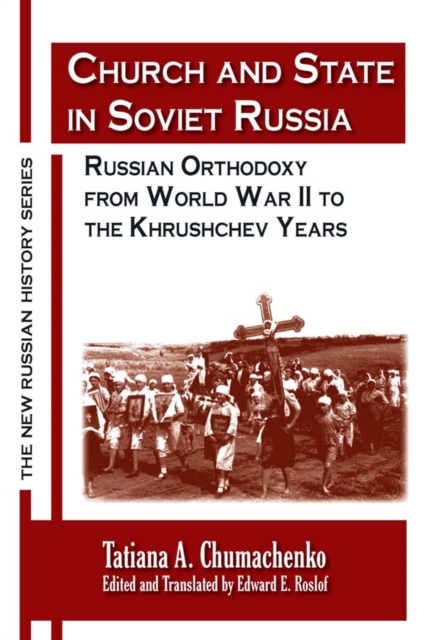
Church and State in Soviet Russia
Church-state relations during the Soviet period were much more complex and changeable than is generally assumed. From the German invasion of the Soviet Union in 1941 until the 21st Party Congress in 1961, the Communist regime's attitude toward the Russian Orthodox Church zigzagged from indifference and opportunism to hostility and repression. Drawing from new access to previously closed archives, historian Tatiana Chumachenko has documented the twists and turns and human dramas of church-state relations during these decades. This rich material provides essential background to the post-Soviet Russian government's controversial relationship to the Russian Orthodox Church today.
eBook

Anti-Ottoman Cruelty and Christian Rite: The Deeds of the “Repenting” Vlad III of Wallachia
When Byzantium fell, Western attitude towards Greek rite Christians began to change, whether they were ‘schismatics’ or in union with Rome, following the troublesome enactment of the Council of Florence (1439). The modification, noted for Balkan Christians, crossed the Lower Danube. There laid the mostly Greek rite zones that stayed outside of Ottoman direct authority, even after Mehmed II’s victories in Serbia (1459), in Bosnia (1463) or in the Crimea (1475). These zones formed two (divided) states: Wallachia and Moldavia. The change of attitude towards Greek rite Christians was visible also in the Kingdom of Hungary, the traditional suzerain of Wallachia and Moldavia, and, by definition, Christendom’s anti-Ottoman ‘bulwark’. The realm had been shielded by a series of “buffer states”. These lands had largely collapsed by the early 1470s.No ruler of Wallachia or of Moldavia was “blacklisted” in the realm (and by its representatives) as ‘schismatic’ after the Ottoman conquest of Byzantium, as well as after “the miracle of Belgrade”, in 1456. The long and predominantly tolerant reign of Sigismund of Luxemburg had certainly altered the “so-to-say” Angevine rhetoric of the 1300s (that is, the Wallachians, and their lords, were ‘schismatic’ “lowlife” to be crushed). Still, the documentary (at least) change, in favour of Greek rite Wallachians appears dramatic.In this framework we turn to the controversial figure of Vlad III Dracula of Wallachia. The ‘Germans’ may have been correct: Vlad was the monster of one – single- Christian faith. This may explain why his deeds did not lead to a collapse of the unstable Christian compromise at the Danube borders of the Ottoman Empire. Vlad was a Greek-Latin Golem (officially by calling, not by making), whose death was later lamented by both King Matthias Corvinus and Stephen III of Moldavia, the Greek rite athleta of the Papacy, Vlad’s relatives.
Journal Article
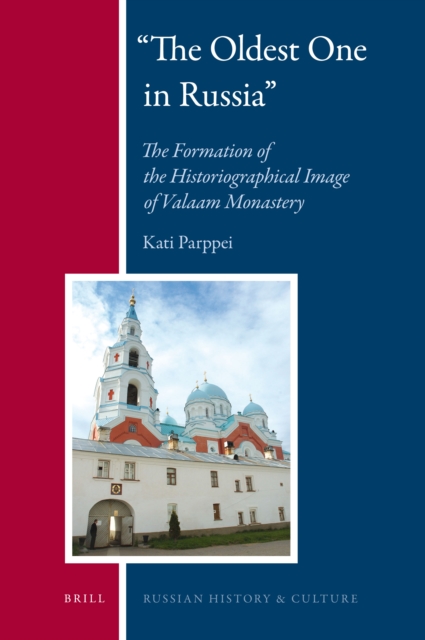
\The Oldest One in Russia\
Contributing, for instance, to the fields of nationality and borderland studies, this book offers a fascinating study of the process of \"writing a worthy past\" for the Russian Orthodox monastery of Valaam during the 18th and 19th centuries.
eBook

The Measure of American Religion: Toward Improving the State of the Art
Recently scholars have devoted renewed attention to the role of religion in American life. Thus, it is important that they use the most effective means available to categorize and study religious groups. However, the most widely used classification scheme in survey research (T.W. Smith 1990) does not capture essential differences between American religious traditions and overlooks significant new trends in religious affiliation. We critique this scheme based on its historical, terminological, and taxonomical inaccuracy and offer a new approach that addresses its shortcomings by using denominational affiliation to place respondents into seven categories grounded in the historical development of American religious traditions. Most important, this new scheme yields more meaningful interpretations because the categories refer to concrete religious traditions. Because of increased accuracy in classification, it also improves model fit and reduces measurement error.
Journal Article