
Catalogue Search | MBRL


Are you sure you want to remove the book from the shelf?

{{itemTitle}}
19
result(s) for
"Circus workers."
Sort by:


Circus World
From the 1870s to the 1960s, circuses crisscrossed the nation
providing entertainment. A unique workforce of human and animal
laborers from around the world put on the show. They also formed
the backbone of a tented entertainment industry that raised new
questions about what constituted work and who counted as a worker.
Andrea Ringer examines the industry-wide circus world--the
collection of shows that traveled by rail, wagon, steamboat, and
car--and the traditional and nontraditional laborers who created
it. Performers and their onstage labor played an integral part in
the popularity of the circus. But behind the scenes, other laborers
performed the endless menial tasks that kept the show on the road.
Circus operators regulated employee behavior both inside and
outside the tent even as the employees themselves blurred the line
between leisure and labor until, in all parts of the show, the
workers could not escape their work.
Illuminating and vivid, Circus World delves into the
gender, class, and even species concerns within an extinct way of
life.
eBook

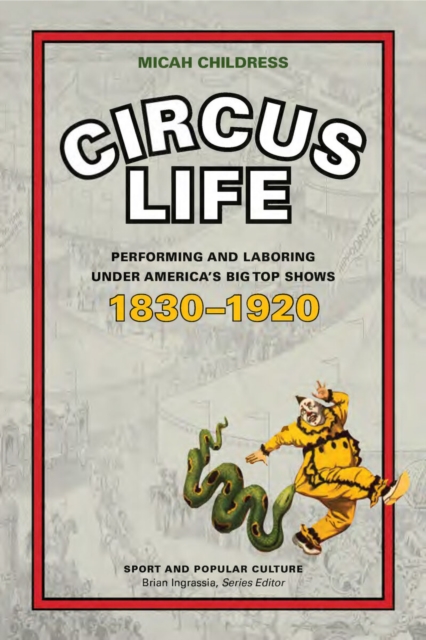
Performing and Laboring Under America's Big Top Shows, 1830-1920
The nineteenth century saw the American circus move from a reviled and rejected form of entertainment to the \"Greatest Show on Earth.\" Circus Life by Micah D. Childress looks at this transition from the perspective of the people who owned and worked in circuses and how they responded to the new incentives that rapid industrialization made possible.The circus has long been a subject of fascination for many, as evidenced by the millions of Americans that have attended circus performances over many decades since 1870 when the circus established itself as a truly unique entertainment enterprise. Yet the few analyses of the circus that do exist have only examined the circus as its own closed microcosm-the \"circus family.\" Circus Life, on the other hand, places circus employees in the larger context of the history of US workers and corporate America. Focusing on the circus as a business-entertainment venture, Childress pushes the scholarship on circuses to new depths, examining the performers, managers, and laborers' lives and how the circus evolved as it grew in popularity over time. Beginning with circuses in the antebellum era, Childress examines changes in circuses as gender balances shifted, industrialization influenced the nature of shows, and customers and crowds became increasingly more middle-class.As a study in sport and social history, Childress's account demonstrates how the itinerant nature of the circus drew specific types of workers and performers, and how the circus was internally in constant upheaval due to the changing nature of its patrons and a changing economy.
eBook

Circus Life
The nineteenth century saw the American circus move from a reviled
and rejected form of entertainment to the \"Greatest Show on Earth.\"
Circus Life by Micah D. Childress looks at this transition
from the perspective of the people who owned and worked in circuses
and how they responded to the new incentives that rapid
industrialization made possible. The circus has long been a subject
of fascination for many, as evidenced by the millions of Americans
that have attended circus performances over many decades since
1870, when the circus established itself as a truly unique
entertainment enterprise. Yet the few analyses of the circus that
do exist have only examined the circus as its own closed
microcosm-the \"circus family.\" Circus Life, on the other
hand, places circus employees in the larger context of the history
of US workers and corporate America. Focusing on the circus as a
business-entertainment venture, Childress pushes the scholarship on
circuses to new depths, examining the performers, managers, and
laborers' lives and how the circus evolved as it grew in popularity
over time. Beginning with circuses in the antebellum era, Childress
examines changes in circuses as gender balances shifted,
industrialization influenced the nature of shows, and customers and
crowds became increasingly more middle-class. As a study in sport
and social history, Childress's account demonstrates how the
itinerant nature of the circus drew specific types of workers and
performers, and how the circus was internally in constant upheaval
due to the changing profile of its patrons and a changing economy.
MICAH D. CHILDRESS received his PhD in history
from Purdue University and currently works as a Realtor® in Grand
Rapids, Michigan. His articles have appeared in Popular
Entertainment Studies and American Studies.
eBook

Adopted Apprentices: Juvenile Recruitment in Australian Circus, 1847–1942
Recent studies on the history of circus in Australia draw attention to the practise of recruiting male and female juveniles as trainee performers to augment a circus family or circus troupe. In oral recollections, circus people loosely described these juveniles as \"apprenticed\" or \"adopted.\" Although several nefarious examples of recruitment have been previously described in detail, historians have not explained the wider contexts in which such recruitment took place. The constant need for circus proprietors to embellish their programs drove the demand for these juveniles. This article explores the factors influencing the supply of juvenile circus labour, focussing on the evolving social, legislative and economic contexts within which juveniles were recruited into circus between 1847 (the foundation year of circus in Australia) and 1942 (when most circus companies temporarily ceased operations owing to wartime restrictions and by which time juvenile recruitment was largely extinguished). The study highlights the worth of deeper scholarly enquiry into this previously neglected group of young workers. It also demonstrates the complexity of labour practises in theatrical entertainments, generally, and in itinerant entertainments such as circus in particular. In doing so, the study suggests the need to reconsider the distinction between the margins and mainstream of Australian labour and social history.
Journal Article


Ringlingville USA
The Ringling Brothers began their business under the most modest of circumstances and through hard work, business savvy, and some luck created the largest, most famous circus in the world.They became wealthy men, one 50 cent admission ticket at a time.
eBook