
Catalogue Search | MBRL


Are you sure you want to remove the book from the shelf?

{{itemTitle}}
5
result(s) for
"Cities and towns, Ancient, in motion pictures."
Sort by:

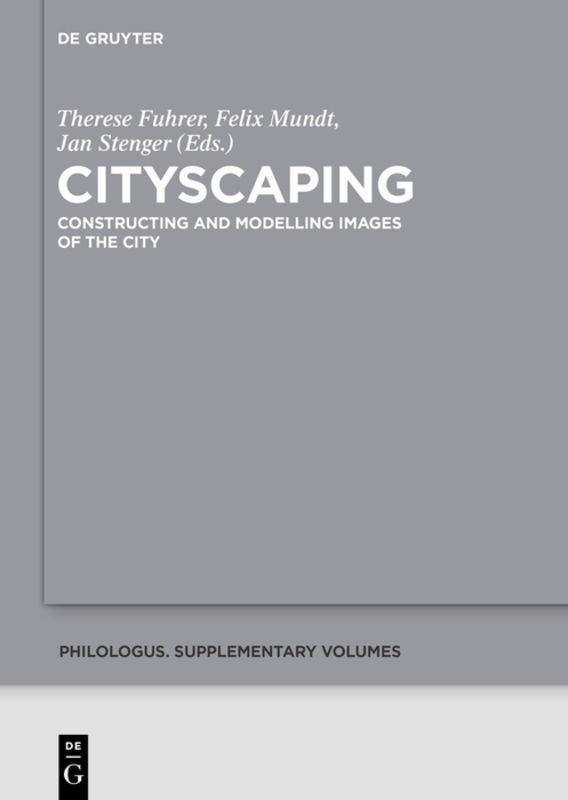
Cityscaping
Der hier neu in die Forschung eingeführte Begriff des 'Cityscaping' charakterisiert den kreativen Prozess, in dem ein Stadtbild in verschiedenen Medien – Text, Film und Artefakten – erschaffen und repräsentiert wird. Er lenkt damit die Aufmerksamkeit von gebauten Stadträumen auf mentale Bilder von Städten. Im Zentrum steht einerseits die Frage, mit welchen literarischen, visuellen und akustischen Mitteln die räumliche Imagination der Rezipienten angeregt wird; andererseits wird untersucht, welche Semantik und Funktionen einem medial konstruierten Stadtbild beigelegt werden. An Beispielen antiker Texte und Kunstwerke, neuzeitlicher Literatur und Filme werden das künstlerische Potenzial und die Techniken der Semantisierung von Stadtbildern beleuchtet. Mit seinem interdisziplinären Ansatz macht der Band erstmals deutlich, wie stark die mentalen Bilder städtischer Räume in der Antike und Neuzeit von medialen Techniken geformt wurden.
eBook

Collapsing (new) buildings: Town planning, history and music in Hubertus Siegert's 'Berlin Babylon' (2001)
Hubertus Siegert's impressionistic documentary, Berlin Babylon, illuminates the demolition and urban renewal of Berlin during the mid to late 1990s. This was a critical phase in the city's history, as it prepared, amidst a flurry of excitement and anticipation, to become the united Germany's seat of power. Siegert's film seeks to give pause for thought, but deliberately eschews a 'voice of god' voiceover, opting instead for a poetic audiovisual montage. This includes shots of the cityscape (and its lacunae), archival footage documenting the wartime devastation and subsequent dynamiting of buildings, observational cinema of the city's busy building sites, and of verbal snippets from various architects, developers and politicians - following the film title's cue, the agents in a rerun of the construction of the Tower of Babel - as well as epigraphs from the Bible and Walter Benjamin, and a prominent soundscape and musical score. As this article demonstrates, the film's (mostly) sombre soundtrack plays a critical role here, commenting on the footage, and, beyond that, on the whole project of the new 'Berlin Republic' and its attitude to architectural heritage and twentieth century history. Refiguring the theme of this special issue of PORTAL, Berlin Babylon's music is a form of writing about (collapsing, old) architecture and history. And yet, the soundtrack is not as unambiguous as a voiceover might have been, and thereby allows creative space for the audience's interpretation, a matter that was very important to the film's director. This article focuses, in particular, on three elements: the use (and treatment) of historical recordings in the film; the use of silence; and finally the way in which tracks from the Berlin band, Einst rzende Neubauten, use music, noise and text to comment on the project of the new Berlin.
Journal Article

La Comète Belge
Desmet’s period as a travelling showman was a transitional phase of just two years. When compared with the twelve years he spent working on the fairgrounds, this is not very long. Compared with his period in film distribution and his time as an operator of permanent cinemas, it is a mere interlude in his career. On the other hand, these are the years that were decisive for Desmet’s move to the Dutch film world. They were essential to the rapid development of his career at the beginning of the twentieth century and led directly to his establishment as a permanent
Book Chapter