
Catalogue Search | MBRL


Are you sure you want to remove the book from the shelf?

{{itemTitle}}
7
result(s) for
"Cities and towns Italy History To 1500."
Sort by:

The logic of political conflict in medieval cities : Italy and the Southern Low Countries, 1370-1440
This title traces the logic of urban political conflict in late medieval Europe's most heavily urbanised regions, Italy and the Southern Low Countries, revealing how conflict in these regions gave rise to a distinct form of political organisation.
Book

Hospitals and Urbanism in Rome, 1200-1500
In Hospitals and Urbanism in Rome 1200 - 1500, Carla Keyvanian reconstructs three centuries of urban history by focusing on public hospitals, state institutions that were urban expressions of sovereignty, characterized by a distinguishing architecture and built in prime urban locations.
eBook

Communities and Crisis
Based on testaments and notarial contracts, this examination of the Black Death of 1348 argues for social resilience in Bologna. The notarial record demonstrates that notaries, officials, medical practitioners, and clergy served the populace, while families remained intact and the populace resisted flight.
eBook

Urban Developments in Late Antique and Medieval Rome
A narrative of decline punctuated by periods of renewal has long structured perceptions of Rome's late antique and medieval history. In their probing contributions to this volume, a multi-disciplinary group of scholars provides alternative approaches to understanding the period. Addressing developments in governance, ceremony, literature, art, music, clerical education and the construction of the city's identity, the essays examine how a variety of actors, from poets to popes, productively addressed the intermittent crises and shifting dynamics of these centuries in ways that bolstered the city's resilience. Without denying that the past (both pre-Christian and Christian) consistently remained a powerful touchstone, the studies in this volume offer rich new insights into the myriad ways that Romans, between the fifth and the eleventh centuries, creatively assimilated the past as they shaped their future.
eBook

The Idea of Rome in Late Antiquity
This book approaches the manifestation and evolution of the idea of Rome as an expression of Roman patriotism and as an (urban) archetype of utopia in late Roman thought in a period extending from AD 357 to 417. Within this period of about a human lifetime, the concepts of Rome and Romanitas were reshaped and used for various ideological causes. This monograph unfolds through a selection of sources that represent the patterns and diversity of this ideological process. The theme of Rome as a personified and anthropomorphic figure and as an epitomized notion 'applied' on the urban landscape would become part of the identity of the Romans of Rome highlighting a sense of cultural uniqueness in an era when their city's privileged status was challenged. Towards the end of the chronological limits set in this thesis various versions of Romanitas would emerge indicating new physical and spiritual potentials.
eBook
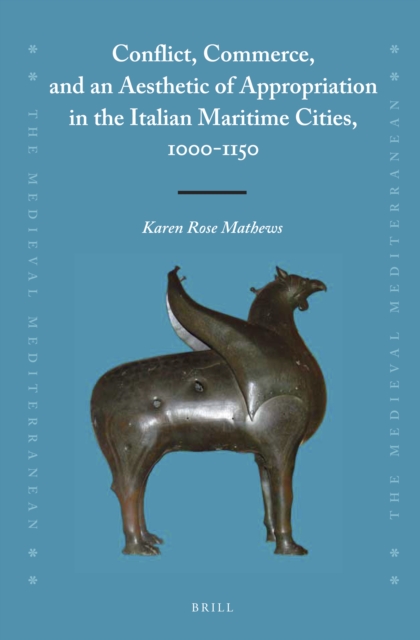
Conflict, Commerce, and an Aesthetic of Appropriation in the Italian Maritime Cities, 1000–1150
In Conflict, Commerce, and an Aesthetic of Appropriation in the Italian Maritime Cities, 1000-1150, Karen Rose Mathews analyzes the relationship between war, trade, and the use of spolia (appropriated objects from past and foreign cultures) as architectural decoration in the public monuments of the Italian maritime republics in the eleventh and twelfth centuries.
eBook
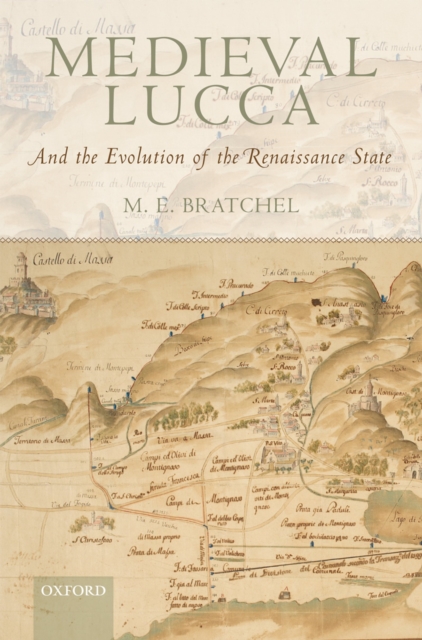
Medieval Lucca and the evolution of the Renaissance state
The book traces the creation of the Lucchese state from classical antiquity to the end of the 15th century. It describes and explains the geographical configuration, institutional organization, and social structures of an Italian city‐state that retained its independence in a world of much larger political entities. Medieval Lucca ruled over a relatively large city territory. The book argues that the region over which Lucca aspired to rule corresponded with its ecclesiastical diocese. Precise borders were the product of inter‐city warfare; but in early medieval Italy the diocese provided a basic framework in a world of fragmenting authority. The early chapters discuss not only the origins and evolving shape of the city territory, but also the firm control exercised by the city over its territory. Though not unique in this respect, Lucca provides a particularly strong example of the centralization of political and juridical power upon the hegemonic city. Lucca was especially innovative and precocious in the early division of its dominions into compact vicariates. Indeed Florence's restructuring of its own dominions was modelled on lands conquered during the fourteenth century from its western neighbour. The book asks how far Lucca's troubled political history in the fourteenth century subverted the earlier development of administrative institutions. Neither the disasters of the 14th century nor the decades of princely rule at the beginning of the 15th century brought a radical change of direction. The overview of the history of the Lucchese state from classical times provides the necessary background to the book's ultimate objective: the analysis in the final two chapters of the politico‐administrative and socio‐economic characteristics of the state that emerged from the Florentine wars of the 1430s. The final chapters compare Lucca with the new territorial or regional states of the Renaissance that have figured so largely in the historical literature, and ask whether the defining qualities of a city‐state retarded the greater market integration that historians have sometimes attributed to the newer political formations.
eBook