
Catalogue Search | MBRL


Are you sure you want to remove the book from the shelf?

{{itemTitle}}
1,538
result(s) for
"Cities and towns in literature."
Sort by:

The materiality of literary narratives in urban history
\"The Materiality of Literary Narratives in Urban History explores a variety of geographical and cultural contexts to examine what literary texts, grasped as material objects and as reflections on urban materialities, have to offer for urban history. The contributing writers' approach to literary narratives and materialities in urban history is summarized within the conceptualization 'materiality in/of literature': the way in which literary narratives at once refer to the material world and also actively partake in the material construction of the world. This book takes a geographically multipolar and multidisciplinary approach to discuss cities in the UK, USA, India, South Africa, Finland, and France, whilst examining a wide range of textual genres from the novel to cartoons, advertising copy, architecture and urban planning, and archaeological writing. In the process, attention is drawn to narrative complexities embedded within literary fiction and to the dialogue between narratives and historical change. The Materiality of Literary Narratives in Urban History has three areas of focus: literary fiction as form of urban materiality, literary narratives as social investigations of the material city, and the narrating of silenced material lives as witnessed in various narrative sources\"-- Provided by publisher.
Book

Main Street and Empire
The small town has become a national icon that circulates widely in literature, culture, and politics as an authentic American space and community. Yet there are surprisingly few critical studies that analyze the small town's centrality to the United States' identity and imagination.InMain Street and Empire, Ryan Poll addresses this need, arguing that the small town, as evoked by the image of \"Main Street,\" is not a relic of the past but rather a metaphorical screen upon which America's \"everyday\" stories and subjects are projected on both a national and global scale.
Bringing together a broad selection of texts-from Thornton Wilder'sOur Town, Grace Metalious'sPeyton Place, and Peter Weir'sThe Truman Showto the speeches of William McKinley, Ronald Reagan, Sarah Palin, and Barack Obama-Poll examines how the small town is used to imagine and reproduce the nation throughout the twentieth- and into the twenty-first century. He contends that the dominant small town, despite its innocent, nostalgic appearance, is central to the development of the U.S. empire and global capitalism.
eBook

Cityscaping : constructing and modelling images of the city
\"The term 'cityscaping' is here introduced to characterise the creative process through which the image of the city is created and represented in various media--text, film and artefacts. It thus turns attention away from built urban spaces and onto mental images of cities. One focus is on the question of which literary, visual and acoustic means prompt their recipients' spatial imagination; another is to inquire into the semantics and functions that are ascribed to the image of a city as constructed in various media. The examples of ancient texts and works of art, and modern literature and films, are used to elucidate the artistic potential of images of the city and the techniques by which they are semanticised. With its interdisciplinary approach, the volume for the first time makes clear how strongly mental images of urban space, both ancient and modern, have been shaped by the techniques of their representation in media\"--From publisher's website.
Book

La Nature à Paris Au XIXe Siècle
Au XIXe siècle, Paris se modernise. Domestiquée, exposée, imitée, la nature répond à des besoins divers (hygiénistes, esthétiques, mondains) ou à un goût de l'exotisme et de la découverte. L'idée d'une ville verte et résiliente se fait jour et s'allie à des revendications politiques. Ce livre confronte des représentations d'époque aux évolutions réelles de la capitale.
eBook
Resistance and the city : challenging urban space
\"The essays collected in this volume unfold a panorama of urban phenomena of resistance that reach from the seventeenth to the twenty-first centuries, thus revealing the essential vulnerability of urban space to all forms of subversion. Taking their readers to diverse places and moments in history, the contributions remind us of the struggles over the concrete as well as the imaginary space we call the city. The collection maps the various challenges experienced by urban communities, ranging from the unmistakably hegemonic claim of civic festivities in early modern London to the perceived threat posed by newly created parks in the Restoration period and from the dangers of criminality and riots in the eighteenth and nineteenth centuries to the transformation of the Berlin Wall into souvenirs scattered around the globe\" -- Provided by publisher.
Book
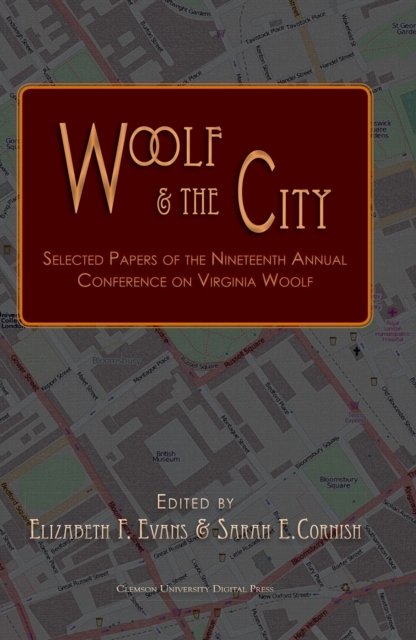
Woolf and the City
Woolf and the City collects important essays selected from the nearly 200 papers delivered at the nineteenth annual international conference on Virginia Woolf. The volume includes an introduction by the editors, the conference keynote addresses, and twenty-five essays organized around six presiding themes: Navigating London; Spatial Perceptions and the Cityscape; Regarding Others; The Literary Public Sphere; Border Crossings, and Liminal Landscapes; and Teaching Woolf, Woolf Teaching. It also includes a special session of the conference, a round-table conversation on Woolf’s legacy in and out of the academy. Beyond the volume’s focus on urban issues, many of the essays address the ethical and political implications of Woolf’s work, a move that suggests new insights into Woolf as a “real world\" social critic. The contributors, who include Ruth Gruber, Molly Hite, Mark Hussey, Tamar Katz, Eleanor McNees, Kathryn Simpson, and Rishona Zimring, advance Woolf studies and the broader fields of narrative studies, cultural geography, urban theory, phenomenology, and gender studies.
eBook

Urban panegyric and the transformation of the medieval city, 1100-1300
This study offers the first extensive analysis of the function and significance of urban panegyric in the Central Middle Ages, a flexible literary genre which enjoyed a marked and renewed popularity in the period 1100 to 1300. In doing so, it connects the production of urban panegyric to major underlying transformations in the medieval city and explores praise of cities primarily in England, Flanders, France, Germany, Iberia, and Italy (including the South and Sicily). The volume demonstrates how laudatory ideas on the city appeared in extremely diverse textual formats which had the potential to interact with a wide audience via multiple textual and material sources. When contextualized within the developments of the twelfth and thirteenth centuries these ideas could reflect more than formulaic, rhetorical outputs for an educated elite, they were instead integral to the process of urbanisation. In Urban Panegyric and the Transformation of the Medieval City, 1100-1300, Paul Oldfield assesses the generation of ideas on the Holy City, on counter-narratives associated with the Evil City, on the inter-relationship between the City and abundance (primarily through discourses on commercial productivity, hinterlands and population size), on0landscapes and sites of power, and on knowledge generation and the construction of urban histories.
Book
Cityscaping
The term 'cityscaping' is here introduced to characterise the creative process through which the image of the city is created and represented in various media – text, film and artefacts. It thus turns attention away from built urban spaces and onto mental images of cities. One focus is on the question of which literary, visual and acoustic means prompt their recipients' spatial imagination; another is to inquire into the semantics and functions that are ascribed to the image of a city as constructed in various media. The examples of ancient texts and works of art, and modern literature and films, are used to elucidate the artistic potential of images of the city and the techniques by which they are semanticised. With its interdisciplinary approach, the volume for the first time makes clear how strongly mental images of urban space, both ancient and modern, have been shaped by the techniques of their representation in media.
eBook

The Cambridge companion to the city in world literature
\"Through a series of chapters spanning a number of metropolises across the globe, this book addresses the way cities have given rise to key aesthetic dispositions, acts of linguistic and cultural translation, topographic and global imaginaries, and narratives of self-fashioning that are central to debates in World Literature\"-- Provided by publisher.
BOOK
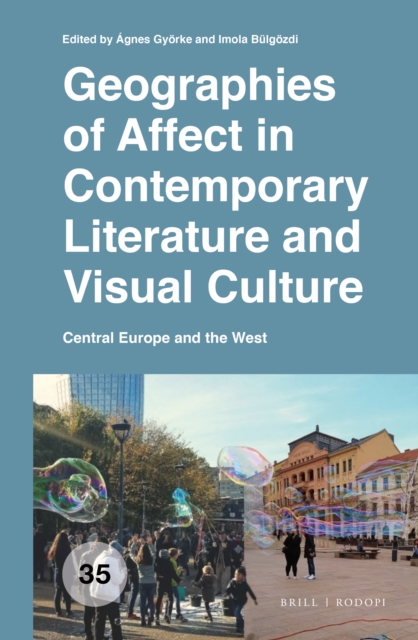
Geographies of Affect in Contemporary Literature and Visual Culture
Opening a dialogue between the literary and filmic works produced in Central Europe and in the Anglophone world, this volume explores the role of affects and emotions such as shame, fascination and withdrawal in contemporary literature and culture.
eBook