
Catalogue Search | MBRL


Are you sure you want to remove the book from the shelf?

{{itemTitle}}
8
result(s) for
"Cities and towns-Soviet Union-History"
Sort by:
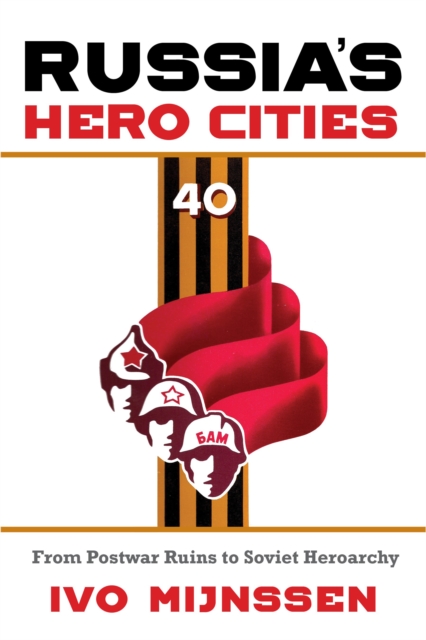
Russia's Hero Cities
By exploring the significance of Hero Cities in Soviet identity and the enduring but conflicted importance they hold for Russians today, Russia's Hero Cities exposes how the Great Patriotic War no longer has the power to mask the deep rifts still present in Russian society.
eBook
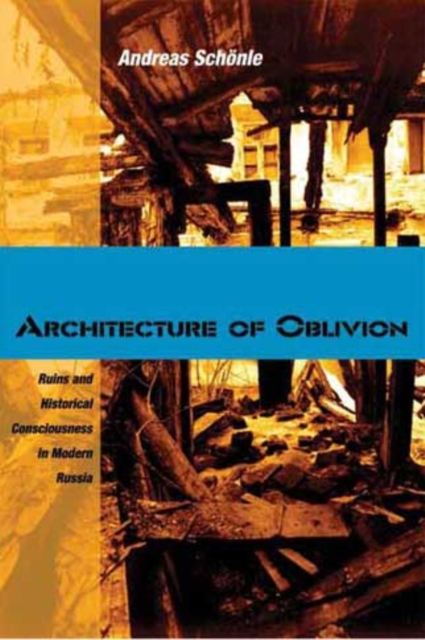
Architecture of Oblivion
Despite attempts to promote the aesthetics of ruins in Russia—from Catherine the Great's construction of fake ruins in imperial parks to Josef Brodsky's elegiac meditations—ruins have never achieved the status they enjoy in Western Europe. While the Soviet Union was notorious for leveling churches, post-Soviet Russia has only intensified the practice of massive destruction and reconstruction. Architecture of Oblivion examines the role of ruins in the development of Russia's historical consciousness from the eighteenth century to the present. Investigating the meaning and functions ruins have acquired in Russian culture, Schönle looks at ideological reasons for the current disregard for the value of ruins and historical buildings, in particular by political authorities, and reveals how ruins have often become a site of resistance to official ideology and an invitation to map out alternative visions of history and of statehood. An interdisciplinary study of Russia's response to ruins has never been attempted, although the topic of ruins has garnered considerable interest in Western Europe and in the U.S. This original work from a leading authority on the subject will appeal to historians of Russian culture and thought, literature and art scholars, and general readers interested in ruins.
eBook
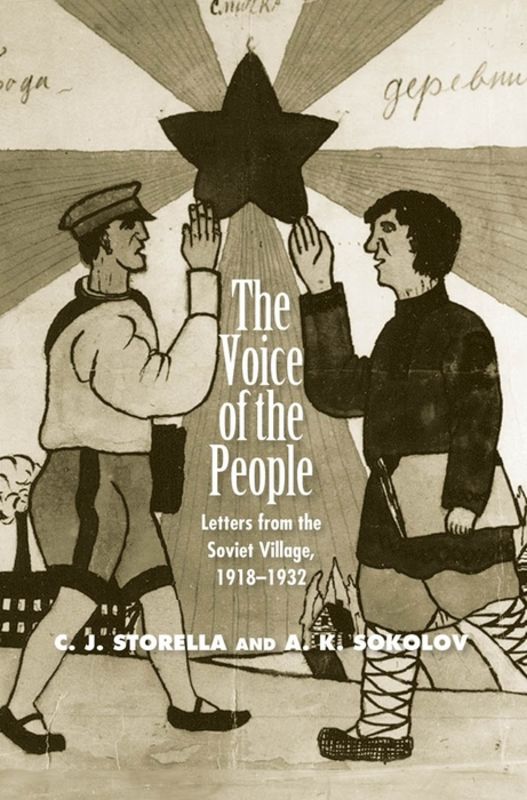
The voice of the people : letters from the Soviet village, 1918-1932
This text presents a comprehensive collection of peasant writings during the early years of the Bolshevik regime. It presents over 150 letters addressed to newspapers, government officials and Communist Party leaders.
eBook

Tashkent
Paul Stronski tells the fascinating story of Tashkent, an ethnically diverse, primarily Muslim city that became the prototype for the Soviet-era reimagining of urban centers in Central Asia. Based on extensive research in Russian and Uzbek archives, Stronski shows us how Soviet officials, planners, and architects strived to integrate local ethnic traditions and socialist ideology into a newly constructed urban space and propaganda showcase.
The Soviets planned to transform Tashkent from a \"feudal city\" of the tsarist era into a \"flourishing garden,\" replete with fountains, a lakeside resort, modern roadways, schools, hospitals, apartment buildings, and of course, factories. The city was intended to be a shining example to the world of the successful assimilation of a distinctly non-Russian city and its citizens through the catalyst of socialism. As Stronski reveals, the physical building of this Soviet city was not an end in itself, but rather a means to change the people and their society.
Stronski analyzes how the local population of Tashkent reacted to, resisted, and eventually acquiesced to the city's socialist transformation. He records their experiences of the Great Terror, World War II, Stalin's death, and the developments of the Krushchev and Brezhnev eras up until the earthquake of 1966, which leveled large parts of the city. Stronski finds that the Soviets established a legitimacy that transformed Tashkent and its people into one of the more stalwart supporters of the regime through years of political and cultural changes and finally during the upheavals of glasnost.
eBook

Uprooted
With the stroke of a pen at the Potsdam Conference following the Allied victory in 1945, Breslau, the largest German city east of Berlin, became the Polish city of Wroclaw. Its more than six hundred thousand inhabitants--almost all of them ethnic Germans--were expelled and replaced by Polish settlers from all parts of prewar Poland.Uprootedexamines the long-term psychological and cultural consequences of forced migration in twentieth-century Europe through the experiences of Wroclaw's Polish inhabitants.
In this pioneering work, Gregor Thum tells the story of how the city's new Polish settlers found themselves in a place that was not only unfamiliar to them but outright repellent given Wroclaw's Prussian-German appearance and the enormous scope of wartime destruction. The immediate consequences were an unstable society, an extremely high crime rate, rapid dilapidation of the building stock, and economic stagnation. This changed only after the city's authorities and a new intellectual elite provided Wroclaw with a Polish founding myth and reshaped the city's appearance to fit the postwar legend that it was an age-old Polish city. Thum also shows how the end of the Cold War and Poland's democratization triggered a public debate about Wroclaw's \"amputated memory.\" Rediscovering the German past, Wroclaw's Poles reinvented their city for the second time since World War II.
Uprootedtraces the complex historical process by which Wroclaw's new inhabitants revitalized their city and made it their own.
eBook
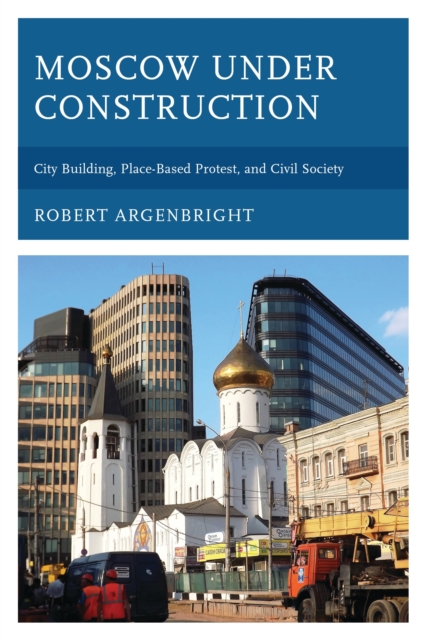
Moscow under construction
This book examines the growth of place-based opposition to destructive redevelopment practices in Moscow and the consequent changes in the city's governance regime. The citizen groups analyzed in this study have struggled to defend specific places of value to communities and, in the process, have built up civil society and advanced democratization.
eBook
Mastery and lost illusions : space and time in the modernization of Eastern and Central Europe
This volume highlights the specific experiences and challenges of modernity in twentieth-century Eastern and Central Europe.Contributors ask how spatial and temporal conditions shaped the region's transformation from a rural to an urban, industrialized society in this period and investigate the state's role in the mastery of space, particularly.
eBook

The Death of the Shtetl
In this book, Yehuda Bauer, an internationally acclaimed Holocaust historian, describes the destruction of small Jewish townships, theshtetls,in what was the eastern part of Poland by the Nazis in 1941-1942. Bauer brings together all available documents, testimonies, and scholarship, including previously unpublished material from the Yad Vashem archives, pertaining to nine representativeshtetls.In line with his belief that \"history is the story of real people in real situations,\" Bauer tells moving stories about what happened to individual Jews and their communities.
Over a million people, approximately a quarter of all victims of the Holocaust, came from theshtetls.Bauer writes of the relations between Jews and non-Jews (including the actions of rescuers); he also describes attempts to create underground resistance groups, efforts to escape to the forests, and Jewish participation in the Soviet partisan movement. Bauer's book is a definitive examination of the demise of theshtetls
,a topic of vast importance to the history of the Holocaust.
eBook