
Catalogue Search | MBRL


Are you sure you want to remove the book from the shelf?

{{itemTitle}}
7
result(s) for
"Citizenship -- Palestine -- History -- 20th century"
Sort by:

Transnational Palestine : migration and the right of return before 1948
Tens of thousands of Palestinians migrated to the Americas in the final decades of the nineteenth century and early decades of the twentieth. By 1936, an estimated 40,000 Palestinians lived outside geographic Palestine. Transnational Palestine is the first book to explore the history of Palestinian immigration to Latin America, the struggles Palestinian migrants faced to secure Palestinian citizenship in the interwar period, and the ways in which these challenges contributed to the formation of a Palestinian diaspora and to the emergence of Palestinian national consciousness. Nadim Bawalsa considers the migrants' strategies for economic success in the diaspora, for preserving their heritage, and for resisting British mandate legislation, including citizenship rejections meted out to thousands of Palestinian migrants. They did this in newspapers, social and cultural clubs and associations, political organizations and committees, and in hundreds of petitions and pleas delivered to local and international governing bodies demanding justice for Palestinian migrants barred from Palestinian citizenship. As this book shows, Palestinian political consciousness developed as a thoroughly transnational process in the first half of the twentieth century—and the first articulation of a Palestinian right of return emerged well before 1948.
eBook

Ottoman brothers : Muslims, Christians, and Jews in early twentieth-century Palestine
In its last decade, the Ottoman Empire underwent a period of dynamic reform, and the 1908 revolution transformed the empire's 20 million subjects into citizens overnight. Questions quickly emerged about what it meant to be Ottoman, what bound the empire together, what role religion and ethnicity would play in politics, and what liberty, reform, and enfranchisement would look like. Ottoman Brothers explores the development of Ottoman collective identity, tracing how Muslims, Christians, and Jews became imperial citizens together. In Palestine, even against the backdrop of the emergence of the Zionist movement and Arab nationalism, Jews and Arabs cooperated in local development and local institutions as they embraced imperial citizenship. As Michelle Campos reveals, the Arab-Jewish conflict in Palestine was not immanent, but rather it erupted in tension with the promises and shortcomings of \"civic Ottomanism.\"
eBook
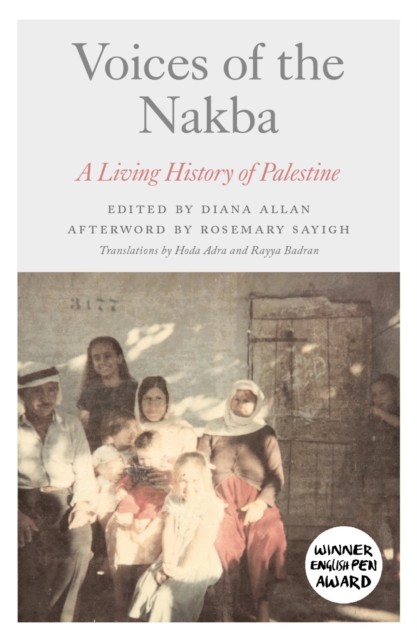
Voices of the Nakba
***Winner of an English PEN Award 2021*** During the 1948 war more than 750,000 Palestinian Arabs fled or were violently expelled from their homes by Zionist militias. The legacy of the Nakba - which translates to ‘disaster’ or ‘catastrophe’ - lays bare the violence of the ongoing Palestinian plight. Voices of the Nakba collects the stories of first-generation Palestinian refugees in Lebanon, documenting a watershed moment in the history of the modern Middle East through the voices of the people who lived through it. The interviews, with commentary from leading scholars of Palestine and the Middle East, offer a vivid journey into the history, politics and culture of Palestine, defining Palestinian popular memory on its own terms in all its plurality and complexity.
eBook

Citizenship and Loyalty in Times of War
This article examines debates regarding citizenship and loyalty to the empire that arose during the Ottomanization campaign that took place in Palestine during World War I. These discussions in Palestine took place in the context of an evolving national conflict with its differing visions for Palestine. World War I and changing political conditions steered political and legal debates concerning citizenship and nationality in various imperial contexts. The questions examined here focus on citizenship and loyalty to the empire during a period of escalating national tension in Palestine and shifting relations between the Ottoman Empire and its non-Muslim minorities. Their close analysis contributes to our understandings of the intersection of citizenship and loyalty to the empire at a moment of crisis.
Journal Article

\Jews, Be Ottomans!\ Zionism, Ottomanism, and Ottomanisation in the Hebrew-Language Press, 1890-1914
In recent years the study of national and civic identities in the later Ottoman period has revealed huge degrees of complexity among previously homogenised groups, none more so that the Jewish population of the Sublime State. Those Jews who moved to the Ottoman Empire from the 1880s as part of a burgeoning expression of Jewish nationalism developed a complex relationship with an Ottomanist identity that requires further consideration. Through an examination of the Hebrew-language press in Palestine, run largely by immigrant Zionist Jews, complemented by the archival records of the Ottoman state and parliament, this paper aims to show the complexities of the engagement between Ottoman and Jewish national identities. The development of Jewish nationalism by largely foreign Jews came with an increase in suspicion from the Ottoman elites, sometimes manifesting itself in outright anti-Semitism, and strong expressions of nationalism in the Hebrew press were denounced both by Ottoman and non- and anti-nationalist Jewish populations. The controversy over immigrant Jewish land purchases in Palestine from the 1890s led to a number of discussions over how far foreign Jews could and should embrace an Ottoman cultural and political identity, with cultural, labour, and political Zionists taking different positions. The issue of Ottomanisation should also be taken in the context of the post-1908 political landscape in the Ottoman Empire, with separatist nationalisms increasingly under the spotlight, and the debates among the different forms of Jewish nationalism increasingly focusing on the limits of performative and civic Ottoman nationalism.
Journal Article

Good Arabs
Based on his reading of top-secret files of the Israeli police and the prime minister's office, Hillel Cohen exposes the full extent of the crucial, and, until now, willfully hidden history of Palestinian collaboration with Israelis-and of the Arab resistance to it. Cohen's previous book, the highly acclaimedArmy of Shadows,told how this hidden history played out from 1917 to 1948, and now, inGood Arabshe focuses on the system of collaborators established by Israel in each and every Arab community after the 1948 war. Covering a broad spectrum of attitudes and behaviors, Cohen brings together the stories of activists, mukhtars, collaborators, teachers, and sheikhs, telling how Israeli security agencies penetrated Arab communities, how they obtained collaboration, how national activists fought them, and how deeply this activity influenced daily life. When this book was first published in Hebrew, it became a bestseller and has evoked bitter memories and intense discussions among Palestinians in Israel and prompted the reclassification of many of the hundreds of documents Cohen viewed to uncover a story that continues to unfold to this day.
eBook

Flight and Exile
A social history of refugee movement from Nazi Germany and German‐occupied lands, this chapter follows the nearly one million Jews who fled. Framing pre‐Second World War Nazi‐era refugee flight within the context of post‐First World War European diasporas and national ‘homecomings’, this chapter pays particular attention to age, gender, social class, and political affiliation as it traces who left and where they went. Jews’ flight took them everywhere: first to countries nearby (France, the Netherlands, Great Britain), then farther afield (Palestine, Shanghai, the Soviet Union, North and South America). Flight continued throughout the Holocaust: over the Alps into Switzerland, across the Pyrenees into Spain, deep into Asiatic Russia. Secure from danger but also severed from the world they knew, the exiles’ lives were shattered by Nazism. Their experiences are a distinct chapter in the history of Europe after 1933. Flight did not write refugees out of that story, it simply took the story elsewhere.
Book Chapter