
Catalogue Search | MBRL


Are you sure you want to remove the book from the shelf?

{{itemTitle}}
16
result(s) for
"City planning -- Moral and ethical aspects"
Sort by:
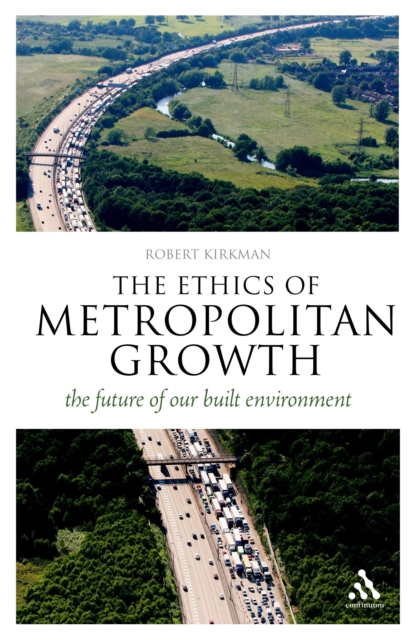
The ethics of metropolitan growth : the future of our built environment
The Ethics of Metropolitan Growth is about the decisions people make that shape the built environment, from the everyday concerns of homeowners and commuters to grand gestures of national policy.Decisions about the built environment have taken on a particular urgency in recent months.
eBook

Crossing Borders
The complex diffusion processes affecting the flow of planning ideas and practices across the globe are illustrated in this book. It raises questions about why and how some ideas and practices attract international attention, and about the invention processes which go on when external influences are woven together with local efforts to meet local specifics and requirements.
Initiated to celebrate the tenth anniversary of the journal Planning Theory and Practice in 2009, this book reflects the themes of the journal.
Taking different intellectual perspectives, this collection takes a critical look at the international diffusion of planning ideas and practices, their impacts on planning practices in different contexts, on the challenge of ‘situating’ planning practices, and on the ethical and methodological issues of international exchange in the planning field.
eBook

The Moral Economy of Cities
Using the redevelopment of the Yonge-Dundas intersection in downtown Toronto in the mid-1990s as a case study, Ruppert examines the language of planners, urban designers, architects, and marketing analysts to reveal the extent to which moralization legitimizes these professions in the public eye.
eBook

Ethics and Planning Research
The consideration of ethics in social research has gained increasing prominence in the past few years, particularly research which seeks to inform public policy. This important and unique book provides a thorough examination of the issues relating to research ethics in planning for an international audience. The authors examine alternative frameworks within which ethical action can be discussed and critically describe the key institutional arrangements surrounding the management of ethical behaviour in research. Also included are highly relevant accounts of ethical challenges faced in planning research.
eBook

Take Back the Economy
In the wake of economic crisis on a global scale, more and more people are reconsidering their role in the economy and wondering what they can do to make it work better for humanity and the planet. In this innovative book, J. K. Gibson-Graham, Jenny Cameron, and Stephen Healy contribute complex understandings of economics in practical terms: what can we do right now, in our own communities, to make a difference?
Full of exercises, thinking tools, and inspiring examples from around the world,Take Back the Economyshows how people can implement small-scale changes in their own lives to create ethical economies. There is no manifesto here, no one prescribed model; rather, readers are encouraged and taught how to take back the economy in ways appropriate for their own communities and context, using what they already have at hand.
Take Back the Economydismantles the idea that the economy is separate from us and best comprehended by experts. Instead, the authors demonstrate that the economy is the outcome of the decisions and efforts we make every day. The economy is thus reframed as a space of ethical action-something we can shape and alter according to what is best for the well-being of people and the planet. The book explores what people are already doing to build ethical economies, presenting these deeds as mutual concerns: What is necessary for survival, and what do we do with the surplus produced beyond what will fulfill basic needs? What do we consume, and how do we preserve and replenish the commons-those resources that can be shared to maintain all? And finally, how can we invest in a future worth living in?
Suitable for activists and students alike,Take Back the Economywill be of interest to anyone seeking a more just, sustainable, and equitable world.
eBook

Vulnerability, exploitation and migrants : insecure work in a globalised economy
Globalization, the economic crisis and related policies of austerity have led to a growth in extreme exploitation at work, with migrants particularly vulnerable. This book explores the lives of the growing numbers of severely exploited labourers in the world today, questioning how we can respond to such globalized patterns of extreme inequality.
eBook

The Politics of Exile
\"The most thought-provoking and refreshing work on Bosnia and the former Yugoslavia in a long time.It is certainly an immense contribution to the broadening schools within international relations.\" Times Higher Education ( THE ).
Written in both autoethnographical and narrative form, The Politics of Exile offers unique insight into the complex encounter of researcher with research subject in the context of the Bosnian War and its aftermath. Exploring themes of personal and civilizational guilt, of displaced and fractured identity, of secrets and subterfuge, of love and alienation, of moral choice and the impossibility of ethics, this work challenges us to recognise pure narrative as an accepted form of writing in international relations.
The author brings theory to life and gives corporeal reality to a wide range of concepts in international relations, including an exploration of the ways in which young academics are initiated into a culture where the volume of research production is more valuable than its content, and where success is marked not by intellectual innovation, but by conformity to theoretical expectations in research and teaching.
This engaging work will be essential reading for all students and scholars of international relations and global politics.
Elizabeth Dauphinee is Associate Professor in the Department of Political Science at York University in Toronto, Canada. Her research interests involve autoethnographic and narrative approaches to international relations, Levinasian ethics and international relations theory, and the philosophy of religion.
\"The most thought-provoking and refreshing work on Bosnia and the former Yugoslavia in a long time.It is certainly an immense contribution to the broadening schools within international relations.\"
Jelena Obradovic-Wochnik lecturer in politics and international relations, Aston University, UK in Times Higher Education ( THE ).
Elizabeth Dauphinee's moving book is so engaging because it is so self-aware, so achingly candid. Here is the book to read if you want to get even a glimpse of the impossible choices that one has to make when one becomes one of the world's \"displaced.\" This book will stick to your ribs.
Cynthia Enloe, Author of Nimo's War, Emma's War: Making Feminist Sense of the Iraq War
This very thought provoking book challenges the notion that the injustice of war violence and misery of others can be grasped by a detached, rational scholar.
Maja Korac, School of Law and Social Sciences, University of East London
An extraordinary work that I found hard to put down each night, and whose emotions, echoes and affects disturbed my sleep and days…a very fine and powerful work of art that glows dangerously in the hands.
Anthony Burke, Associate Professor, International and Political Studies, UNSW Canberra, Australia.
Superb writing as well as an aesthetic sensitivity to the experiences on which the writing is based…It could well serve as the foundation text for courses on war.
Michael J Shapiro, Professor of Political Science, University of Hawaii, USA.
eBook

Seeking spatial justice
In 1996, the Los Angeles Bus Riders Union, a grassroots advocacy organization, won a historic legal victory against the citys Metropolitan Transit Authority. The resulting consent decree forced the MTA for a period of ten years to essentially reorient the mass transit system to better serve the citys poorest residents. A stunning reversal of conventional governance and planning in urban America, which almost always favors wealthier residents, this decision is also, for renowned urban theorist Edward W. Soja, a concrete example of spatial justice in action.In Seeking Spatial Justice , Soja argues that justice has a geography and that the equitable distribution of resources, services, and access is a basic human right. Building on current concerns in critical geography and the new spatial consciousness, Soja interweaves theory and practice, offering new ways of understanding and changing the unjust geographies in which we live. After tracing the evolution of spatial justice and the closely related notion of the right to the city in the influential work of Henri Lefebvre, David Harvey, and others, he demonstrates how these ideas are now being applied through a series of case studies in Los Angeles, the city at the forefront of this movement. Soja focuses on such innovative laborcommunity coalitions as Justice for Janitors, the Los Angeles Alliance for a New Economy, and the Right to the City Alliance; on struggles for rent control and environmental justice; and on the role that faculty and students in the UCLA Department of Urban Planning have played in both developing the theory of spatial justice and putting it into practice.Effectively locating spatial justice as a theoretical concept, a mode of empirical analysis, and a strategy for social and political action, this book makes a significant contribution to the contemporary debates about
justice, space, and the city.
eBook
Imagining Sustainable Food Systems
What defines a sustainable food system? How can it be more inclusive? How do local and global scales interact and how does power flow within food systems? How to encourage an interdisciplinary approach to realizing sustainable food systems? And how to activate change? These questions are considered by EU and North American academics and practitioners in this book. Using a wide range of case studies, it provides a critical overview, showing how and where theory and practice can converge to produce more sustainable food systems.
eBook

Rethinking Abortion
Mark Graber looks at the history of abortion law in action to argue that the only defensible, constitutional approach to the issue is to afford all women equal choice--abortion should remain legal or bans should be strictly enforced. Steering away from metaphysical critiques of privacy, Graber compares the philosophical, constitutional, and democratic merits of the two systems of abortion regulation witnessed in the twentieth century: pre-Roe v. Wadestatutory prohibitions on abortion andRoe'sban on significant state interference with the market for safe abortion services. He demonstrates that beforeRoe,pro-life measures were selectively and erratically administered, thereby subverting our constitutional commitment to equal justice. Claiming that these measures would be similarly administered if reinstated, the author seeks to increase support for keeping abortion legal, even among those who have reservations about its morality.
Abortion should remain legal, Graber argues, because statutory bans on abortion have a history of being enforced in ways that intentionally discriminate against poor persons and persons of color. In the years beforeRoe, the same law enforcement officials who routinely ignored and sometimes assisted those physicians seeking to terminate pregnancies for their private patients too often prevented competent abortionists from offering the same services to the general public. This double standard violated the fundamental human and constitutional right of equal justice under law, a right that remains a major concern of the equal protection clause of the Fourteenth Amendment.
eBook