
Catalogue Search | MBRL


Are you sure you want to remove the book from the shelf?

{{itemTitle}}
27
result(s) for
"City planning New York (State) New York History 20th century."
Sort by:


Public Housing That Worked
When it comes to large-scale public housing in the United States, the consensus for the past decades has been to let the wrecking balls fly. The demolition of infamous projects, such as Pruitt-Igoe in St. Louis and the towers of Cabrini-Green in Chicago, represents to most Americans the fate of all public housing. Yet one notable exception to this national tragedy remains. The New York City Housing Authority, America's largest public housing manager, still maintains over 400,000 tenants in its vast and well-run high-rise projects. While by no means utopian, New York City's public housing remains an acceptable and affordable option.The story of New York's success where so many other housing authorities faltered has been ignored for too long.Public Housing That Workedshows how New York's administrators, beginning in the 1930s, developed a rigorous system of public housing management that weathered a variety of social and political challenges. A key element in the long-term viability of New York's public housing has been the constant search for better methods in fields such as tenant selection, policing, renovation, community affairs, and landscape design.Nicholas Dagen Bloom presents the achievements that contradict the common wisdom that public housing projects are inherently unmanageable. By focusing on what worked, rather than on the conventional history of failure and blame, Bloom provides useful models for addressing the current crisis in affordable urban housing.Public Housing That Workedis essential reading for practitioners and scholars in the areas of public policy, urban history, planning, criminal justice, affordable housing management, social work, and urban affairs.
eBook

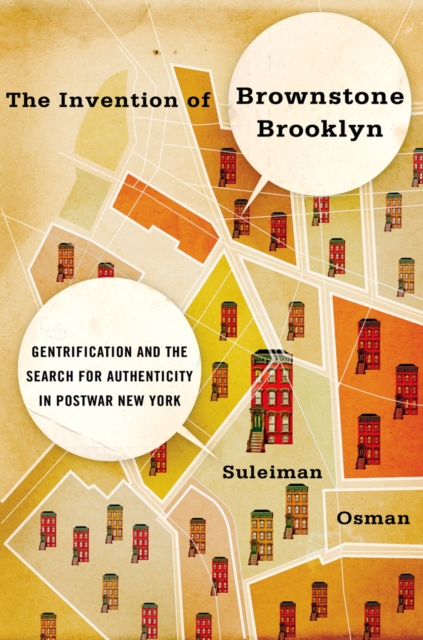
The invention of brownstone Brooklyn : gentrification and the search for authenticity in postwar New York
An original and captivating history of gentrification, this book challenges the conventional wisdom that New York City began a comeback in the 1990s, locating the roots of Brooklyn's revival in the social upheavals of the 1960s and 1970s. Osman examines the emergence of a progressive coalition as young, well-educated brownstoners joined with poorer residents to battle city planners and local machine politicians. Deftly mixing architectural, cultural, and political history, this book offers an eye-opening perspective on the post-industrial city.
eBook


Deconstructing Post-WWII New York City
Situating post-WWII New York literature within the material context of American urban history, this work analyzes how literary movements such as the Beat Generation, the New York poets and Black Arts Moment criticized the spatial restructuring of post-WWII New York City.
eBook


When Tenants Claimed the City
In postwar America, not everyone wanted to move out of the city and into the suburbs. For decades before World War II, New York's tenants had organized to secure renters' rights. After the war, tenant activists raised the stakes by challenging the newly-dominant ideal of homeownership in racially segregated suburbs. They insisted that renters as well as owners had rights to stable, well-maintained homes, and they proposed that racially diverse urban communities held a right to remain in place--a right that outweighed owners' rights to raise rents, redevelop properties, or exclude tenants of color. Further, the activists asserted that women could participate fully in the political arenas where these matters were decided. Grounded in archival research and oral history, When Tenants Claimed the City: The Struggle for Citizenship in New York City Housing shows that New York City's tenant movement made a significant claim to citizenship rights that came to accrue, both ideologically and legally, to homeownership in postwar America. Roberta Gold emphasizes the centrality of housing to the racial and class reorganization of the city after the war; the prominent role of women within the tenant movement; and their fostering of a concept of \"community rights\" grounded in their experience of living together in heterogeneous urban neighborhoods.
eBook


Spatial Regulation in New York City
This book explores and critiques the process of spatial regulation in post-war New York, focusing on the period after the fiscal crisis of the 1970s, examining the ideological underpinnings and practical applications of urban renewal, exclusionary zoning, anti-vagrancy laws, and order-maintenance policing. It argues that these practices were part of a class project that deflected attention from the underlying causes of poverty, eroded civil rights, and sought to enable real estate investment, high-end consumption, mainstream tourism, and corporate success.
eBook