
Catalogue Search | MBRL


Are you sure you want to remove the book from the shelf?

{{itemTitle}}
10
result(s) for
"City planning-Moral and ethical aspects"
Sort by:
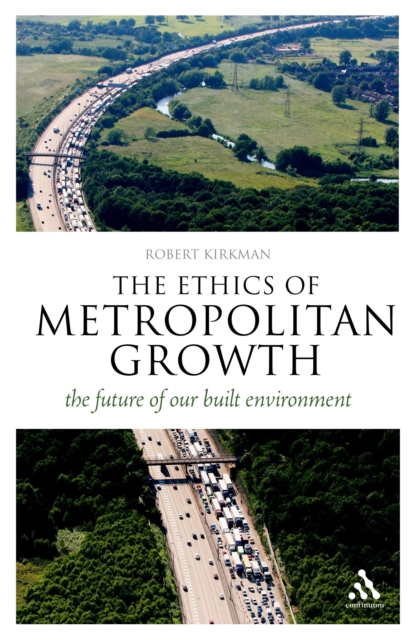
The ethics of metropolitan growth : the future of our built environment
The Ethics of Metropolitan Growth is about the decisions people make that shape the built environment, from the everyday concerns of homeowners and commuters to grand gestures of national policy.Decisions about the built environment have taken on a particular urgency in recent months.
eBook

Crossing Borders
The complex diffusion processes affecting the flow of planning ideas and practices across the globe are illustrated in this book. It raises questions about why and how some ideas and practices attract international attention, and about the invention processes which go on when external influences are woven together with local efforts to meet local specifics and requirements.
Initiated to celebrate the tenth anniversary of the journal Planning Theory and Practice in 2009, this book reflects the themes of the journal.
Taking different intellectual perspectives, this collection takes a critical look at the international diffusion of planning ideas and practices, their impacts on planning practices in different contexts, on the challenge of ‘situating’ planning practices, and on the ethical and methodological issues of international exchange in the planning field.
eBook

The Moral Economy of Cities
Using the redevelopment of the Yonge-Dundas intersection in downtown Toronto in the mid-1990s as a case study, Ruppert examines the language of planners, urban designers, architects, and marketing analysts to reveal the extent to which moralization legitimizes these professions in the public eye.
eBook

Ethics and Planning Research
The consideration of ethics in social research has gained increasing prominence in the past few years, particularly research which seeks to inform public policy. This important and unique book provides a thorough examination of the issues relating to research ethics in planning for an international audience. The authors examine alternative frameworks within which ethical action can be discussed and critically describe the key institutional arrangements surrounding the management of ethical behaviour in research. Also included are highly relevant accounts of ethical challenges faced in planning research.
eBook

The Politics of Exile
\"The most thought-provoking and refreshing work on Bosnia and the former Yugoslavia in a long time.It is certainly an immense contribution to the broadening schools within international relations.\" Times Higher Education ( THE ).
Written in both autoethnographical and narrative form, The Politics of Exile offers unique insight into the complex encounter of researcher with research subject in the context of the Bosnian War and its aftermath. Exploring themes of personal and civilizational guilt, of displaced and fractured identity, of secrets and subterfuge, of love and alienation, of moral choice and the impossibility of ethics, this work challenges us to recognise pure narrative as an accepted form of writing in international relations.
The author brings theory to life and gives corporeal reality to a wide range of concepts in international relations, including an exploration of the ways in which young academics are initiated into a culture where the volume of research production is more valuable than its content, and where success is marked not by intellectual innovation, but by conformity to theoretical expectations in research and teaching.
This engaging work will be essential reading for all students and scholars of international relations and global politics.
Elizabeth Dauphinee is Associate Professor in the Department of Political Science at York University in Toronto, Canada. Her research interests involve autoethnographic and narrative approaches to international relations, Levinasian ethics and international relations theory, and the philosophy of religion.
\"The most thought-provoking and refreshing work on Bosnia and the former Yugoslavia in a long time.It is certainly an immense contribution to the broadening schools within international relations.\"
Jelena Obradovic-Wochnik lecturer in politics and international relations, Aston University, UK in Times Higher Education ( THE ).
Elizabeth Dauphinee's moving book is so engaging because it is so self-aware, so achingly candid. Here is the book to read if you want to get even a glimpse of the impossible choices that one has to make when one becomes one of the world's \"displaced.\" This book will stick to your ribs.
Cynthia Enloe, Author of Nimo's War, Emma's War: Making Feminist Sense of the Iraq War
This very thought provoking book challenges the notion that the injustice of war violence and misery of others can be grasped by a detached, rational scholar.
Maja Korac, School of Law and Social Sciences, University of East London
An extraordinary work that I found hard to put down each night, and whose emotions, echoes and affects disturbed my sleep and days…a very fine and powerful work of art that glows dangerously in the hands.
Anthony Burke, Associate Professor, International and Political Studies, UNSW Canberra, Australia.
Superb writing as well as an aesthetic sensitivity to the experiences on which the writing is based…It could well serve as the foundation text for courses on war.
Michael J Shapiro, Professor of Political Science, University of Hawaii, USA.
eBook

Rethinking Abortion
Mark Graber looks at the history of abortion law in action to argue that the only defensible, constitutional approach to the issue is to afford all women equal choice--abortion should remain legal or bans should be strictly enforced. Steering away from metaphysical critiques of privacy, Graber compares the philosophical, constitutional, and democratic merits of the two systems of abortion regulation witnessed in the twentieth century: pre-Roe v. Wadestatutory prohibitions on abortion andRoe'sban on significant state interference with the market for safe abortion services. He demonstrates that beforeRoe,pro-life measures were selectively and erratically administered, thereby subverting our constitutional commitment to equal justice. Claiming that these measures would be similarly administered if reinstated, the author seeks to increase support for keeping abortion legal, even among those who have reservations about its morality.
Abortion should remain legal, Graber argues, because statutory bans on abortion have a history of being enforced in ways that intentionally discriminate against poor persons and persons of color. In the years beforeRoe, the same law enforcement officials who routinely ignored and sometimes assisted those physicians seeking to terminate pregnancies for their private patients too often prevented competent abortionists from offering the same services to the general public. This double standard violated the fundamental human and constitutional right of equal justice under law, a right that remains a major concern of the equal protection clause of the Fourteenth Amendment.
eBook
Development and faith : where mind, heart, and soul work together
The faith and development nexus is both a promising new focus for secular development agencies and a historic reality: for centuries, world faiths and individuals inspired by their faith have played many roles in social change and social welfare. Secular development agencies have largely operated in parallel to the world of faith-motivated development. The World Bank began in the late 1990s to explore ways in which faith and development are connected. The issue was not and is not about religion, but about the recognition that some of the best experts on development are faith leaders living and working in poor communities, where strong ties and moral authority give them unique experience and insight. The World Bank's goal is to act as a catalyst and convenor, bringing together development practitioners to find common ground, understand one another's efforts, and explore differences. 'Development and Faith' explores and highlights promising partnerships in the world between secular and faith development entities. It recounts the evolving history of relationships between faith and secular development institutions. It focuses on the Millennium Development Goals as a common framework for action and an opportunity for new forms of collaboration and partnership.
eBook
Housing, Individuals and the State
Can the state solve housing problems or does it create them? This book explores the question by combining a detailed critique of contemporary housing policy with a philisophical analysis of the role of the state and individuals. Examining the state's role as controller and funder of housing, the author contends that the state is not capable of planning and controlling a sustainable housing policy.
eBook

Social Development
This edited collection demonstrates that the ideas inherent in social development are practical and not utopian. By discussing and delineating a social development approach, the book argues the need for practicing it at local or grassroots-level communities to promote universal social justice and wellbeing. Towards this end, several leading scholars have presented critical and inspiring thoughts on the significance and usefulness in development of genuine participation of people, bottom-up strategies, self-reliance, capacity building, and egalitarian and empowering partnerships. They also delve into hitherto neglected aspects of social development related to preparing personnel for social development work, ethical imperatives and a new social development paradigm. The world’s contemporary problems persist in part because the social development approach in its comprehensive form has not been planned and implemented at local, national and global levels. Social Development presents the optimistic argument that the application of social development ideas can help create a world in which almost all people’s wellbeing can be significantly enhanced.
Manohar S. Pawar has more than 20 years experience in social work education, research and practice in Australia and India. He is currently an Associate Professor in Social Work and Human Services, School of Humanities and Social Sciences, and a principal researcher of the Institute for Land Water and Society, Charles Sturt University, Wagga Wagga, Australia.
David R. Cox was a social work practitioner in the refugee and migration fields for over 20 years, and a social work educator for the following 22 years, during which his focus was in large part on international social work. He retired as Professor of Social Work at La Trobe University in 2001, but is still there as an Adjunct Professor of Social Work. He has been involved in the social development field since 1979, not only as a social work educator, but as a consultant on poverty alleviation and other fields with the United Nations on a significant number of occasions, and a visitor in various roles to a range of developing countries.
1. Introduction: Why a Focus on Social Development in the 21st Century? Manohar S. Pawar and David R. Cox. Conceptual Understanding of Social Development 2. Social Development Manohar S. Pawar and David R. Cox 3. Local Level Social Development Manohar S. Pawar and David R. Cox. Critical Perspectives in Social Development 4. Participatory Development Kwaku Osei-Hwedie and Bertha Z. Osei-Hwedie 5. Self- Reliant Development Madhavappallil Thomas and Manohar S. Pawar 6. Capacity Building for Local Development: An Overview Gautam N. Yadama and Marsela Dauti 7. Building Partnerships for Social Development Ingrid Burkett and Alex Ruhunda 8. Personnel for Local Level Social Development David R. Cox and Manohar S. Pawar 9. Importance to Poverty Alleviation of Bottom-Up Approaches to Social Development Rufus Akindola. Ethical Issues in Social Development 10. The Ethics of Social Development Hartley Dean. Future of Social Development 11. Towards a New Social Development Brij Mohan 12. Conclusions: Social Development into the Future Manohar S. Pawar and David R. Cox
eBook

Manhood Factories
Between the Civil War and the Great Depression, the Young Men’s Christian Association built more than a thousand community centers across the United States and in major cities around the world. Paula Lupkin goes behind the reserved Beaux-Arts facades of typical YMCA buildings constructed in this period to understand the urban anxieties, moral agendas, and conceptions of masculinity that guided their design, construction, and use.
eBook