
Catalogue Search | MBRL


Are you sure you want to remove the book from the shelf?

{{itemTitle}}
1,238
result(s) for
"Civics -- Study and teaching"
Sort by:


Teaching history for the common good
This book reviews research on elementary & middle schools students' historical thinking.Grounded in the theoretical context of mediated action,it addresses the breadth of social practices, settings, purposes & tools that influence students.
eBook


Uninformed: why people know so little about politics and what we can do about it
Research polls, media interviews, and everyday conversations reveal an unsettling truth: citizens, while well-meaning and even passionate about current affairs, appear to know very little about politics. Hundreds of surveys document vast numbers of citizens answering even basic questions about government incorrectly. Given this unfortunate state of affairs, it is not surprising that more knowledgeable people often deride the public for its ignorance. Some experts even think that less informed citizens should stay out of politics altogether. As Arthur Lupia shows in Uninformed, this is not constructive. At root, critics of public ignorance fundamentally misunderstand the problem. Many experts believe that simply providing people with more facts will make them more competent voters. However, these experts fail to understand how most people learn, and hence don't really know what types of information are even relevant to voters. Feeding them information they don't find relevant does not address the problem. In other words, before educating the public, we need to educate the educators. Lupia offers not just a critique, though; he also has solutions. Drawing from a variety of areas of research on topics like attention span and political psychology, he shows how we can actually increase issue competence among voters in areas ranging from gun regulation to climate change. To attack the problem, he develops an arsenal of techniques to effectively convey to people information they actually care about. Citizens sometimes lack the knowledge that they need to make competent political choices, and it is undeniable that greater knowledge can improve decision making. But we need to understand that voters either don't care about or pay attention to much of the information that expertst think is important. Uninformed provides the keys to improving political knowledge and civic competence: understanding what information is important to others and knowing how to best convey it to them.
eBook
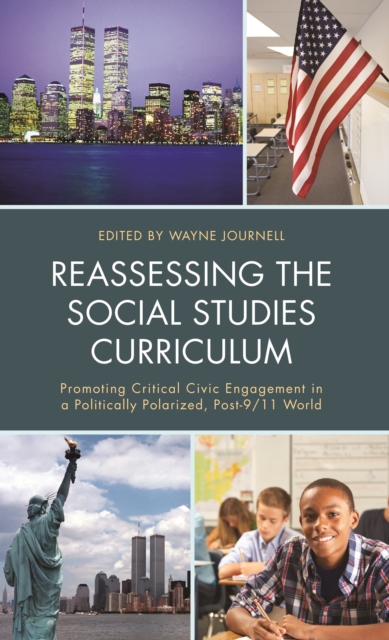
Reassessing the social studies curriculum
The terrorist attacks of September 11, 2001 dramatically changed many aspects of American society, and the ramifications of that horrific event are still impacting the domestic and foreign policies of the United States.
eBook


Educating Democracy
Do strong leaders inevitably undermine democracies? Drawing upon the insights of Alexis de Tocqueville, Brian Danoff offers a compelling, revisionist analysis of the role of leadership in democratic societies. Rather than focusing on effectiveness or character to assess the quality of leaders in democracies, Tocqueville suggests that great democratic leaders are those who educate, elevate, and empower their fellow citizens; certain types of leadership enhance rather than diminish self-rule. Danoff then enriches and expands Tocqueville's perspective through the ideas of American theorists and statesmen such as Woodrow Wilson, Abraham Lincoln, and the Antifederalists. Timely and necessary, this book sheds new light on both Tocqueville and on the role of leadership in American democracy.
eBook

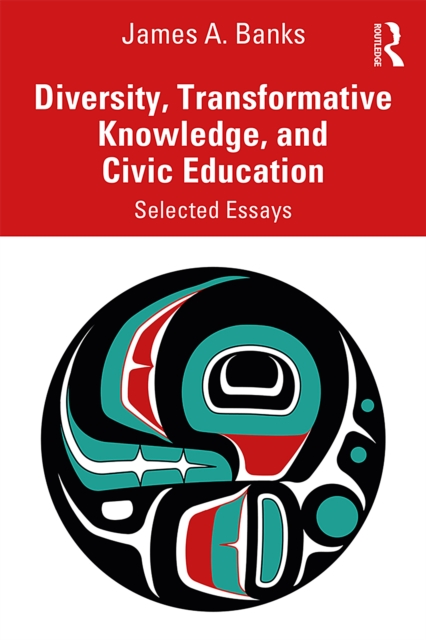
Diversity, Transformative Knowledge, and Civic Education
The essays collected in this book by James A. Banks, a foundational figure in the field of multicultural education, illuminate the interconnection between the author's work on knowledge construction and civic education. In pieces both poignant and personal, Banks shares some of his most groundbreaking and innovative work. Diversity, Transformative Knowledge, and Civic Education aims to unpack the \"citizenship-education dilemma,\" whereby education programs strive to teach students democratic ideals and values within social, economic, political, and educational contexts that contradict justice, equality, and human rights. For change to take place, students need to internalize democratic values, by directly experiencing them in transformative classrooms and schools that are envisioned and described in this book.
Drawn from Banks' formidable canon, this collection highlights the conceptual, curricular, and pedagogical issues related to this dilemma and signals a fundamental shift toward transformative citizenship education. Students, scholars, and educators in the fields of multicultural education, civic education, social studies education, comparative education, and the foundations of education will find this book to be a valuable resource for discussion and discovery.
eBook