
Catalogue Search | MBRL


Are you sure you want to remove the book from the shelf?

{{itemTitle}}
54
result(s) for
"Civil defense United States History 20th century."
Sort by:

Armageddon insurance : civil defense in the United States and Soviet Union, 1945-1991
\"The dangerous, decades-long arms race between the United States and the Soviet Union during the Cold War begged a fundamental question: how did these superpowers actually plan to survive a nuclear strike? In Armageddon insurance, the first historical account of Soviet civil defense and a pioneering reappraisal of its American counterpart, Edward M. Geist compares how the two superpowers tried, and mostly failed, to reinforce their societies to withstand the ultimate catastrophe\"-- Provided by publisher.
Book
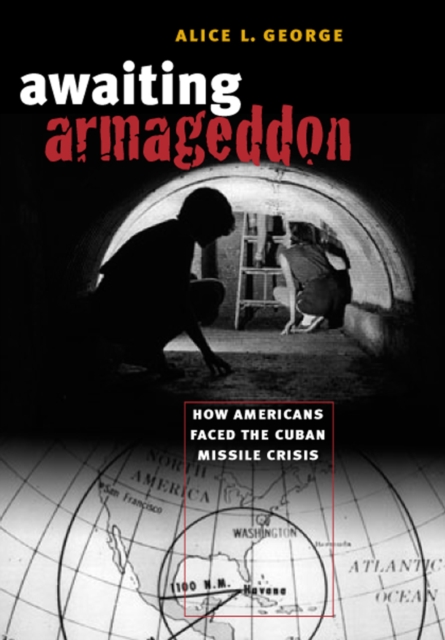
Awaiting Armageddon : how Americans faced the Cuban Missile Crisis
For thirteen days in October 1962, America stood at the brink of nuclear war. Nikita Khrushchevs decision to place nuclear missiles in Cuba and John F. Kennedys defiant response introduced the possibility of unprecedented cataclysm. The immediate threat of destruction entered Americas classrooms and its living rooms. Awaiting Armageddon provides the first in-depth look at this crisis as it roiled outside of government offices, where ordinary Americans realized their government was unprepared to protect either itself or its citizens from the dangers of nuclear war. During the seven days between Kennedys announcement of a naval blockade and Khrushchevs decision to withdraw Soviet nuclear missiles from Cuba, U.S. citizens absorbed the nightmare scenario unfolding on their television sets. An estimated ten million Americans fled their homes; millions more prepared shelters at home, clearing the shelves of supermarkets and gun stores. Alice George captures the irrationality of the moment as Americans coped with dread and resignation, humor and pathos, terror and ignorance. In her examination of the public response to the missile crisis, the author reveals cracks in the veneer of American confidence in the early years of the space age and demonstrates how the fears generated by Cold War culture blinded many Americans to the dangers of nuclear war until it was almost too late.
eBook

Defenseless under the night : the Roosevelt years and the origins of Homeland Security
\"As the bombs fell on Guernica and the Blitz terrorized Britons--even before Pearl Harbor--Americans watched and worried about attacks on their homeland. In May 1941, FDR established an Office of Civilian Defense to protect Americans from foreign and domestic threats. In this book, Matthew Dallek narrates the history of the Office of Civilian Defense. He uses the development of the precursor of \"homeland security\" as a way of examining constitutional questions about civil liberties; the role of government in propagandizing to its own citizens; competing visions among liberals and conservatives for establishing a plan to defend America; and federal, state, and local responsibilities for citizen protection. Much of the dramatic tension lies in the preparation of communities against attack and their fears of Japanese invasion along the Pacific Coast and Nazi invasion. So too there was a clash of visions between LaGuardia and Eleanor Roosevelt. The mayor argued that the OCD's focus had to be on preparing the country against German and Japanese attack, including conducting blackout drills, preparing evacuation plans, coordinating emergency medical teams, and protecting industrial plants and transportation centers. The First Lady believed the OCD should also promote social justice for African Americans and women and raise civilian morale. Their clashes frustrated FDR, who pressured them both to resign in 1942, and led to the appointment of James Landis, commissioner of the SEC, who created a semi-military operation that involved grassroots citizen mobilization, including planting Victory Gardens and building the Civil Air Patrol. It was the largest volunteer program in World War II America.\"--Provided by publisher.
BOOK

Let Us Fight as Free Men
Today, the military is one the most racially diverse institutions in the United States. But for many decades African American soldiers battled racial discrimination and segregation within its ranks. In the years after World War II, the integration of the armed forces was a touchstone in the homefront struggle for equality-though its importance is often overlooked in contemporary histories of the civil rights movement. Drawing on a wide array of sources, from press reports and newspapers to organizational and presidential archives, historian Christine Knauer recounts the conflicts surrounding black military service and the fight for integration.Let Us Fight as Free Menshows that, even after their service to the nation in World War II, it took the persistent efforts of black soldiers, as well as civilian activists and government policy changes, to integrate the military. In response to unjust treatment during and immediately after the war, African Americans pushed for integration on the strength of their service despite the oppressive limitations they faced on the front and at home. Pressured by civil rights activists such as A. Philip Randolph, President Harry S. Truman passed an executive order that called for equal treatment in the military. Even so, integration took place haltingly and was realized only after the political and strategic realities of the Korean War forced the Army to allow black soldiers to fight alongside their white comrades. While the war pushed the civil rights struggle beyond national boundaries, it also revealed the persistence of racial discrimination and exposed the limits of interracial solidarity.Let Us Fight as Free Menreveals the heated debates about the meaning of military service, manhood, and civil rights strategies within the African American community and the United States as a whole.
eBook

Up Against the Wall
Curtis J. Austin's Up Against the Wall chronicles how violence brought about the founding of the Black Panther Party in 1966 by Huey P. Newton and Bobby Seale, dominated its policies, and finally destroyed the party as one member after another-Eldridge Cleaver, Fred Hampton, Alex Rackley-left the party, was killed, or was imprisoned. Austin shows how the party's early emphasis in the 1960s on self-defense, though sorely needed in black communities at the time, left it open to mischaracterization, infiltration, and devastation by local, state, and federal police forces and government agencies. Austin carefully highlights the internal tension between advocates of a more radical position than the Panthers took, who insisted on military confrontation with the state, and those such as Newton and David Hilliard, who believed in community organizing and alliance building as first priorities. Austin interviewed a number of party members who had heretofore remained silent. With the help of these stories, Austin is able to put the violent history of the party in perspective and show that the \"survival\" programs, such as the Free Breakfast for Children program and Free Health Clinics, helped the black communities they served to recognize their own bases of power and ability to save themselves.
eBook

Civil Rights Advocacy on Behalf of the Poor
Representation of the poor has never been the top priority for civil rights organizations, which exist to eradicate racially prejudiced and discriminatory practices and policy. Scholars have argued that the activities and ideologies of civil rights groups have functioned with a distinct middle-class bias since well before the 1960s civil rights movement. Additionally, all political organizations face disincentives to represent the poor-such advocacy is expensive and politically unpopular, and often involves trade-offs with other issues that are more central to organizations' missions. InCivil Rights Advocacy on Behalf of the Poor, Catherine M. Paden examines five civil rights organizations and explores why they chose to represent the poor-specifically low-income African Americans-during six legislative periods considering welfare reform. Paden's archival research into groups such as NAACP, the Congress of Racial Equality, and the Southern Christian Leadership Conference, and her extensive interviews with movement leaders and activists reveal that national organizations advocate on behalf of the poor when they have incentives to do so. Organizational decisions to represent the poor are sometimes strategic, sometimes based on an ideological commitment, and sometimes both. However, Paden points out that decisions are never purely ideological-groups are always aware of strategy and of their positions within their issue niche when they fix their priorities.Civil Rights Advocacy on Behalf of the Pooralso points to the critical role that radical organizations play in increasing representation in the U.S. political system. Paden maintains that radical groups matter not because their representation affects long-term policy change or is particularly effective in representing the interest of marginal groups. Rather, she argues, it is because they compete with more mainstream or conservative organizations for their constituencies.
eBook

Nursing Civil Rights
In Nursing Civil Rights, Charissa J. Threat investigates the parallel battles against occupational segregation by African American women and white men in the U.S. Army. As Threat reveals, both groups viewed their circumstances with the Army Nurse Corps as a civil rights matter. Each conducted separate integration campaigns to end the discrimination they suffered. Yet their stories defy the narrative that civil rights struggles inevitably arced toward social justice. Threat tells how progressive elements in the campaigns did indeed break down barriers in both military and civilian nursing. At the same time, she follows conservative threads to portray how some of the women who succeeded as agents of change became defenders of exclusionary practices when men sought military nursing careers. The ironic result was a struggle that simultaneously confronted and reaffirmed the social hierarchies that nurtured discrimination.
eBook

Power to the people : the world of the Black Panthers
This pictorial history tells the story of the revolutionary Black Panther Party in the words of its co-founder, Bobby Seale.Coming toward the end of America's epic Civil Rights Movement, the Black Panther Party was one of the most creative and influential responses to racism and inequality in American history.
eBook

Out of Oakland
InOut of Oakland, Sean L. Malloy explores the evolving internationalism of the Black Panther Party (BPP); the continuing exile of former members, including Assata Shakur, in Cuba is testament to the lasting nature of the international bonds that were forged during the party's heyday. Founded in Oakland, California, in October 1966 by Huey P. Newton and Bobby Seale, the BPP began with no more than a dozen members. Focused on local issues, most notably police brutality, the Panthers patrolled their West Oakland neighborhood armed with shotguns and law books. Within a few years, the BPP had expanded its operations into a global confrontation with what Minister of Information Eldridge Cleaver dubbed \"the international pig power structure.\"
p>Malloy traces the shifting intersections between the black freedom struggle in the United States, Third World anticolonialism, and the Cold War. By the early 1970s, the Panthers had chapters across the United States as well as an international section headquartered in Algeria and support groups and emulators as far afield as England, India, New Zealand, Israel, and Sweden. The international section served as an official embassy for the BPP and a beacon for American revolutionaries abroad, attracting figures ranging from Black Power skyjackers to fugitive LSD guru Timothy Leary. Engaging directly with the expanding Cold War, BPP representatives cultivated alliances with the governments of Cuba, North Korea, China, North Vietnam, and the People's Republic of the Congo as well as European and Japanese militant groups and the Palestinian Liberation Organization. In an epilogue, Malloy directly links the legacy of the BPP to contemporary questions raised by the Black Lives Matter movement.
eBook

An Army Afire
By the late 1960s, what had been widely heralded as the best qualified, best-trained army in US history was descending into crisis as the Vietnam War raged without end. Morale was tanking. AWOL rates were rising. And in August 1968, a group of Black soldiers seized control of the infamous Long Binh Jail, burned buildings, and beat a white inmate to death with a shovel. The days of \"same mud, same blood\" were over, and a new generation of Black GIs had decisively rejected the slights and institutional racism their forefathers had endured. As Black and white soldiers fought in barracks and bars, with violence spilling into surrounding towns within the US and in West Germany, Vietnam, South Korea, and Japan, army leaders grew convinced that the growing racial crisis undermined the army's ability to defend the nation. Acclaimed military historian Beth Bailey shows how the US Army tried to solve that racial crisis (in army terms, \"the problem of race\"). Army leaders were surprisingly creative in confronting demands for racial justice, even willing to challenge fundamental army principles of discipline, order, hierarchy, and authority. Bailey traces a frustrating yet fascinating story, as a massive, conservative institution came to terms with demands for change.
eBook