
Catalogue Search | MBRL


Are you sure you want to remove the book from the shelf?

{{itemTitle}}
146
result(s) for
"Civilization, Homeric"
Sort by:


Representations
This volume presents a series of reflections on modes of communication in the Bronze Age Aegean, drawing on papers presented at two round table workshops of the Sheffield Centre for Aegean Archaeology on 'Technologies of Representation' and 'Writing and Non-Writing in the Bronze Age Aegean'. Each was designed to capture current developments in these interrelated research areas and also to help elide boundaries between 'science-based' and 'humanities-based' approaches, and between those focused on written communication (especially its content) and those interested in broader modes of communication. Contributions are arranged thematically in three groups: the first concerns primarily non-written communication, the second mainly written communication, and the third blurs this somewhat arbitrary distinction. Topics in the first group include use of color in wall-paintings at Late Bronze Age Pylos; a re-interpretation of the 'Harvester Vase' from Ayia Triada; re-readings of the sequence of grave stelae at Mycenae, of Aegean representations of warfare, and of how ritual architecture is represented in the Knossos wall-paintings; and the use of painted media to represent depictions in other (lost) media such as cloth. Topics in the second group range from defining Aegean writing itself, through the contexts for literacy and how the Linear B script represented language, to a historical exploration of early attempts at deciphering Linear B. In the third group Linear B texts and archaeological data are used to explore how people were represented diacritically through taste and smell, and how different qualities of time were expressed both textually and materially; the roles of images in Aegean scripts, complemented by a Peircian analysis of early Cretan writing; a consideration of the complementary role of (non-literate) sealing and (literate) writing practices; and concludes with a further exploration of the color palette used at Pylos.
eBook

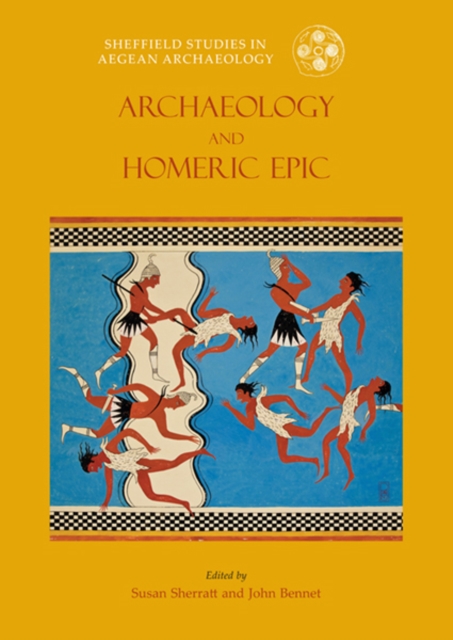
Archaeology and the Homeric Epic
The relationship between the Homeric epics and archaeology has long suffered mixed fortunes, swinging between 'fundamentalist' attempts to use archaeology in order to demonstrate the essential historicity of the epics and their background, and outright rejection of the idea that archaeology is capable of contributing anything at all to our understanding and appreciation of the epics. Archaeology and the Homeric Epic concentrates less on historicity in favor of exploring a variety of other, perhaps sometimes more oblique, ways in which we can use a multidisciplinary approach – archaeology, philology, anthropology and social history – to help offer insights into the epics, the contexts of their possibly prolonged creation, aspects of their 'prehistory', and what they may have stood for at various times in their long oral and written history. The effects of the Homeric epics on the history and popular reception of archaeology, especially in the particular context of modern Germany, is also a theme that is explored here. Contributors explore a variety of issues including the relationships between visual and verbal imagery, the social contexts of epic (or sub-epic) creation or re-creation, the roles of bards and their relationships to different types of patrons and audiences, the construction and uses of 'history' as traceable through both epic and archaeology and the relationship between 'prehistoric' (oral) and 'historical' (recorded in writing) periods. Throughout, the emphasis is on context and its relevance to the creation, transmission, re-creation and manipulation of epic in the present (or near-present) as well as in the ancient Greek past.
eBook
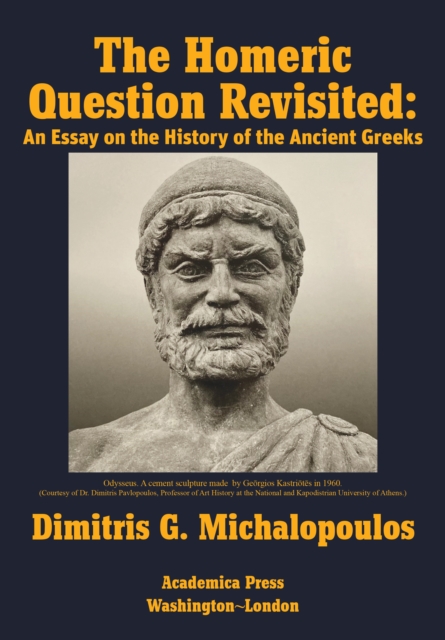
The Homeric Question Revisited
How did Socrates and Plato know that our planet is shaped like a ball? How were they aware that the earth has twelve tectonic plates? Were the Persians conquered at the naval battle of Salamis thanks to missiles launched from the nearby Thriasion Plain? How can Theocritus' accurate knowledge of the American continent and Plutarch's awareness of the Sargasso Sea be explained? Who was the real victor of the Trojan War, the Greeks or the Trojans? Can the aftermath of that legendary war in Anatolia be regarded as proof that the Greeks were conquered by the Trojans and not vice-versa? In point of fact, almost the whole of ancient Greek civilization is still an enigma. This book, taking as its starting point the assurance of Strabo, the famous geographer of the age of Pax Romana, that Odysseus's peregrinations took place in the Atlantic Ocean, provides evidence for the veracity of this statement.
eBook

Studies of Homeric Greece
Kniha je přepracovaným a doplněným přehledem archeologie a historie pozdně mykénského a geometrického Řecka a společenství geometrických stylů rané doby železné v Evropě a severní Eurasii, ve vztahu k egyptským a předovýchodním civilizacím: období od 13. do 8. století př. Kr., tzv. axiální době lidských dějin a počátkům přechodu od předfilozofického k filozofickému myšlení, od mýtu k logu. Kniha obsahuje mnoho mapek a kreslených ilustrací, černobílé a barevné přílohy.
Svazek kombinuje svědectví archeologických pramenů s obrazem světa u Homéra a Hesioda a líčení doby Davidovy a Šalamounovy ve Starém Zákoně, věnuje se počátkům soukromých obchodních výprav fonických a řeckých, předkolonizačních aktivit a rané foinické a řecké kolonizace, době přechodu od systému centrálních pyramidálních struktur říší doby bronzové k řeckému modelu městského státu, řízeného nikoli už božskou autoritou, ale ústavou městské obce, vzniklou jako výsledek dohody jejích svobodných občanů, osobní nezávislé inteligence a jejích schopností, které umožnily mimo jiné i plné ovládnutí sil zvířat. Vyspělé uměnní jezdecké rozvinuly především národy eurasijské stepi, zatímco rozvoj mořeplavby a obchodu započali Foiničané (mj. objevem hláskového písma, umožňujícího přesný záznam slov), a dále rozvinuli především Řekové a jejich nejbližší sousedé na východě, Lýdové a Kárové; obdobný vývoj proběhl také u starozákonních Hebrejců v první době královské.
eBook
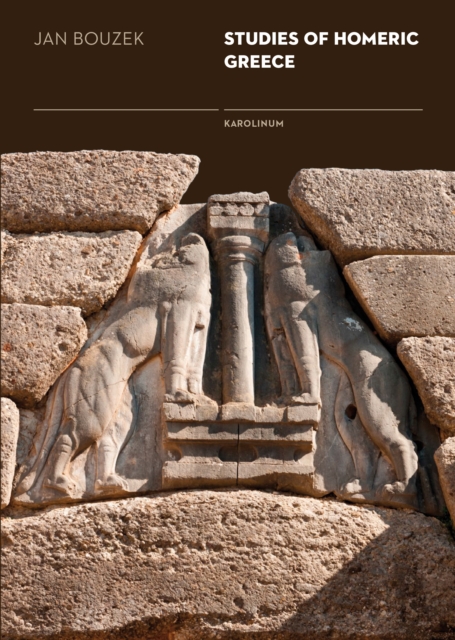
Studies of Homeric Greece
The volume brings a kind of companion to the subject of study of archaeology and history of Late Mycenaean to Geometric Greece and of the koine of Early Iron Age Geometric styles in Europe and Upper Eurasia, ca 1300–700 BC, in relation to their Near Eastern neighbours. The age around the so-called axial period of human history, of transition from Bronze to Iron Age, from the pre-philosophical to philosophical mind, from mythical level of human thought to logos, is discussed in the frame of combining several approaches into a synthetic picture revisiting the previous books and papers by the author, in an attempt to combine the witness of archaeological sources with the worlds of Homer and Hesiod, and the first private Phoenician and Greek merchant ventures. It surveys the birth of Greek autonomous city states, of its art and its free citizens. The book contains many maps and drawings illustrating the discussed subjects, black and white and colour photographs.
eBook
Geometric Greece
J.N. Coldstream has now fully updated his comprehensive survey with a substantial new chapter on the abundant discoveries and developments made since the book's first publication.
The text is presented in three main sections: the passing of the dark ages, c.900–770 BC; the Greek renaissance, c.770–700 BC, covered region by region, and the final part on life in eighth century Greece. Its geographical coverage of the Mediterranean ranges from Syria to Sicily, and the detailed archaeological evidence is amplified by reference to literary sources.
Highly illustrated, including images of several finds never previously published, this follows the first successful edition as the essential handbook for anyone studying early Greek antiquity.
'This second edition of Geometric Greece is sure to prove as essential for the period as was its predecessor.' - Minverva
'This [is an] excellent survey based on [J.N. Coldstream's] deep learning. Geometric Greece is brought up to date in a masterly way. This will certainly remain the main book of reference in this field of Greek archaeology for many years to come.' - Ancient West and East
eBook
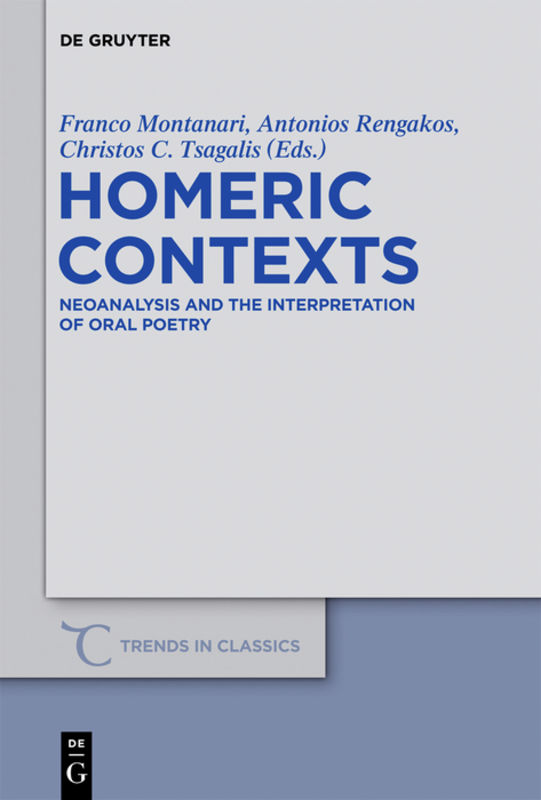
Homeric Contexts
This volume aims at offering a critical reassessment of the progress made in Homeric research in recent years, focussing on its two main trends, Neonalysis and Oral Theory. Interpreting Homer in the 21st century asks for a holistic approach that allows us to reconsider some of our methodological tools and preconceptions concerning what we call Homeric poetry. The neoanalytical and oral 'booms', which have to a large extent influenced the way we see Homer today, may be re-evaluated if we are willing to endorse a more flexible approach to certain scholarly taboos pertaining to these two schools of interpretation. Song-traditions, formula, performance, multiformity on the one hand, and Motivforschung, Epic Cycle on the other, may not be so incompatible as we often tend to think.
eBook
